Joseph Binder: Born March 3, 1898

binder

Born in Vienna and trained as a painter at the Kunstgewerbeschüle, Joseph Binder’s early designs won numerous international competitions that placed his posters in public spaces throughout Europe. A leader in the emerging field of graphic design, Binder felt that posters were “an expression of contemporary civilization reduced to its simplest forms for instantaneous visual communication.”
FROM http://americanart.si.edu/collections/search/artist/?id=418

nywf

In 1936 Joseph Binder settled in New York for good and in 1944 became an American citizen.
In his design he focused on the reduction of geometric forms, on color contrasts and the psychological impact of colors. His clients included American Railroads, American Airlines, A&P Iced Coffee, Fortune and Graphis. In 1948 the U.S. Navy made him their art director and designer.
In the 1960s Binder turned away from commercial graphic work and renewed his explorations in graphic works of art in the abstract style.
FROM http://www.aiga.org/medalist-josephbinder#5

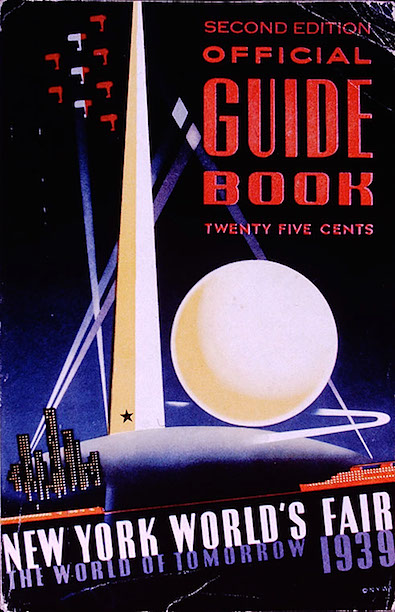
Joseph Binder’s Ships and Planes~
http://www.printmag.com/daily-heller/joseph-binders-ships-and-planes/
Joseph Binder on Artnet~
https://www.artnet.com/artists/joseph-binder/

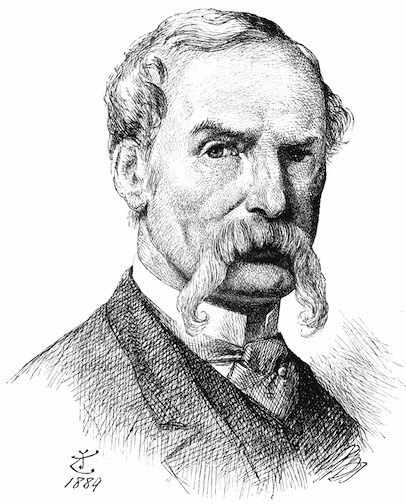
Sir John Tenniel: Born February 28, 1820

John_Tenniel

John Tenniel was born in Kensington, London, on 28 February 1820, the youngest son of John Baptist Tenniel, of Huguenot lineage. He was a skilful artist from an early age, and later studied at the Royal Academy Schools, but became dissatisfied with the teaching there, and decided to follow a more independent line…in 1845 he was commissioned to paint a fresco for the House of Lords. He spent a short time in Munich to study the art of fresco in preparation for his mural painting in the House entitled, “Saint Cecilia.”

Continues~ https://illustratorsjournal.wordpress.com/tag/alice-in-wonderland/
allegory

Realising that paintings in oils were unlikely to bring him either fame or fortune, he decided to turn his hand to book illustration…His skill at drawing animals and men in dramatic situations caught the eye of Mark Lemon, editor of Punch, a magazine then in the early stages of establishing itself as a popular Victorian weekly publication of satire and humour. Richard Doyle, one of the key artists associated with the magazine resigned in 1850 leaving a vacancy which, on the suggestion of Douglas Jerrold, was filled by Tenniel. Thus began a lifelong position at the Punch Office culminating in Tenniel becoming the foremost illustrator of its pages.

Continues~ https://illustratorsjournal.wordpress.com/tag/alice-in-wonderland/
Tenniel cartoons for PUNCH:
http://punch.photoshelter.com/gallery/John-Tenniel-Cartoons/G0000JCRWVO.C79Y/
Tenniel illustrations for Alice in Wonderland:
http://commons.wikimedia.org/wiki/Category:John_Tenniel%27s_illustrations_of_Alice%27s_Adventures_in_Wonderland
Tenniel illustrations for Through the Looking-Glass and What Alice Found There:
http://commons.wikimedia.org/wiki/Category:John_Tenniel%27s_illustrations_of_Through_the_Looking-Glass_and_What_Alice_Found_There

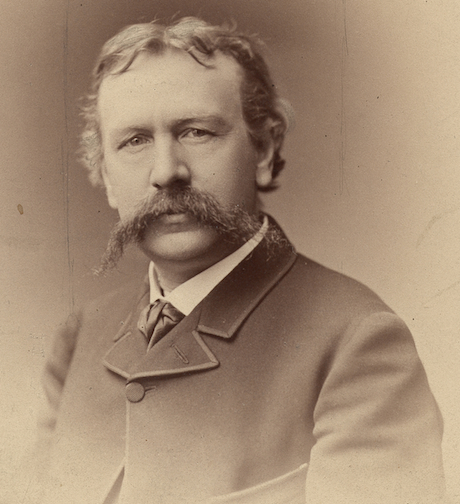
Elihu Vedder: Born February 26, 1836

During the second half of the nineteenth century Elihu Vedder was among the ev1870most imaginative and independent of the American expatriate artists. After studying with the genre painter Tompkins H. Matteson in New York, Vedder traveled to Paris…In 1857 he moved to Florence…Vedder returned to the United States in 1860 and began to establish a reputation for imaginative literary paintings and book illustrations. He became a member of the Tile Club and the Century Association and an intimate of notable artistic and literary circles in New York.
FROM About This Artist~ https://collections.lacma.org/node/167054

Elihu Vedder (1836–1923)~ http://www.questroyalfineart.com/artist/elihu-vedder/
From the Met Collection~ https://bit.ly/3guaUML

The White Album Cover

Richard Hamilton* discusses designing the White Album

In one of Richard Hamilton’s last filmed interviews, he tells the story of how he designed the Beatles White Album cover

The Beatles record label, EMI had concerns, but Paul McCartney, who commissioned Richard Hamilton to design the cover, persuaded EMI to allow the design to go ahead. Together with Paul McCartney, they decided that the next Beatles cover should be the total opposite of the Sgt. Pepper’s design…

White Album


*Richard Hamilton (February 24, 1922 – September 13, 2011) was an English painter and collage artist.


The White Album: How Richard Hamilton Brought Conceptual Art to the Beatles
https://www.sothebys.com/en/articles/the-white-album-how-richard-hamilton-brought-conceptual-art-to-the-beatles

Records of the National Park Service: Ansel Adams Photographs

Dam

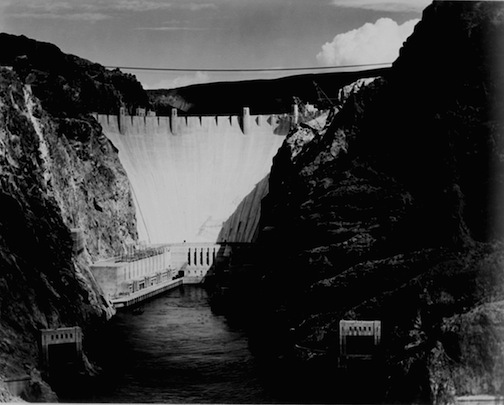
In 1941 the National Park Service commissioned noted photographer Ansel Adams to create a photo mural for the Department of the Interior Building in Washington, DC. The theme was to be nature as exemplified and protected in the U.S. National Parks. The project was halted because of World War II and never resumed.

The holdings of the National Archives Still Picture Branch include 226 photographs taken for this project, most of them signed and captioned by Adams.

http://www.archives.gov/research/ansel-adams/

Louis Comfort Tiffany: Born February 18, 1848

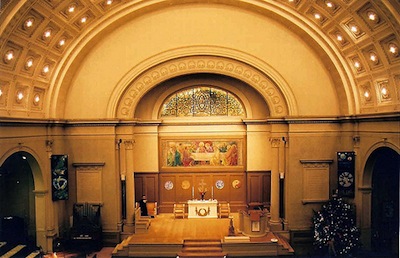
Since today is the birthday of Louis Comfort Tiffany, I thought it might be interesting to have a look at some of the magnificent examples of Tiffany design with which Baltimore has been favored.

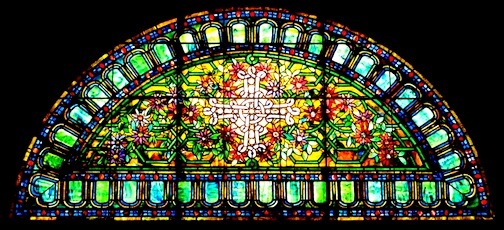
Louis Comfort Tiffany’s career lasted from the 1870s through the 1920s. He was the son of Charles Lewis Tiffany who founded Tiffany & Company, but chose not to join the family business, instead embarking on a career as a painter. Although he never stopped painting, Tiffany began in the late 1870s to concentrate on the decorative arts for which we remember him today.  He and his studios worked in a vast array of mediums, including stained-glass windows, glass mosaics, lamps, ceramics, enamelwork, and jewelry.

Tiffany was appointed the first design director of Tiffany & Co. upon his father’s death in 1902. He also continued his association with Tiffany Studios, which did not cease operations until his own death in 1933.

http://www.firstunitarian.net/about-us/history/our-buildings/

unitarianunitariansanctuary

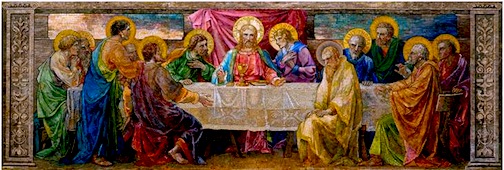
The First Unitarian Church of Baltimore has one of the only three versions of this particular Tiffany glass mosaic design for the Last Supper known to exist. It was installed in 1897 and measures 18′ wide x 9′ tall. The designer was Frederick Wilson who worked for the Tiffany Glass and Decorating Company.

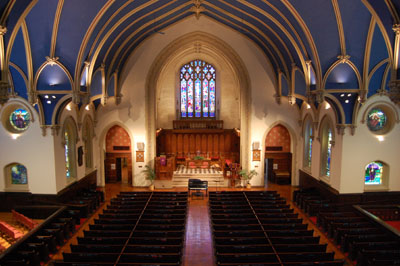
http://www.browndowntown.org/index.php?s=tiffanywindows

Brownbrownsanctuary

Brown Memorial Presbyterian Church was dedicated in 1870; when it was enlarged in 1905 the church commissioned Tiffany Studios in New York City to create its stained glass windows. There are 11 documented Tiffany windows, including two transept windows which measure 40′ high by 16′ wide and dominate the interior.

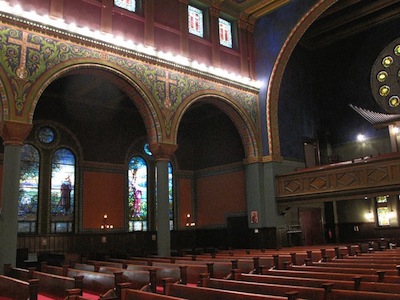
http://www.stmarksbaltimore.org/st-marks-architecture.html

stmarksstmarkssanctuary

St. Mark’s Lutheran Church boasts a complete interior created by Louis Comfort Tiffany. The building was opened in 1898 and among its treasures are mosaics, lamps, and stained-glass windows. It is one of the few intact Tiffany-designed interiors left in the world.

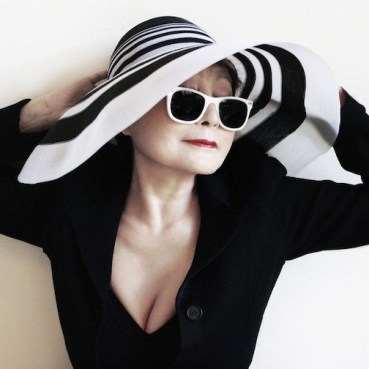
Yoko Ono: Born February 18, 1933

http://imaginepeace.com/
http://www.allmusic.com/artist/yoko-ono-mn0000521704/biography

https://schristywolfe.com/wp-content/uploads/2015/02/yoko.jpg

Since emerging onto the international art scene in the early 1960s, Yoko Ono has made profound contributions to visual art, performance, filmmaking, and experimental music. Born in Tokyo in 1933, she moved with her family to New York in the mid-1950s and enrolled at Sarah Lawrence College. Over the next decade she lived in New York, Tokyo, and London, greatly influencing the international development of Fluxus and Conceptual art.
https://www.moma.org/artists/4410

via Yoko Ono On Being An Inspiration And Her Friendship With David Bowie.

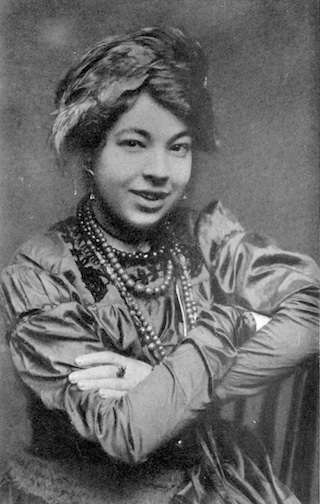
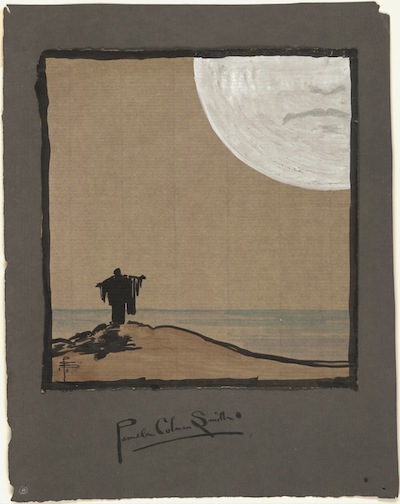
Illustrator Pamela Colman Smith: Born February 16, 1878

I’ve never given any thought to who might have designed and/or illustrated Tarot Cards, I suppose because I figured they were something that evolved over time and were already established by the time card/game companies began printing them. The popular version that I am familiar with turns out to have been illustrated by one Pamela Colman Smith, an illustrator who attended (but did not finish) Pratt.

Smith1912

sample

Pamela Colman Smith (16 February 1878 – 18 September 1951), also nicknamed Pixie, was an artist, illustrator, and writer. She is best known for designing the Waite-Smith deck of divinatory tarot cards (also called the Rider-Waite or the Rider-Waite-Smith deck) for Arthur Edward Waite.
http://en.wikipedia.org/wiki/Pamela_Colman_Smith

The Beinecke Rare Book & Manuscript Library of the Yale University Library:
https://collections.library.yale.edu/catalog?search_field=all_fields&q=Pamela%20Colman%20Smithdeck