Steve Jobs: Born February 24, 1955

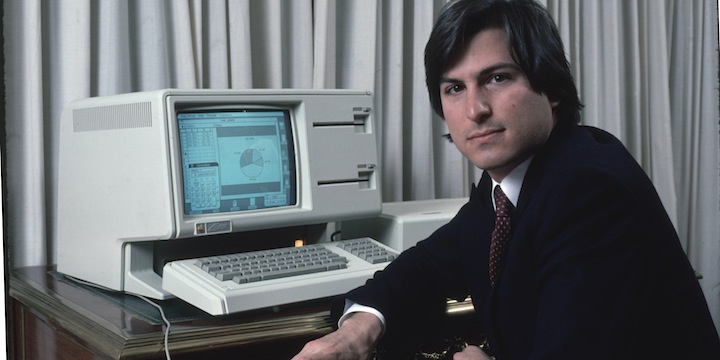
Apple computer Chrmn. Steve Jobs w. new LISA computer during press preview.

Jobs’s friend Larry Ellison, the founder of Oracle, had a private jet, and he designed its interior with a great deal of care. One day, Jobs decided that he wanted a private jet, too. He studied what Ellison had done. Then he set about to reproduce his friend’s design in its entirety—the same jet, the same reconfiguration, the same doors between the cabins. Actually, not in its entirety. Ellison’s jet “had a door between cabins with an open button and a close button,” Isaacson writes. “Jobs insisted that his have a single button that toggled. He didn’t like the polished stainless steel of the buttons, so he had them replaced with brushed metal ones.” Having hired Ellison’s designer, “pretty soon he was driving her crazy.” Of course he was. The great accomplishment of Jobs’s life is how effectively he put his idiosyncrasies—his petulance, his narcissism, and his rudeness—in the service of perfection. “I look at his airplane and mine,” Ellison says, “and everything he changed was better.”
FROM http://www.newyorker.com/magazine/2011/11/14/the-tweaker

“Remembering that I’ll be dead soon is the most important tool I’ve ever encountered to help me make the big choices in life,” he said. “Because almost everything — all external expectations, all pride, all fear of embarrassment or failure — these things just fall away in the face of death, leaving only what is truly important.”
Renata Scotto: Born February 24, 1934

[Renata Scotto] began vocal studies when she was 14, and moved to Milan when she was 16. In 1952, when she was just 19, she made her debut as Violetta (La traviata) at the Teatro Nuovo, followed by her La Scala debut as Walter in La Wally. However, only a few years later she had a vocal crisis, losing most of her upper range; she now credits her recovery to Alfredo Kraus (himself renowned for a solid technique and vocal longevity), who introducing her to his teacher, Mercedes Llopart. After completely restudying her technique, she re-began her career as a coloratura, making her London debut at the Stoll Theater as Adina in L’elisir d’amore. She returned to La Scala, and in 1957, replaced Maria Callas (whom she had greatly admired) as Amina in La Sonnambula.
– See more at:
http://www.allmusic.com/artist/renata-scotto-mn0000681028/biography
http://musicalworld.com/artists/renata-scotto/biography.html

Men in Wigs

pepys

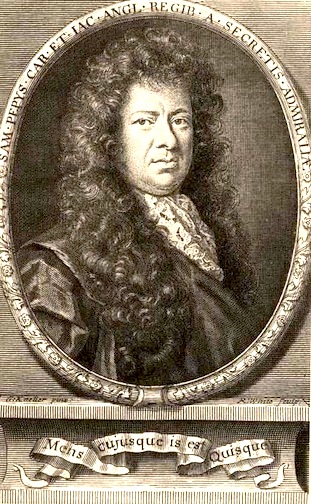
This morning come two of Captain Cooke’s boys, whose voices are broke, and are gone from the Chapel, but have extraordinary skill; and they and my boy, with his broken voice, did sing three parts; their names were Blaewl and Loggings; but, notwithstanding their skill, yet to hear them sing with their broken voices, which they could not command to keep in tune, would make a man mad–so bad it was.

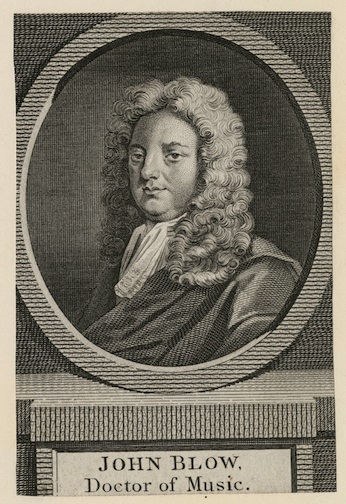
The quote above is Samuel Pepys (born February 23, 1633) referring to John Blow (born February 23, 1649). Samuel Pepys was a member of Parliament who is now most famous for his private diary, kept from 1660 until 1669.

Samuel Pepys (1633 – 1703)
http://www.bbc.co.uk/history/historic_figures/pepys_samuel.shtml
The Diary of Samuel Pepys: http://www.gutenberg.org/files/4200/4200-h/4200-h.htm

BlowJohn Blow was an English Baroque composer and organist whose opera Venus & Adonis is considered the earliest surviving British opera and which is believed to have influenced Henry Purcell’s later opera Dido and Aeneas.

John Blow (1649 – 1708)
https://en.wikipedia.org
/wiki/John_Blow

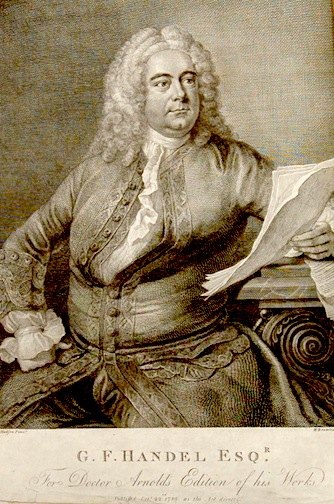
HandelAfter Purcell, opera in England languished until the arrival of George Frideric Handel (born February 23, 1685) who, however, wrote most of his operas in Italian. Acis and Galatea is Handel’s only work for the theatre that is set to an English libretto.

George Frideric Handel (1685 – 1759)
https://en.wikipedia.org/wiki/George_Frideric_Handel

Of course, most of us know Handel for his English-language oratorio Messiah and for his collection of short pieces for small orchestra known as the Water Music.

Records of the National Park Service: Ansel Adams Photographs

Dam

In 1941 the National Park Service commissioned noted photographer Ansel Adams to create a photo mural for the Department of the Interior Building in Washington, DC. The theme was to be nature as exemplified and protected in the U.S. National Parks. The project was halted because of World War II and never resumed.

The holdings of the National Archives Still Picture Branch include 226 photographs taken for this project, most of them signed and captioned by Adams.

http://www.archives.gov/research/ansel-adams/

Adelina Patti: Born February 19, 1843

Adelina Patti, original name Adela Juana Maria Patti (born Feb. 19, 1843, Madrid, Spain—died Sept. 27, 1919, Craig-y-Nos Castle, Brecknockshire, Wales), Italian soprano who was one of the great coloratura singers of the 19th century.
http://www.britannica.com/EBchecked/topic/446851/Adelina-Patti

Biographical sketch of Madame Adelina Patti
https://archive.org/details/biographicalsket00mortiala

Louis Comfort Tiffany: Born February 18, 1848

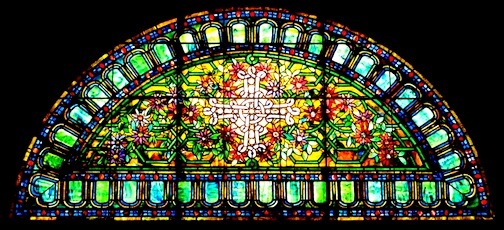
Since today is the birthday of Louis Comfort Tiffany, I thought it might be interesting to have a look at some of the magnificent examples of Tiffany design with which Baltimore has been favored.

Louis Comfort Tiffany’s career lasted from the 1870s through the 1920s. He was the son of Charles Lewis Tiffany who founded Tiffany & Company, but chose not to join the family business, instead embarking on a career as a painter. Although he never stopped painting, Tiffany began in the late 1870s to concentrate on the decorative arts for which we remember him today.  He and his studios worked in a vast array of mediums, including stained-glass windows, glass mosaics, lamps, ceramics, enamelwork, and jewelry.

Tiffany was appointed the first design director of Tiffany & Co. upon his father’s death in 1902. He also continued his association with Tiffany Studios, which did not cease operations until his own death in 1933.

http://www.firstunitarian.net/about-us/history/our-buildings/

unitarianunitariansanctuary

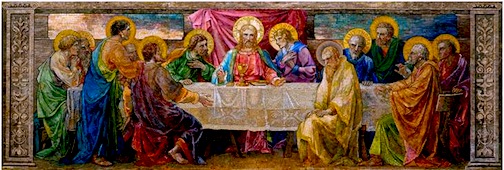
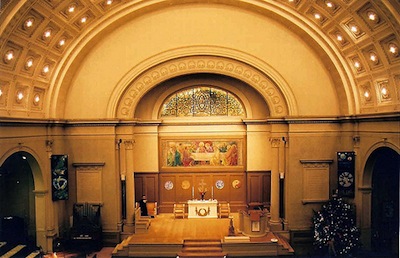
The First Unitarian Church of Baltimore has one of the only three versions of this particular Tiffany glass mosaic design for the Last Supper known to exist. It was installed in 1897 and measures 18′ wide x 9′ tall. The designer was Frederick Wilson who worked for the Tiffany Glass and Decorating Company.

http://www.browndowntown.org/index.php?s=tiffanywindows

Brownbrownsanctuary

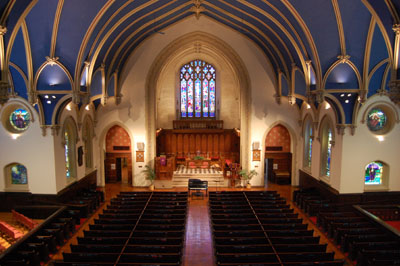
Brown Memorial Presbyterian Church was dedicated in 1870; when it was enlarged in 1905 the church commissioned Tiffany Studios in New York City to create its stained glass windows. There are 11 documented Tiffany windows, including two transept windows which measure 40′ high by 16′ wide and dominate the interior.

http://www.stmarksbaltimore.org/st-marks-architecture.html

stmarksstmarkssanctuary

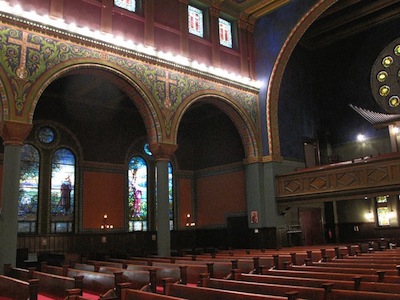
St. Mark’s Lutheran Church boasts a complete interior created by Louis Comfort Tiffany. The building was opened in 1898 and among its treasures are mosaics, lamps, and stained-glass windows. It is one of the few intact Tiffany-designed interiors left in the world.

Yoko Ono: Born February 18, 1933

http://imaginepeace.com/
http://www.allmusic.com/artist/yoko-ono-mn0000521704/biography

https://schristywolfe.com/wp-content/uploads/2015/02/yoko.jpg

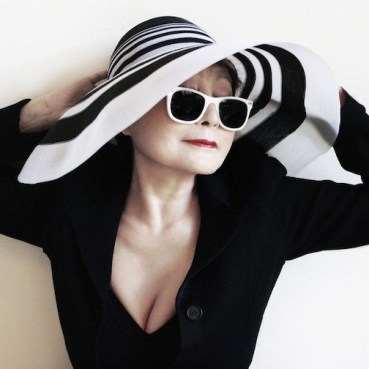
Since emerging onto the international art scene in the early 1960s, Yoko Ono has made profound contributions to visual art, performance, filmmaking, and experimental music. Born in Tokyo in 1933, she moved with her family to New York in the mid-1950s and enrolled at Sarah Lawrence College. Over the next decade she lived in New York, Tokyo, and London, greatly influencing the international development of Fluxus and Conceptual art.
https://www.moma.org/artists/4410

via Yoko Ono On Being An Inspiration And Her Friendship With David Bowie.

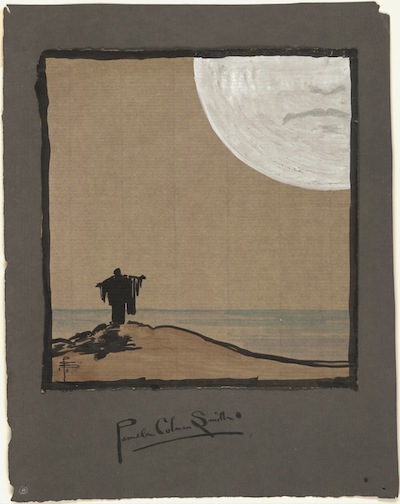
Illustrator Pamela Colman Smith: Born February 16, 1878

I’ve never given any thought to who might have designed and/or illustrated Tarot Cards, I suppose because I figured they were something that evolved over time and were already established by the time card/game companies began printing them. The popular version that I am familiar with turns out to have been illustrated by one Pamela Colman Smith, an illustrator who attended (but did not finish) Pratt.

Smith1912

sample

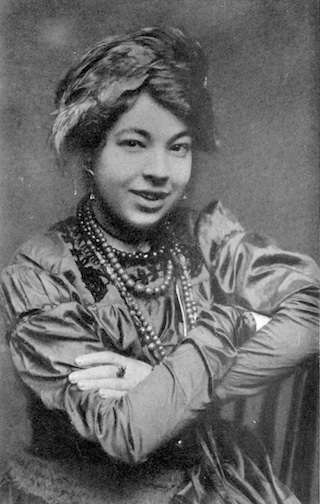
Pamela Colman Smith (16 February 1878 – 18 September 1951), also nicknamed Pixie, was an artist, illustrator, and writer. She is best known for designing the Waite-Smith deck of divinatory tarot cards (also called the Rider-Waite or the Rider-Waite-Smith deck) for Arthur Edward Waite.
http://en.wikipedia.org/wiki/Pamela_Colman_Smith

The Beinecke Rare Book & Manuscript Library of the Yale University Library:
https://collections.library.yale.edu/catalog?search_field=all_fields&q=Pamela%20Colman%20Smithdeck