1902 Graduating Class of the Cherokee Female Seminary
by Jennie Ross Cobb
 c.1902 / Photograph / Dimensions not available / Oklahoma Historical Society, Oklahoma City, OK
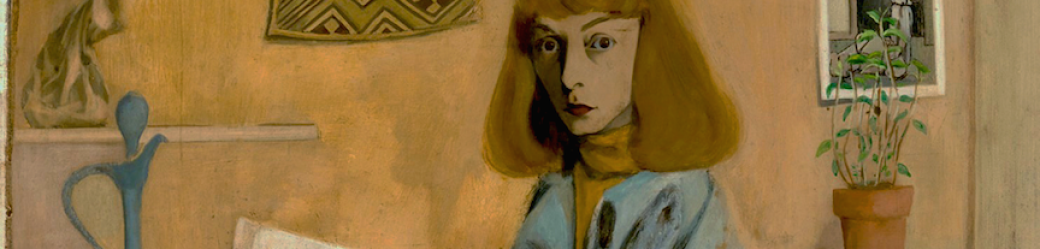
c.1902 / Photograph / Dimensions not available / Oklahoma Historical Society, Oklahoma City, OK
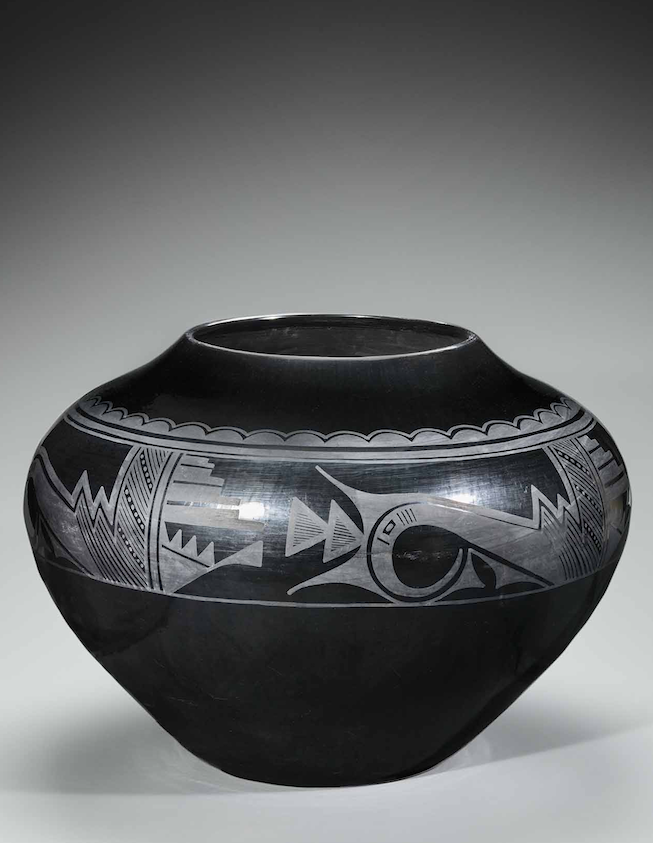 1940 / Polished blackware pottery with matte paint / 15 1/8″x21 3/4″ / Toledo Museum of Art, OH
 1897 / Photograph / Dimensions not available
Sir Henry Wellcome Collection, National Archives at Seattle, WA
 1900 / Oil on canvas / No size available / Original held by J. Andrew Darling
Paying Tribute to Smith’s First Known Native American Graduate
https://www.smith.edu/newssmith/fall2003/decora.php
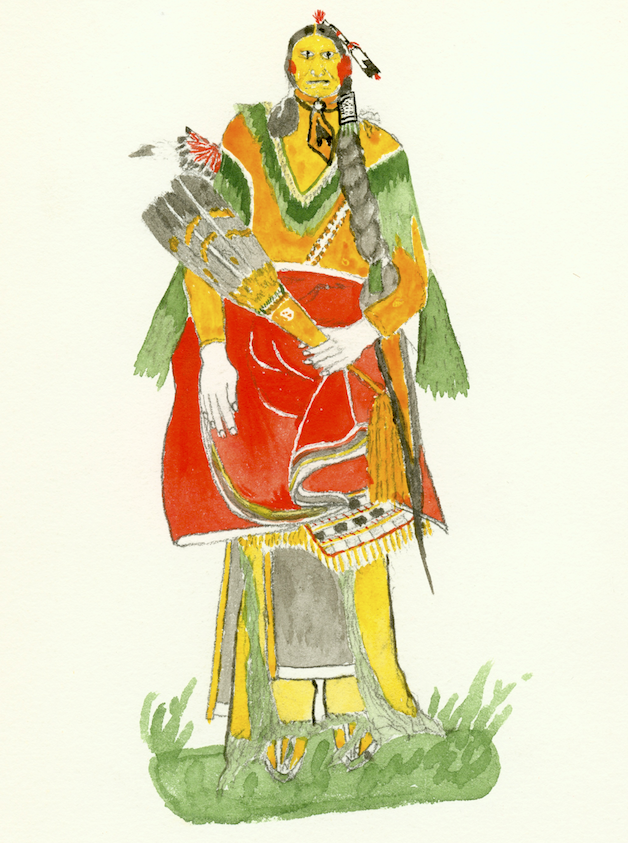 No Date / Watercolor on paper / No size available
Edward E. Ayer Art Collection, Newberry Library, Chicago, IL
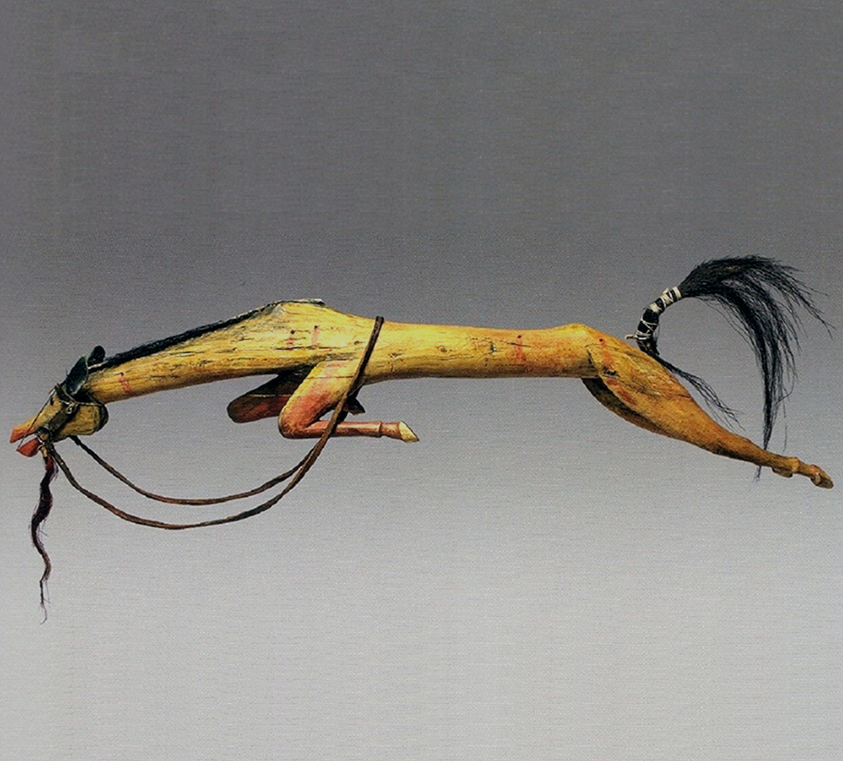 c.1880 / Wood, pigment, tanned leather, rawhide, horsehair, brass, iron, and bird quill
38 1/2″ in length / South Dakota State Historical Society, Pierre, SD
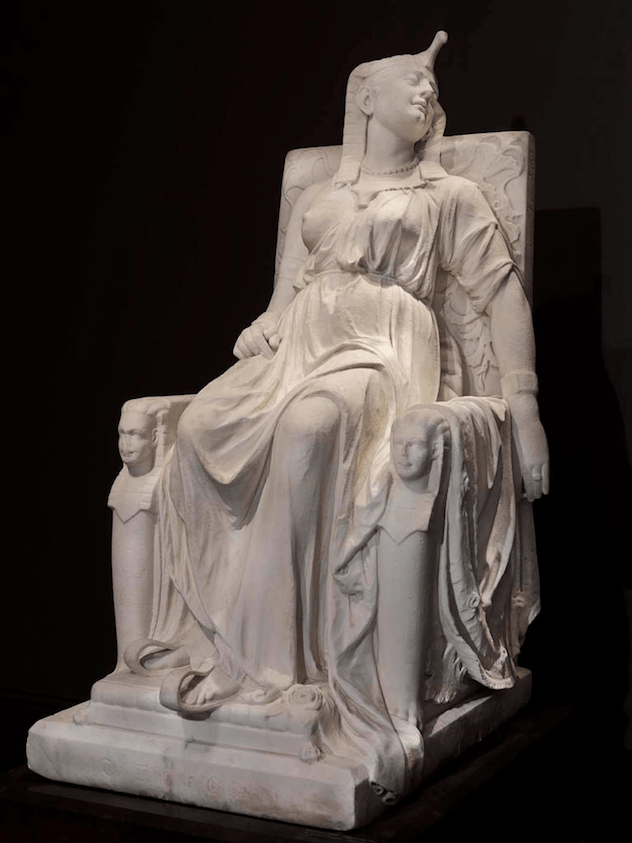 1876 / Marble / 63″x31 1⁄4″x46″ / Smithsonian American Art Museum, DC
 c.1900 / Cedar bark, spruce root, paint / 8 1/4″x17″
National Museum of the American Indian, Washington, DC
William Edward Caton (1846-1905), an American trader operating in the Dakotas during the late nineteenth century, was best known for his role as post‐trader at the Cheyenne River Indian Reservation. In the winter of 1880–81 he commissioned the eminent Lakota artist‐medicine-man Black Hawk (c.1832–c.1890) to render Lakota life and vision.[i]
Black Hawk drew seventy-six vivid images depicting complex scenes of ceremonial activity, personal visions, historical events, and nature studies. Black Hawk’s drawing book now stands as the most complete visual record of Lakota art of the early reservation period (1875-95).[ii]
 1881 / Page from the Black Hawk Ledger / Pencil, colored pencil
16 1/4″x10 1/4″ / The Plains Indian Ledger Art Project, UC San Diego
[i] William Edward Caton biography. Ruderman Rare Maps, no date.
https://raremaps.com/mapmaker/12732/william-edward-caton
[ii] George Braziller. Spirit Beings & Sun Dancers: Black Hawk’s vision of the Lakota World, no date.
https://www.georgebraziller.com/spirit-beings-sun-dancers-black-hawks-vision-of-the-lakota-world
The Meskwaki people are likely the first and perhaps only tribal nation in the U.S. to purchase land rather than rely on a reservation. An important pen-and-ink drawn by Meskwaki elder Wacochachi documents the relationship between the Meskwaki and Euro-Americans and is believed to be a gift to a trader named George Davenport. The drawing depicts important events in Wacochachi’s life, including two scenes of warfare, as well as creatures that are sacred to the Meskwaki.[i]
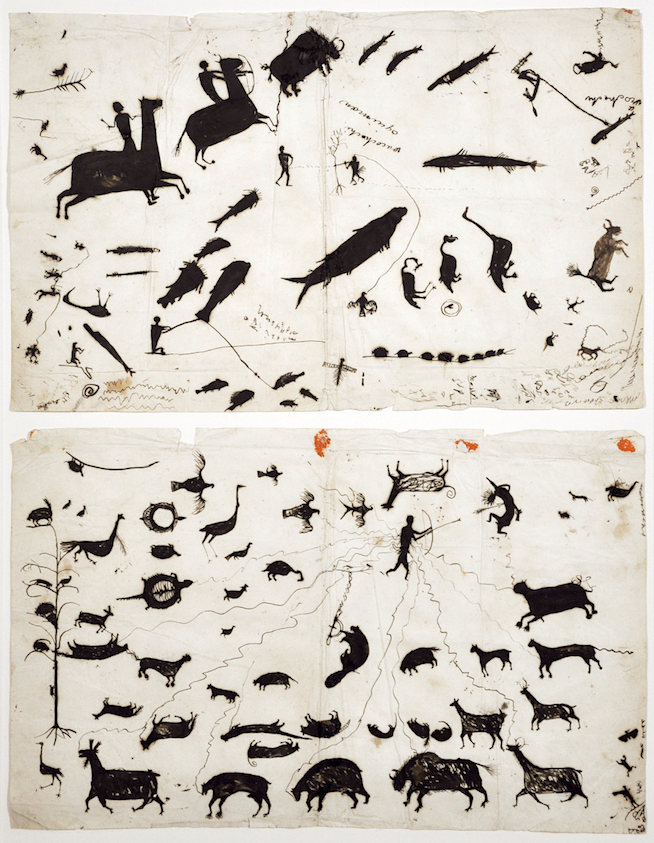 c.1830 / Paper, ink, sealing wax / Each sheet 9 3/4″x15 1/2″ / State Historical Museum of Iowa, Des Moines, IA
[i]“IHJ Exploring History: Celebrating 175 Years of Statehood — State Historical Museum of Iowa’s Newest Exhibit ‘Iowa’s People and Places’ Marks Milestones in Iowa’s History -.” 2025. August 15, 2025.
https://iowahistoryjournal.com/ihj-exploring-history-celebrating-175-years-of-statehood-state-historical-museum-of-iowas-newest-exhibit-iowas-people-and-places-marks-milestones-in-iowa/

