R.I.P. Muhammad Ali – we lost a legend, a champion and an inspiration.
George Lois’s powerful Esquire cover in April 1968 of the great Muhammad Ali posing as the martyr Saint Sebastian was one of the most iconic images of the decade, dramatizing the boxing greats persecution of his beliefs concerning Vietnam, race and religion.
One of the greatest magazine covers ever….of one of the greatest.
The riot turned the work into a symbol of all that modernist art was supposed to be: a break with tradition and a thumb in the eye of bourgeois taste. Yet for quite some time scholars have called into question the size, the ferocity, and the immediate effects of what definitely was a disturbance on opening night.
But the extent to which this disturbance counts as a riot really is beside the point, as is the question of what actually happened that night. What matters most is that whatever it was, it never happened again. FROMSpring Fever~http://www.theparisreview.org/blog/2013/07/11/spring-fever/
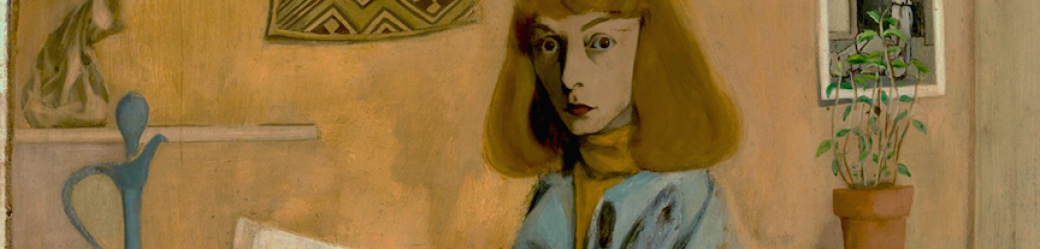
Norma Bassett Hall was an American woodblock printmaker who often depicted landscapes and outdoor scenes. She was born in Halsey, Oregon. In 1910, she become a member of the inaugural class of the Museum Art School in Portland, Oregon. After leaving Portland, she briefly taught in Milwaukee, Wisconsin, before continuing her education at the School of the Art Institute of Chicago from 1915-1918. She also studied privately with the noted British printmaker Mabel Royds, who introduced Norma to the Japanese method of printing woodcuts on rice paper with transparent watercolors. While studying at the SAIC, Norma Bassett met and would later marry Arthur William Hall, a fellow student and artist. Following their marriage, they made their home in Kansas, becoming deeply involved with the state’s flourishing printmaking culture and helping to found the Prairie Print Makers. Hall, the only female among the group’s eleven charter members, designed their distinctive logo, a monogram set within a stylized sunflower. Hall and her husband divided their time and subjects between the rolling hills of Kansas and the dramatic vistas of New Mexico. In 1944 the couple permanently relocated to New Mexico, living first in Santa Fe and eventually purchasing an estate near Alcade from which they operated an art school. Bassett Hall continued to work and teach from their estate until her death in 1957.~FROM Wikipedia
I haven’t counted, but I would guess that at least 10% of people who meet me ask if I play basketball. I haven’t.But when you are almost 6′ tall, that’s a fair question.
It might seemsurprising then that someone who cannot dribble to save her life might choose Christopher Myer’s Jabberwocky, the Classic Poem from Lewis Carroll’s Through the Looking-Glass and What Alice Found Thereas her favorite item in the Alice 150 exhibit. But I have my reasons. Myers’brilliant recreation Carroll’s most famous poem as a pick-up basketball game is visually engrossing and thought provoking and hisstriking illustrationspulse with energy. Myers uses his original illustrations in tandem with Carroll’s original poem to create a “Jabberwock” who is the towering king of an urban basketball court…up until now!The oversize, oddly shaped and multicolored font sprawls across the page in between large, fiery-eyed players who seem as if they are somehow…
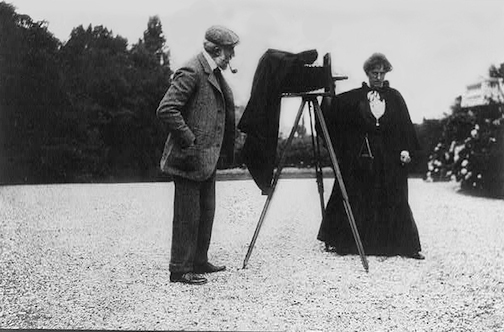
Gertrude Käsebier was a leading member of the pioneering photographic known as Pictorialism, which emphasized a subjective, painterly approach to photography rather than a documentary one.
Though she had long been interested in art, Käsebier only began her formal training at the Pratt Institute after her children entered high school. She planned to be a painter, but eventually switched to photography. Following classes in Paris and apprenticeships with a German photographic chemist, and a Brooklyn portrait photographer, Käsebier opened her own portrait studio in 1897. FROMhttps://nmwa.org/art/artists/gertrude-kasebier/
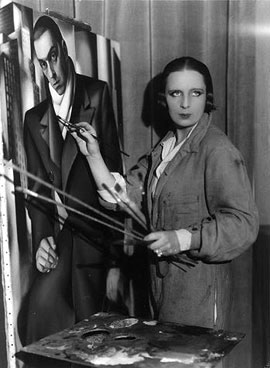
Who was she? De Lempicka shuffled the facts of her biography much as she meddled with her birth date. … Her time was the 1920s: a period of transition, an era in which functionalism merged with fantasy and formal social structures lurched into the frenetic. In essence, De Lempicka was a classicist, having admired Renaissance painting since her adolescent travels in Italy. But she astutely combined traditional portraiture with advertising techniques, photographic lighting, vistas of the tower architecture of great cities. … In 1939, urged by Tamara, who was partly Jewish, Kuffner sold his estates in Hungary and they moved to the US. In New York, she tried abstract expressionism unsuccessfully, and was reduced to the role of a chic curiosity, “the painting baroness”. FROMhttps://www.theguardian.com/artanddesign/2004/may/15/art
This link is to a “collection…of photographs and contact sheets produced by University News Service (now University Communications and Marketing) before, during, and after the May 4, 1970 shootings at Kent State University. The first photographs were taken on April 30 to May 3, 1970. This group consists of a small number of photos. The bulk of the photographs were taken on May 4, 1970. Other photographs include events immediately after the shootings and some annual commemorations.”http://www.library.kent.edu/university-news-service-photographs-may-1-4-1970