~Arts Advocacy Day~

Today, over 500 dedicated arts supporters from 44 states will come together in Washington, DC for the 29th annual Arts Advocacy Day: The National Arts Action Summit, the only national event that brings together a broad cross section of America’s cultural and civic organizations. These arts advocates represent a united effort to tell Capitol Hill how important the arts are to our communities, how much arts education means to our children, and how the arts improve our daily lives.
http://www.artsactionfund.org/about/about-us

2015-AAD-DigitalBanner

Here are the top legislative issues affecting the arts. Read about each and then take action to support their positive outcome.
Arts Education Policy and Funding:Improving Access to Arts Education for All Students
http://www.americansforthearts.org/by-program/reports-and-data/legislation-policy/legislative-issue-center/arts-education-policy-and-funding
Charitable Giving & Tax Reform: 
Encouraging Charitable Gifts and Tax Provisions to Support Community Access to the Arts
http://www.americansforthearts.org/by-program/reports-and-data/legislation-policy/legislative-issue-center/charitable-giving-tax-reform
National Endowment for the Arts: 
Promoting Creativity and Public Access to the Arts
http://www.americansforthearts.org/by-program/reports-and-data/legislation-policy/legislative-issue-center/national-endowment-for-the-arts-funding-for-arts-agencies
Visit the Legislative Issue Center to learn about other legislation impacting the arts
http://www.americansforthearts.org/by-program/reports-and-data/legislation-policy/legislative-issue-center
.

Anthony Caro: March 8, 1924-October 23, 2013

Sir Anthony Caro (1924–2013) played a pivotal role in the development of twentieth-century sculpture. In the early 1960s, he began making brightly painted, abstract steel structures that he positioned directly on the floor, the omission of a pedestal marking a radical shift in the dynamic between work and viewer. In addition to steel, he also produced works in bronze, lead, silver, stoneware, and wood, as well as on paper. Caro’s constant reinvention of the language of abstract sculpture, as well as his influential teaching at St. Martin’s School of Art in London, distinguished him as the successor to artists such as Henry Moore and David Smith, and as an innovative artist in his own right. Resolutely nonfigurative, his sculptures nevertheless operate as analogues for human experience. As art historian Rosalind Krauss has observed, “Caro rendered the human form not as it looked from the outside, but how it felt from the inside, with its relationships subjectively conditioned.”
https://gagosian.com/artists/anthony-caro/


Obituary, NYT~
http://www.nytimes.com/2013/10/25/arts/design/anthony-caro-sculptor-who-discovered-a-path-to-abstraction-dies-at-89.html

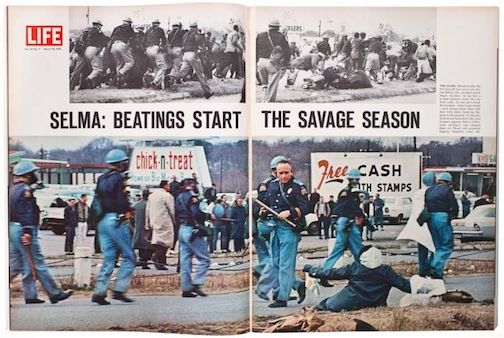
March 7, 1965: Selma to Montgomery Marches begin

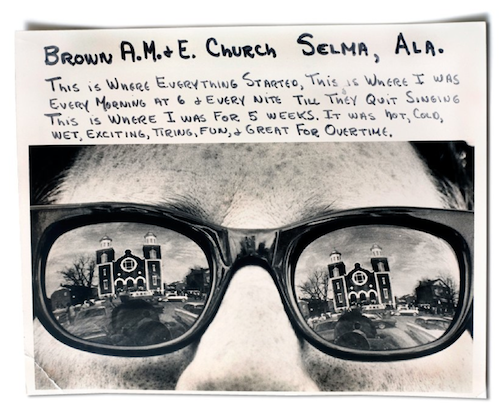
Selma through the camera lens:
https://schristywolfe.com/wp-content/uploads/2015/03/barker.jpg

James Barker
These Rare Photos of the Selma March Place You in the Thick of History. James Barker, a photographer from Alaska, shares his memories of documenting the famed event:
http://www.smithsonianmag.com/history/rare-photos-selma-march-thick-history-180953874/?no-ist

LIFE

Charles Moore, Flip Schulke and Frank Dandridge
How LIFE Magazine Covered the Selma Marches in 1965. Fifty years after nonviolent protesters clashed with Alabama state troopers in Selma:

http://time.com/3720555/selma-bloody-sunday/

smartin

Spider Martin
Photographer Helped Expose Brutality Of Selma’s ‘Bloody Sunday’:
http://www.npr.org/blogs/codeswitch/2015/03/06/390943835/photographer-helped-expose-brutality-of-selmas-bloody-sunday


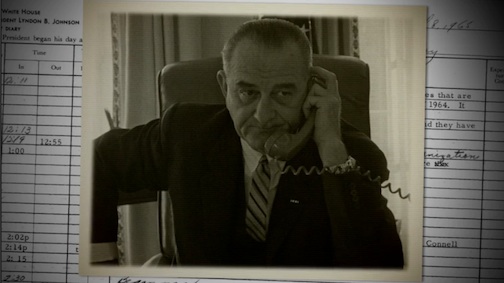
The Atlantic: “What LBJ Really Said About Selma” [click photo]:

lbj

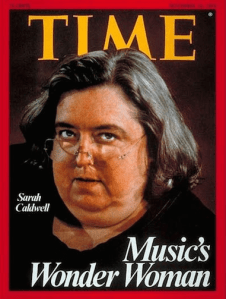
Sarah Caldwell: Born on March 6, 1924

American opera visionary Sarah Caldwell founded the Opera Company of Boston in 1958. The company’s principal prima donna was Beverly Sills, and Placido Domingo was an unknown young tenor when he first sang with the company. Caldwell died on March 23 at the age of 82.
http://www.npr.org/templates/story/story.php?storyId=5311751

sc


Sarah Caldwell, impresario of Boston opera, dead at 82

Biography on Encyclopedia.com

Gioachino Rossini/“Il Barbiere di Siviglia”/Sills, Titus, Gramm, Price, Ramey & Sarah Caldwell/New York City Opera

Discography

Kiri Te Kanawa: Born on March 6, 1944

The internationally famed soprano, Dame Kiri Te Kanawa, was born Claire Mary Teresa Rawstron in the small New Zealand seaside town of Gisborne, where Captain James Cook first made landfall. Just at the edge of the international date line, it prides itself as the first city in the world to greet the sun. Here, the birth child of a native Maori man and a woman of European extraction was adopted at five weeks of age by a local couple, Tom and Nell Te Kanawa, he also a Maori and she with family ties to the British Isles. The Te Kanawas named their daughter Kiri, the Maori word for bell. She was to be their only child.

Her first performances were on a little stage jerry-rigged in the Te Kanawa’s house, complete with a curtain; “the curtains would come back,” she recalled, “and I’d get up and sing.” Without a television in the home, music and singing quickly became the primary entertainment. But although her mom played piano, from early on, Kiri eschewed command performances: “I was rather sort of miffy about it even then. I’d only sing when I felt like it.”

http://www.achievement.org/autodoc/page/tek0bio-1

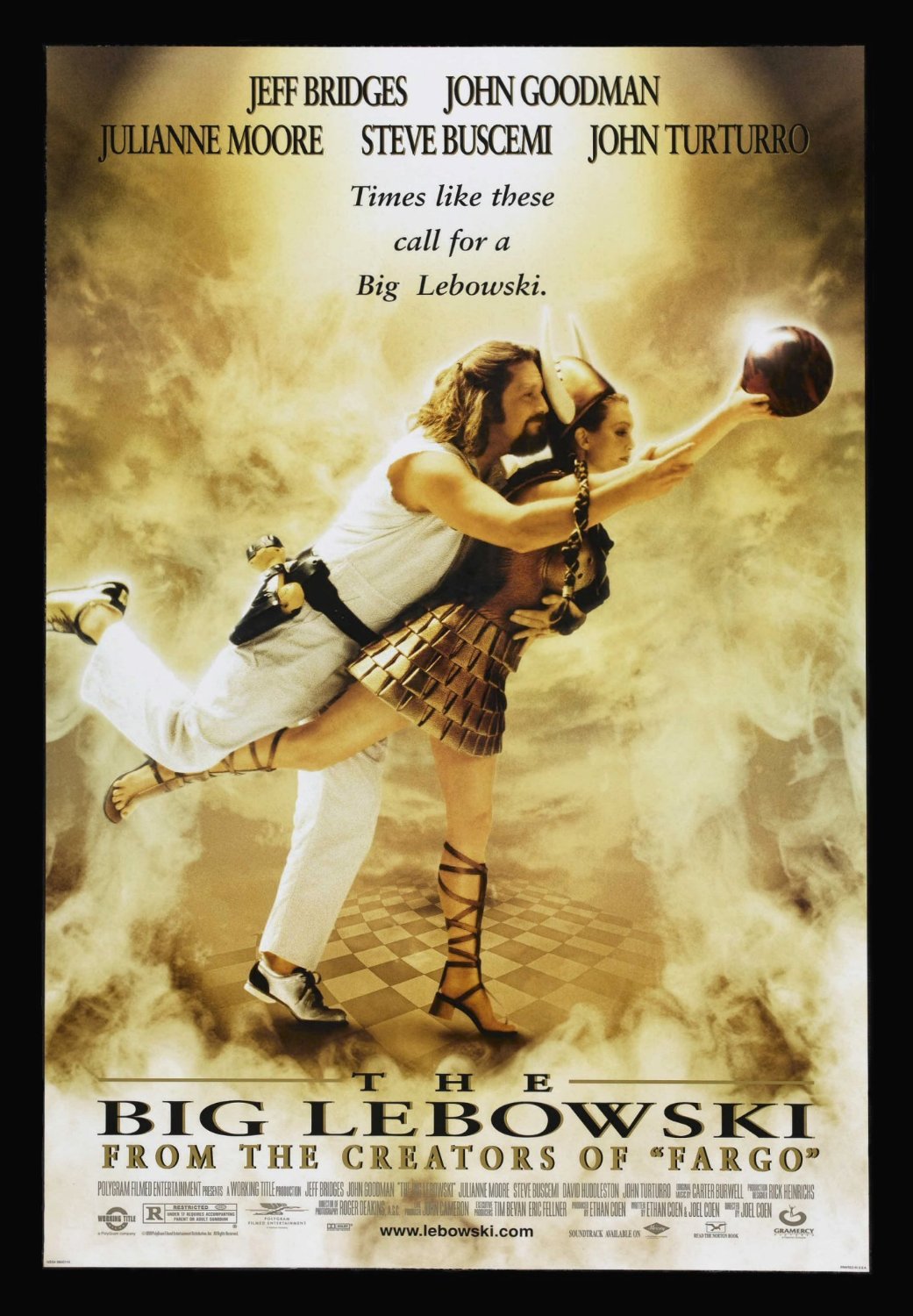
March 6, 1998: “The Big Lebowski” is released

posterThe Big Lebowski, struggled upon release with both audiences and critics, grossing only $17 million at the box office. But over the next decade, it became an object of adoration, inspiring a festival, a religion, and an enormous cult following.
http://www.vulture.com/2016/02/breaking-down-the-coens-box-office-history.html

The best single way to explain its unique appeal is that The Big Lebowski is the only film I know of that is more enjoyable upon second or third, or even fifth or sixth, viewing than the first.
http://www.theatlantic.com/entertainment/archive/2014/09/30-years-of-coens-the-big-lebowski/380220/


Bridges

http://player.pbs.org/viralplayer/1739091116

About the Film


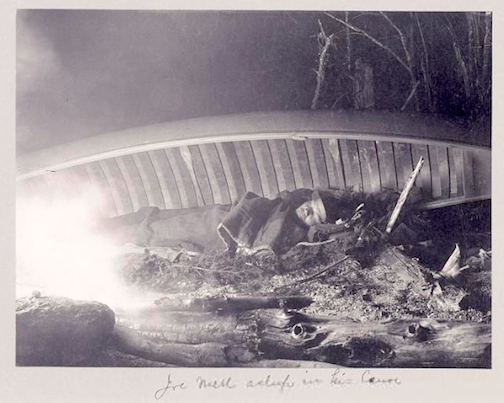
William Lyman Underwood (March 5, 1864-Jan. 24, 1929)

canoe

William Lyman Underwood and his brother Loring (1874–1930) were early leaders in nineteenth-century nature photography. Loring, trained as a horticulturist, focused on the cultivated landscapes of parks and estate gardens, while William preferred the wilderness of northeastern America. A renowned public speaker, William gave more than forty lectures a year about his experiences as “a camera hunter,” accompanied by a lantern slide show of his photographs. This run-of-the-century [sic] entertainment instructed audiences about an environment that Underwood feared was vanishing.
http://americanart.si.edu/collections/search/artist/?id=6755

In 1895, William Lyman Underwood, director of a Massachusetts canned-food bookcompany, came to MIT seeking the help of a scientist–any scientist–who could fix the problem of his smelly canned clams. He went straight to the biology department, asking whether anyone could “suggest a cause and, better still, a remedy.” The department chair passed Underwood off to his assistant, Samuel Cate Prescott, advising the chemist to teach the canner a bit about microbes.

During these experiments, Underwood indulged his passion for photography. The March 1898 Technology Quarterly featured several of his actual-size photographs of petri dishes filled with circular spidery blooms of bacillus–each like a telescopic glance at a pockmarked moon–as well as some strikingly clear slides of microörganisms at 1,000 times their actual size.
https://www.technologyreview.com/s/412221/two-happy-clams/

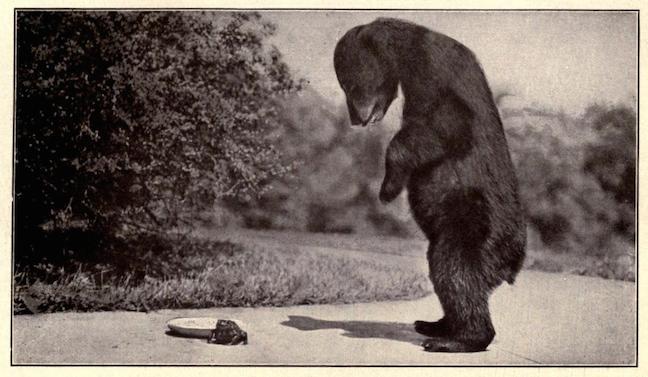
bear“Wild brother; strangest of true stories from the north woods”~
https://archive.org/details/wildbrotherstran00undeiala
Underwood’s Deviled Ham: The Oldest Trademark Still in Use~
http://www.smithsonianmag.com/arts-culture/underwoods-deviled-ham-the-oldest-trademark-still-in-use-119136583/

Howard Pyle: March 5, 1853-November 9, 1911

Today, Howard Pyle is not nearly as well known as his images. However, he was one of America’s most popular illustrators and storytellers at a time when top illustrators were celebrities. At his death, he was designated by the New York Times “the father of American magazine illustration as it is known to-day.” His illustrations appeared in magazines like Harper’s Monthly, Collier’s Weekly, St. Nicholas, and Scribner’s Magazine, gaining him national and international exposure. And because magazines so influenced the nation’s visual culture, Pyle’s images and stories—including American history and tales of pirates and medieval adventurers—reached millions, helping to shape the American imagination.
https://www.delart.org/collections/howard-pyle/about-howard-pyle/

Howard Pyle: Born: March 5, 1853 | Died: November 9, 1911~
https://en.wikipedia.org/wiki/Howard_Pyle

Howard Pyle: 1853–1911
https://americanillustration.org/project/howard-pyle/

This slideshow requires JavaScript.