Joseph Binder: Born March 3, 1898
Born in Vienna and trained as a painter at the Kunstgewerbeschüle, Joseph Binder’s early designs won numerous international competitions that placed his posters in public spaces throughout Europe. A leader in the emerging field of graphic design, Binder felt that posters were “an expression of contemporary civilization reduced to its simplest forms for instantaneous visual communication.”
FROM http://americanart.si.edu/collections/search/artist/?id=418
In 1936 Joseph Binder settled in New York for good and in 1944 became an American citizen.
In his design he focused on the reduction of geometric forms, on color contrasts and the psychological impact of colors. His clients included American Railroads, American Airlines, A&P Iced Coffee, Fortune and Graphis. In 1948 the U.S. Navy made him their art director and designer.
In the 1960s Binder turned away from commercial graphic work and renewed his explorations in graphic works of art in the abstract style.
FROM http://www.aiga.org/medalist-josephbinder#5

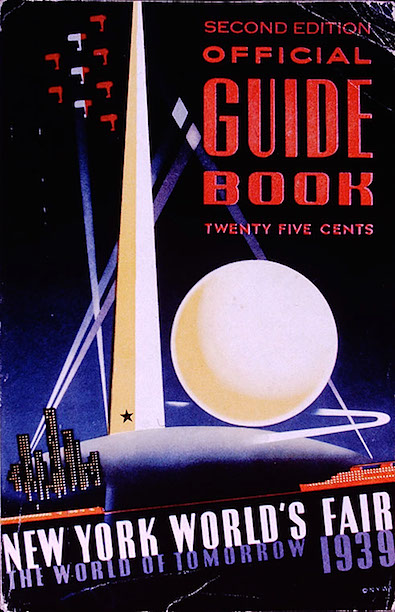
Joseph Binder’s Ships and Planes~
http://www.printmag.com/daily-heller/joseph-binders-ships-and-planes/
Joseph Binder on Artnet~
https://www.artnet.com/artists/joseph-binder/
Desi Arnaz: Born March 2, 1917
>>>>>>>>>> https://www.discogs.com/artist/358904-Desi-Arnaz <<<<<<<<<<
>>>>>>>>>> https://en.wikipedia.org/wiki/Desi_Arnaz <<<<<<<<<<
Glenn Miller: Born March 1, 1904
Miller led one of the most popular and best-remembered dance bands of the swing era. In his lifetime he was seen as an intense, ambitious perfectionist, and his success was built on the precise playing of carefully crafted arrangements, rather than propulsive swing or fine jazz solo improvisation (his only important jazz soloist was Bobby Hackett). He was particularly noted for the device of doubling a melody on saxophone with a clarinet an octave higher. His arrangements were seamless and rich. Paradoxically, however, although he had many hits with sentimental ballads performed by such singers as Ray Eberle and Marion Hutton, it was his swinging riff tunes, for example In the Mood and Tuxedo Junction, which became most famous. In 1943, he published Glenn Miller’s Method for Orchestral Arranging.
http://www.pbs.org/jazz/biography/artist_id_miller_glen.htm
Diana of the Tower by Augustus Saint-Gaudens
Frédéric Chopin: Born March 1, 1810 (?)
Fryderyk Franciszek Chopin…and his family held his date of birth to be 1 March 1810, yet the certificate of baptism signed in the parish church of Brochów is dated 22 February. That discrepancy has still not been entirely resolved, although today it is the date celebrated by Chopin and his family that is more often used. http://en.chopin.nifc.pl/chopin/life/biography/page/1

Harry Belafonte: Born on March 1, 1927
Born March 1, 1927 in poverty-stricken Harlem to first-generation Jamaican immigrants, Belafonte emigrated with his mother back to Jamaica at eight years old, and returned to New York at age thirteen. Midway through high school, he dropped out and enlisted in the Navy. Upon discharge, the young man studied and performed at the Actors Studio (alongside such legends as Tony Curtis and Marlon Brando), Erwin Piscator’s Dramatic Workshop at the New School for Social Research, and The American Negro Theater. A singing role in a theatrical piece led to a string of cabaret engagements, and before long, Belafonte’s success enabled him to secure funding to open his own nightclub. His recording career officially began at the age of 22, in 1949, when he presented himself as a pop singer along the lines of Tony Bennett or Frank Sinatra, but in time he found a more unique niche by delving headfirst into the Library of Congress’s archive of folk song recordings and studying West Indian music. What emerged was a highly unique (and unprecedented) blend of pop, jazz and traditional Caribbean rhythms.
https://www.nytimes.com/search?query=Harry+Belafonte
Harry Belafonte, a supporter of Martin Luther King, Jr., and the civil rights movement, used his celebrity as a beloved entertainer to garner funding for the movement. In her autobiography, Coretta Scott King said of Belafonte, “whenever we got into trouble or when tragedy struck, Harry has always come to our aid, his generous heart wide open” (King, 144-145).
https://kinginstitute.stanford.edu/encyclopedia/belafonte-harold-george-jr
February 29, 1940: Hattie McDaniel wins an Oscar
The 12th Academy Awards ceremony was held on February 29, 1940, at the Ambassador Hotel in Los Angeles, with Bob Hope hosting. Gone With The Wind was nominated for 13 awards and won for Outstanding Production, Directing (Victor Fleming), Actress (Vivien Leigh), Art Direction (Lyle Wheeler), Cinematography
(Color) (Ernest Haller and Ray Rennahan), and Film Editing (Hal Kern and James Newcom). Sidney Howard posthumously received the Writing (Screenplay) award, and production designer William Cameron Menzies received a special award for “outstanding use of color for the enhancement of dramatic mood in the production of Gone With The Wind.” In the Actress in Supporting Role category, Hattie McDaniel made history becoming the first African American to receive an Academy Award.
https://sites.utexas.edu/ransomcentermagazine/2016/02/26/hattie-mcdaniels-landmark-academy-awards-win/
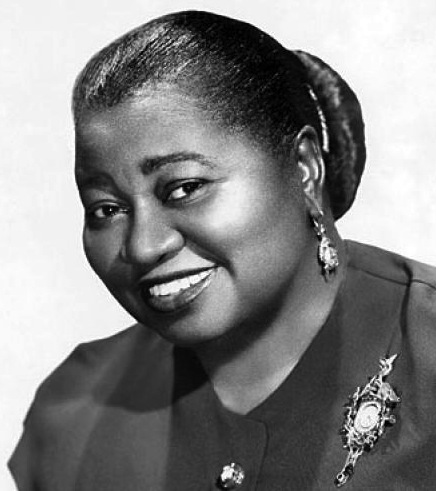
Oscar’s First Black Winner Accepted Her Honor in a Segregated ‘No Blacks’ Hotel in L.A.~
http://www.hollywoodreporter.com/features/oscars-first-black-winner-accepted-774335
The Curious Case Of A Missing Academy Award~
http://www.npr.org/templates/story/story.php?storyId=100937570
February 29~
John Edward Costigan (1888-1972)
https://en.wikipedia.org/wiki/John_Edward_Costigan


Augusta Savage (1892-1962)
http://dos.myflorida.com/cultural/programs/florida-artists-hall-of-fame/augusta-savage/
The Artwork of Nijinsky~
 Source: Art Found Out: “Vaslav Nijinsky – in Raw Vision magazine”
For a short period of time, 1918-19, not long before mental illness completely overtook his life, Vaslav Nijinsky created a small body of drawings and paintings…The largest collection of this Nijinsky’s art is in the collection of the Foundation John Neumeier. Neumeier is a dancer, choreographer, and the director of the Hamburg Ballet.
http://artfoundout.blogspot.com/2014/05/vaslav-nijinsky-unknown-paintings.html
Nijinsky: A Dance with Madness
ARTS ABROAD; At the Altar of Nijinsky, Elusive Firebird and Faun

