Sir John Tenniel: Born February 28, 1820

John_Tenniel

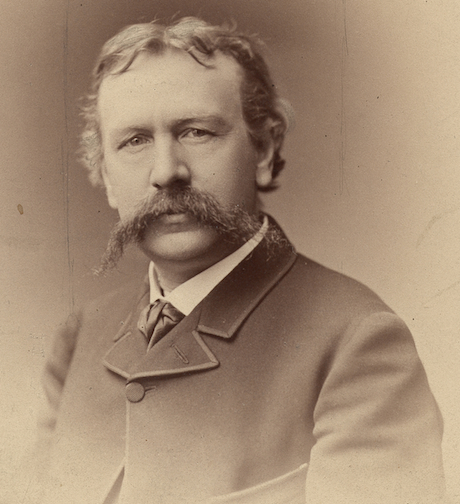
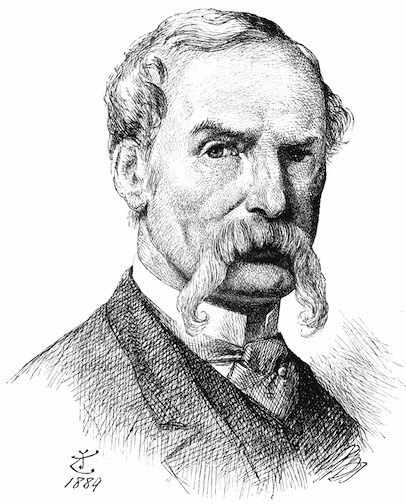
John Tenniel was born in Kensington, London, on 28 February 1820, the youngest son of John Baptist Tenniel, of Huguenot lineage. He was a skilful artist from an early age, and later studied at the Royal Academy Schools, but became dissatisfied with the teaching there, and decided to follow a more independent line…in 1845 he was commissioned to paint a fresco for the House of Lords. He spent a short time in Munich to study the art of fresco in preparation for his mural painting in the House entitled, “Saint Cecilia.”

Continues~ https://illustratorsjournal.wordpress.com/tag/alice-in-wonderland/
allegory

Realising that paintings in oils were unlikely to bring him either fame or fortune, he decided to turn his hand to book illustration…His skill at drawing animals and men in dramatic situations caught the eye of Mark Lemon, editor of Punch, a magazine then in the early stages of establishing itself as a popular Victorian weekly publication of satire and humour. Richard Doyle, one of the key artists associated with the magazine resigned in 1850 leaving a vacancy which, on the suggestion of Douglas Jerrold, was filled by Tenniel. Thus began a lifelong position at the Punch Office culminating in Tenniel becoming the foremost illustrator of its pages.

Continues~ https://illustratorsjournal.wordpress.com/tag/alice-in-wonderland/
Tenniel cartoons for PUNCH:
http://punch.photoshelter.com/gallery/John-Tenniel-Cartoons/G0000JCRWVO.C79Y/
Tenniel illustrations for Alice in Wonderland:
http://commons.wikimedia.org/wiki/Category:John_Tenniel%27s_illustrations_of_Alice%27s_Adventures_in_Wonderland
Tenniel illustrations for Through the Looking-Glass and What Alice Found There:
http://commons.wikimedia.org/wiki/Category:John_Tenniel%27s_illustrations_of_Through_the_Looking-Glass_and_What_Alice_Found_There

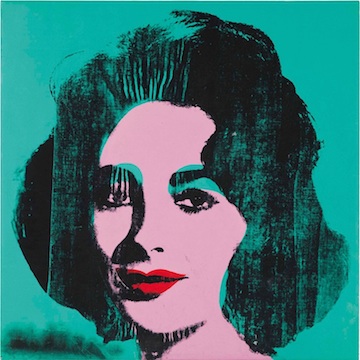
Elizabeth Taylor: Born February 27, 1932

awet

Elizabeth Rosemond Taylor was considered one of the last, if not the last, major star to have come out of the old Hollywood studio system
Biography on IMDb~
http://www.imdb.com/name/nm0000072/bio
Time/LIFE photographs~
news.yahoo.com/elizabeth-taylor-photos-legendary-life-183244564.html
ANDY’S PORTRAITS OF LIZ by Jerry Saltz~
http://www.artnet.com/magazineus/features/saltz/andy-warhols-portraits-of-liz3-24-11.asp
The Elizabeth Taylor AIDS Foundation (ETAF)~ https://elizabethtayloraidsfoundation.org/

Marian Anderson: Born February 27, 1897

Contralto Marian Anderson was born in Philadelphia, Pennsylvania. A variety of sources suggested February 17, 1902, as her birthdate; however, Anderson’s birth certificate, released by her family after her death, listed the date as February 27, 1897. Her father was an ice and coal salesman, and her mother was a former teacher.

Although Anderson had early showed an interest in the violin, she eventually focused on singing. The Black community, recognizing her talent, gave her financial and moral support. She also gained the notice of tenor Roland Hayes, who provided guidance in her developing career.
FROM http://www.afrovoices.com/anderson.html

This slideshow requires JavaScript.

For more images of Marian Anderson, see:
https://www.portrait.gov.au/magazines/64/the-right-note
https://blogs.loc.gov/picturethis/2020/04/marian-anderson-in-performance-a-visual-and-musical-story/

Elihu Vedder: Born February 26, 1836

During the second half of the nineteenth century Elihu Vedder was among the ev1870most imaginative and independent of the American expatriate artists. After studying with the genre painter Tompkins H. Matteson in New York, Vedder traveled to Paris…In 1857 he moved to Florence…Vedder returned to the United States in 1860 and began to establish a reputation for imaginative literary paintings and book illustrations. He became a member of the Tile Club and the Century Association and an intimate of notable artistic and literary circles in New York.
FROM About This Artist~ https://collections.lacma.org/node/167054

Elihu Vedder (1836–1923)~ http://www.questroyalfineart.com/artist/elihu-vedder/
From the Met Collection~ https://bit.ly/3guaUML

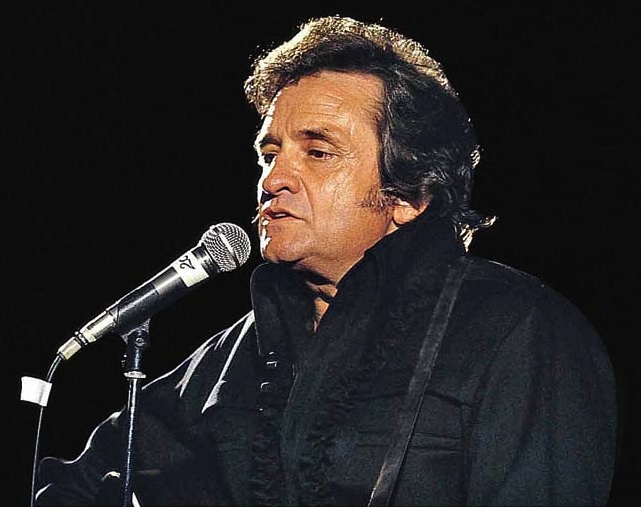
Johnny Cash: Born February 26, 1932

widejohnny

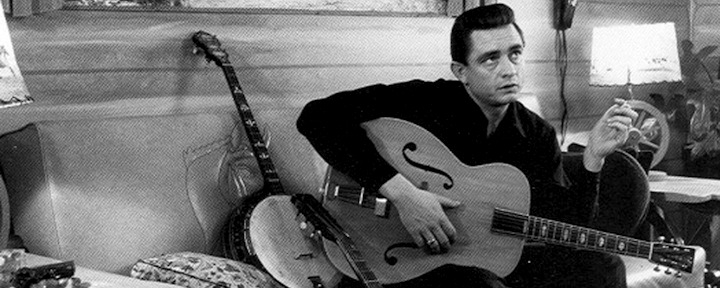
kidjohnnyJohnny Cash was a towering figure in 20th century American music, a minimalist with a booming Old Testament baritone who could wrench an abundance of power from stark settings. At first Cash was backed by guitar and bass; in the end it was simply guitar. But when a voice can tell a story with as much resonance as Cash’s could, not much else is needed.

cashpromo

Cash’s songs – from his early gospel recordings and the resonant outlaw-country of Fifties classics like “Folsom Prison Blues” to late efforts like his unlikely, gut-wrenching cover of Nine Inch Nails’ “Hurt” – influenced not only his fellow country musicians, but also rockers from Bono to Bob Dylan. By turns those songs were laden with pathos, whimsy, regret, hope, lust, and fury; they always cut to the heart of its subject matter, whether it be God, love or the plight of prisoners and Native Americans. Cash led a tumultuous life, battling drug addiction, chaffing against orthodoxy, and doing things his own way. But by the end The Man in Black became an icon, a man who earns almost universal respect among music fans.
FROM http://www.rollingstone.com/music/artists/johnny-cash/biographyDR1001_Johnny_CASH_P

oldcash

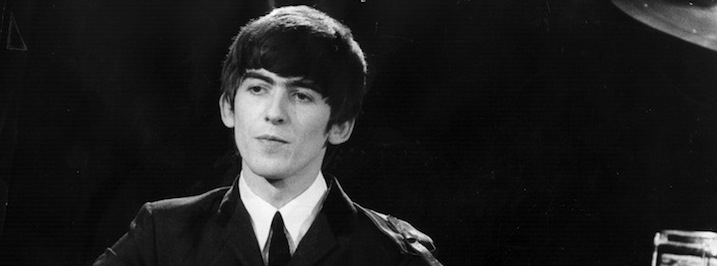
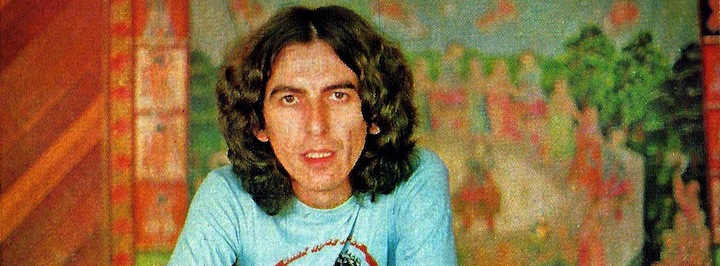
George Harrison: Born on February 25, 1943

George Harrison

georgewguitarAs a songwriter, Harrison was continually out-gunned by Lennon-McCartney. The intense trio of songs he contributed to Revolver — “Taxman,” “I Want to Tell You,” and “Love You To” — would be his most significant contribution to a single Beatles album. He had other classics to his credit, including “Here Comes the Sun” and “Something,” his first Beatles A-side, a track which would top the charts in America. (Both came off 1969’s Abbey Road) But Harrison also funneled his creativity into the guitar, a suitably introspective pursuit. From his raw, early rock-and-roll influences he extrapolated a wide-ranging and poetic style. In the late sixties, he helped introduce the slide guitar to prominence; he also popularized the 12-string Rickenbacker guitar and its ultra-distinctive sound on 1964’s A Hard Day’s Night.
FROM https://www.rollingstone.com/results/#?q=george%20harrisongeorge

georgeintee

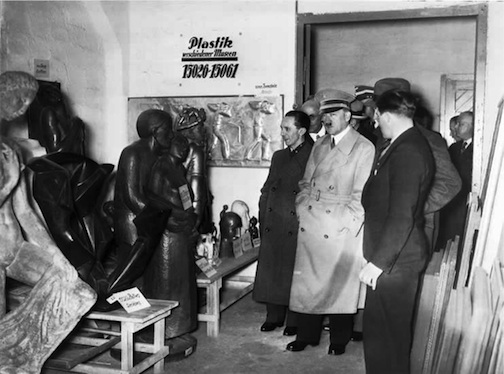
“The art Hitler hated.”

hitler

I have observed among the pictures submitted here quite a few paintings which make one actually come to the conclusion that the eye shows things differently to certain human beings than the way they really are, that is, that there really are men who see the present population of our nation only as rotten cretins; who, on principle, see meadows blue, skies green, clouds sulphur yellow, and so on—or, as they say, experience them as such. I do not want to enter into an argument here about the question of whether the persons concerned really do or do not see or feel in such a way, but in the name of the German people, I want to forbid these pitiful misfortunates who quite obviously suffer from an eye disease, to try vehemently to foist these products of their misinterpretation upon the age we live in, or even to wish to present them as “Art.”   ~Adolph Hitler, 1937
http://laphamsquarterly.org/arts-letters/artifactitious-stammerings

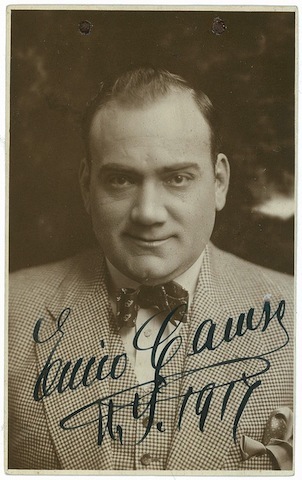
Enrico Caruso: Born February 25, 1873

‘The Great Caruso’ or ‘King of Tenors’ was born in Naples in 1873. He was his parents’ 18th child and the first to survive infancy. Music was his escape from the wretched reality that surrounded him. He sang in Neapolitan cafes and restaurants. By 1895 he was singing leading roles at the Opera House in Naples. From there he went to the major Italian opera houses and then became an international star. ‘Who has sent you to me? God?’ exclaimed Puccini on first hearing him sing.
FROM http://www.vam.ac.uk/content/articles/e/enrico-caruso/caruso

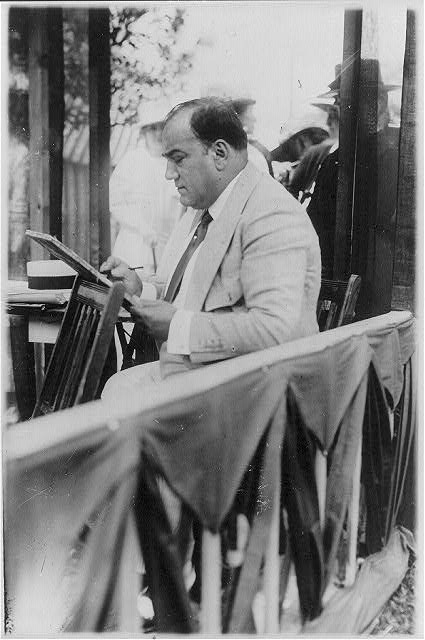
Below: Enrico Caruso drawing caricature sketches in booth at charity fair in Southampton, L.I.~
https://www.loc.gov/item/2005680287/

sketching.jpg

Caruso was a compulsive caricaturist who made spontaneous and witty sketches of colleagues and strangers wherever he went. His doodles often captured a candid likeness of the person, but they were never cruel.

Although he was proud of his sketches, he turned down offers to draw professionally. However, he did regularly contribute to an Italian-American newspaper called La Follia di New York, from which a book of drawings was eventually produced. Nowadays his cartoons are extremely collectable. One firm even reproduced one of his self caricatures as a powder compact.
FROM http://www.vam.ac.uk/content/articles/e/enrico-caruso/

Drawings by Enrico Caruso~
https://commons.wikimedia.org/wiki/Category:Drawings_by_Enrico_Caruso