Peter Blake: Born June 25, 1932

Peter graduated from the RCA in 1956 having also completed his National Service. He received the Leverhulme Research Award to study popular art whilst travelling Europe and went on to teach for several years at various London Art Schools, all the while working and exhibiting. His first solo show was held in the Portal Gallery in 1962 and since the early 70s his work has regularly been exhibited in one-man shows and retrospectives around the world. In 1981 he was elected a member of the Royal Academy and in 1994 was made the Third Associate Artist of the National Gallery. He was Knighted in 2002.
Sir Peter Blake | Illustrators | Central Illustration Agency
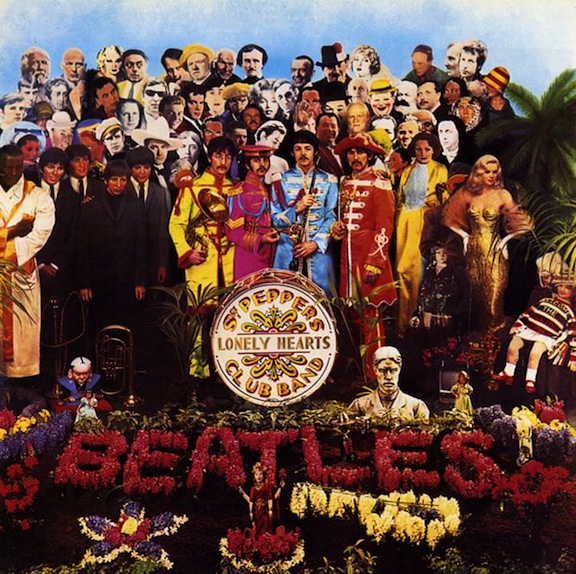
SPLHCB

The Beatles’ Sgt. Pepper’s Lonely Hearts Club Band, released by EMI Records in 1967, is arguably the most famous album sleeve of all time. The image on the album cover is composed of a collage of celebrities. There are 88 figures, including the band members themselves. Pop artist Peter Blake and his wife Jann Haworth conceived and constructed the set, including all the life-sized cut-outs of historical figures. The set was photographed, with the Beatles standing in the centre, by Michael Cooper. Copyright was a problem as Brian Epstein, the Beatles’ manager, had to locate each person in order to get permission to use their image in this context.

Maurice Sendak: Born June 10, 1928

Dubbed by one critic “the Picasso of children’s literature” and once addressed by former President Bill Clinton as “the King of Dreams,” Maurice Sendak illustrated nearly a hundred picture books throughout a career that spanned more than 60 years. Some of his best known books include Chicken Soup with Rice (1962), Where the Wild Things Are (1963), and In the Night Kitchen (1970). Born in Brooklyn in 1928 to Jewish immigrant parents from northern Poland, Sendak grew up idolizing the storytelling abilities of his father, Philip, and his big brother, Jack. As a child he illustrated his first stories on shirt cardboard provided by his tailor-father. Aside from a few night classes in art after graduating high school, Sendak was a largely self-taught artist.
FROM http://www.rosenbach.org/maurice-sendak-biography-and-timeline

Classical Music Fueled Maurice Sendak’s Creative Muse~
https://www.wqxr.org/story/207545-classical-music-fueled-maurice-sendak-muse/

This slideshow requires JavaScript.

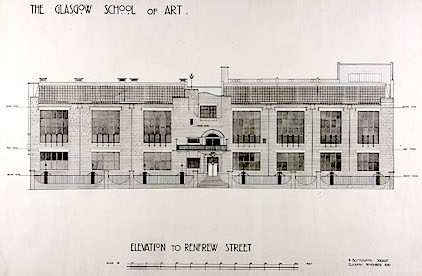
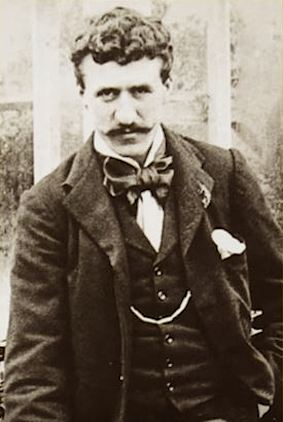
Charles Rennie Mackintosh~ Born June 7, 1868

Charles Rennie Mackintosh (7 June 1868-10 December 1928) “was a Scottish architect, designer, water colourist and artist. He was a designer in the Post-Impressionist movement and also the main representative of Art Nouveau in the United Kingdom. He had considerable influence on European design. He was born in Glasgow…”
FROM https://alchetron.com/Charles-Rennie-Mackintosh-1221200-W

“Mackintosh was apprenticed to a local architect John Hutchison, but in 1889 he transferred to the larger, more established city practice of Honeyman and Keppie.

To complement his architectural apprenticeship, Mackintosh enrolled for evening classes at the Glasgow School of Art where he pursued various drawing programmes.”
FROM https://www.crmsociety.com/about-mackintosh/charles-rennie-mackintosh/

“The majority of Mackintosh’s architectural practice was supported by his wife Margaret Macdonald with whom he had studied at the Glasgow School of Art. Her mind was often responsible for the artistic flourish that became so integral to the aforementioned Mackintosh Rose motif. In his time as a professional architect, Mackintosh worked with his wife to design buildings ranging in use from residential, to commercial and religious.”
FROM https://www.archdaily.com/639483/spotlight-charles-rennie-mackintosh

“Despite success in Europe and the support of clients such as Blackie and Cranston, Mackintosh’s work met with considerable indifference at home and his career soon declined. Few private clients were sufficiently sympathetic to want his ‘total design’ of house and interior.

A move to the South of France in 1923 signalled the end of Mackintosh’s three-dimensional career and the last years of his life were spent painting. He died in London on 10 December 1928.”
FROM https://gsaarchives.net/collections/charles-rennie-mackintosh/

Design Museum~ https://designmuseum.org/designers/charles-rennie-mackintosh#toggle-submenu
Charles Rennie Mackintosh Society~ https://www.crmsociety.com/


Muhammad Ali RIP Champ

sallyedelstein's avatarEnvisioning The American Dream

Muhammad Ali Esquire Esquire magazine 1968 Art Director George Lois

R.I.P. Muhammad Ali – we lost a legend, a champion and an inspiration.

George Lois’s powerful Esquire cover in April 1968 of the great Muhammad Ali posing as the martyr Saint Sebastian was one of the most iconic images of the decade, dramatizing the boxing greats persecution of his beliefs concerning Vietnam, race and religion.

One of the greatest magazine covers ever….of one of the greatest.

View original post

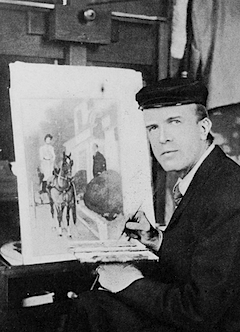
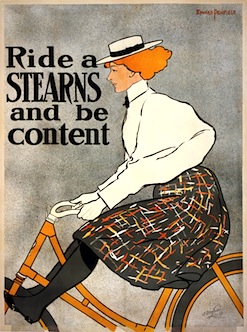
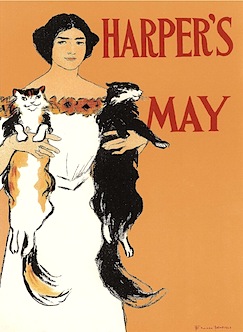
Edward Penfield: Born June 2, 1866

epportraitBicycleCatseptoo

“What many do not realize is that Penfield’s Harpers years account for less than a third of his thirty-four year career. During the decade after his self-retirement from Harper and Brothers, his freelance work was seen by millions of people on hundreds of magazine covers and advertisements.

Not a boisterous self-promoter like some of his contemporaries — he rarely gave personal interviews — Penfield preferred to live a quiet life near his ancestral stomping grounds in New York. But at the same time he was considered “that rare person among artists, an active citizen.” He volunteered for civic duties, spoke at womens’ clubs, taught at the Art Students’s League and served as president of the Society of Illustrators.

More than a poster artist, Edward Penfield was an illustrator, art editor, graphic designer, writer, painter, educator and mentor — an American Master.” FROM https://edwardpenfield.com/introduction/

Google Arts: https://artsandculture.google.com/entity/edward-penfield/m09rt2r_?categoryId=artist&hl=en
Edward Penfield posters~ https://digitalcollections.nypl.org/collections/posters-by-edward-penfield#/?tab=about
eptopper

Herbert Bayer: Born April 5, 1900

HerbertBayerStadelwand1936© M.T. Abraham Center© M.T. Abraham Center – Provided by copyright owner of both photograph and artwork, CC BY 3.0
https://commons.wikimedia.org/w/index.php?curid=24556654

Herbert Bayer (1900-1985) is one of the individuals most closely identified with the famous Bauhaus program in Weimar, Germany. Together with Walter Gropius, Laszlo Moholy-Nagy, and Wassily Kandinsky, Bayer helped shape a philosophy of functional design that extended across disciplines ranging from architecture to typography and graphic design. Endowed with enormous talent and energy, Bayer went on to produce an impressive body of work, including freelance graphics commissions, Modernist exhibition design, corporate identity programs, and architecture and environmental design…Though Bayer came to the Bauhaus as a student, he stayed on to become one of its most prominent faculty members.
FROM https://library.rit.edu/gda/designers/herbert-bayer

Collection at MoMA~ http://www.moma.org/collection/artists/399
New York Times Obituary~
http://www.nytimes.com/1985/10/01/arts/herbert-bayer-85-a-designer-and-artist-of-bauhaus-school.html

This slideshow requires JavaScript.

Jan Tschichold: Born April 2, 1902


TSCHICHOLD, JAN 1963 © ERLING MANDELMANNBy 1945, Tschichold had gained fame in the typographic world for the books he designed, as well as those he wrote, altogether an impressive list. His beautiful work and impeccable craftsmanship made him the logical choice when Allen Lane wanted somebody to develop an orderly system of design for his Penguin Books.


Tschichold combined a series of grids with a set of rules of composition and forced their acceptance by a reluctant, sometimes rebellious, printing craft. His perseverance served to inspire tremendous improvement in the quality of all British books, as his techniques were admired and imitated.

FROM https://www.oneclub.org/adc-hall-of-fame/-bio/jan-tschichold

http://www.theguardian.com/artanddesign/2008/dec/05/jan-tschichold-typography
http://www.theguardian.com/culture/gallery/2008/dec/05/design

Joseph Binder: Born March 3, 1898

binder

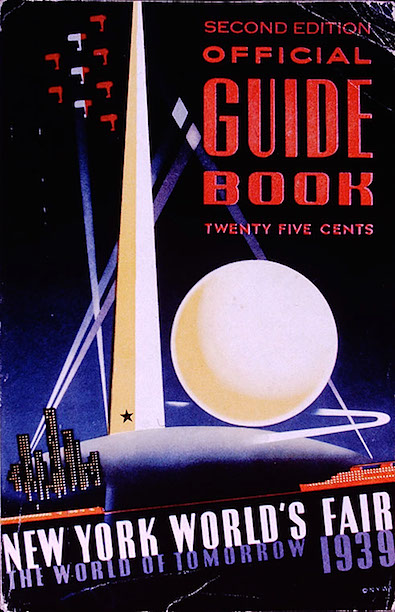
Born in Vienna and trained as a painter at the Kunstgewerbeschüle, Joseph Binder’s early designs won numerous international competitions that placed his posters in public spaces throughout Europe. A leader in the emerging field of graphic design, Binder felt that posters were “an expression of contemporary civilization reduced to its simplest forms for instantaneous visual communication.”
FROM http://americanart.si.edu/collections/search/artist/?id=418

nywf

In 1936 Joseph Binder settled in New York for good and in 1944 became an American citizen.
In his design he focused on the reduction of geometric forms, on color contrasts and the psychological impact of colors. His clients included American Railroads, American Airlines, A&P Iced Coffee, Fortune and Graphis. In 1948 the U.S. Navy made him their art director and designer.
In the 1960s Binder turned away from commercial graphic work and renewed his explorations in graphic works of art in the abstract style.
FROM http://www.aiga.org/medalist-josephbinder#5

Joseph Binder’s Ships and Planes~
http://www.printmag.com/daily-heller/joseph-binders-ships-and-planes/
Joseph Binder on Artnet~
https://www.artnet.com/artists/joseph-binder/

The White Album Cover

Richard Hamilton* discusses designing the White Album

In one of Richard Hamilton’s last filmed interviews, he tells the story of how he designed the Beatles White Album cover

The Beatles record label, EMI had concerns, but Paul McCartney, who commissioned Richard Hamilton to design the cover, persuaded EMI to allow the design to go ahead. Together with Paul McCartney, they decided that the next Beatles cover should be the total opposite of the Sgt. Pepper’s design…

White Album


*Richard Hamilton (February 24, 1922 – September 13, 2011) was an English painter and collage artist.


The White Album: How Richard Hamilton Brought Conceptual Art to the Beatles
https://www.sothebys.com/en/articles/the-white-album-how-richard-hamilton-brought-conceptual-art-to-the-beatles