March 1~ Women’s History Month in visual arts


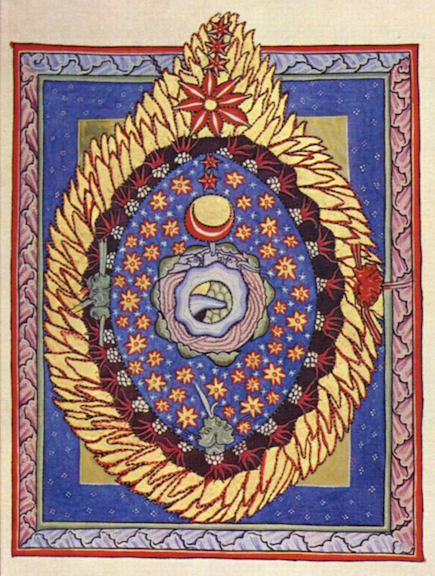
Illuminations in “Scivias” Hildegard von Bingen (1098-1179)
German abbess, writer, composer, mystic, and perhaps artist; it is unclear how involved she was in the illustrations
https://www.wikiart.org/en/hildegard-of-bingen

Das Weltall (The Universe) / c.1165 / Manuscript illumination from “Scivias” by Hildegard of Bingen


Herrad von Landsberg (c.1130-1195)
Alsatian abbess, artist, author, poet, composer, and educator
https://www.wikiart.org/en/herrad-of-landsberg

Hell / c.1180 / Colored pen and ink drawing on paper, original no longer available

I Want To Hold Your Hand

February 1, 1964 was the day that a Beatles song hit Number One for the first time in the USA. The song was “I Want To Hold Your Hand”. The Beatles flew into JFK on February 7 and made their first appearance on Ed Sullivan two days later. And we all had a gear time!

https://www.rockhall.com/inductees/beatles
http://www.rollingstone.com/music/lists/100-greatest-beatles-songs-20110919/i-want-to-hold-your-hand-19691231

Jackie Robinson: January 31, 1919 – October 24, 1972

robinsonLIFE With Jackie Robinson: Rare and Classic Photos of an American Icon

When Jack Roosevelt Robinson stepped onto Brooklyn’s Ebbets Field on April 15, 1947, he not only changed the face of professional baseball in America. In ways subtle and profound — ways that have been debated, dissected and celebrated in books, films, popular songs, academic circles and casual conversations in the long decades since — he changed the nation itself.

Here, LIFE.com offers a selection of both classic and, in some cases, rare pictures that paint a portrait of a man whose dignity, competitive fire and grace under pressure set him indelibly and inevitably apart from his peers and his rivals.

http://time.com/3813840/life-with-jackie-robinson-rare-and-classic-photos-of-an-american-icon/

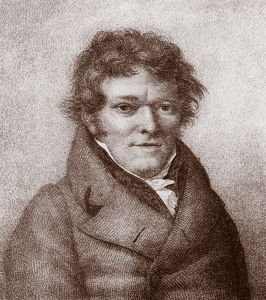
Alois Senefelder: Born November 6, 1771

senefelderAlois Senefelder (1771-1834) was an Austrian actor and playwright who invented the printing technique of lithography in 1798. Born Aloys Johann Nepomuk Franz Senefelder in Prague where his actor father was appearing on stage. He was educated in Munich and won a scholarship to study law at Ingolstadt. The death of his father in 1791 forced him to leave his studies to support his mother and eight siblings, and he became an actor and wrote a successful play Connoisseur of Girls.
Problems with the printing of his play Mathilde von Altenstein caused him to fall into debt, and unable to afford to publish a new play he had written, Senefelder experimented with a novel etching technique using a greasy, acid resistant ink as a resist on a smooth fine-grained stone of Solnhofen limestone. He then discovered that this could be extended to allow printing from the flat surface of the stone alone, the first planographic process in printing. He joined with the André family of music publishers and gradually brought his technique into a workable form, perfecting both the chemical processes and the special form of printing press required for using the stones. He called it “stone printing” or “chemical printing”, but the French name “lithography” became more widely adopted.
FROM http://www.radio.cz/en/static/inventors/senefelderLithographic-Press
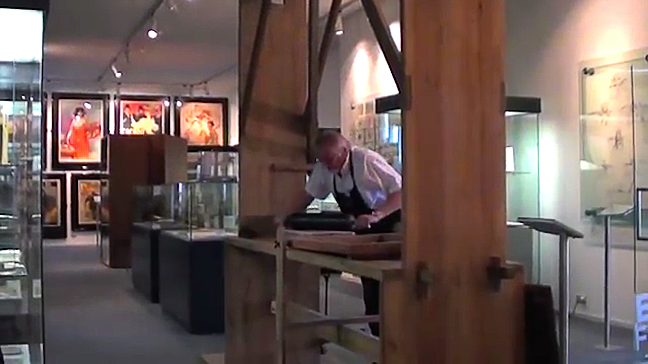
Lithography is a printing technique that gives multiple reproductions of an image drawn with ink or crayon on a certain type of limestone. The image must be prepared with a chemical process so that the grease contained in the ink or crayon (both being specially made for lithographic work) becomes permanently fixed to the stone. When the naturally absorbant stone is wetted before printing the lithographic ink will be retained in all areas containing grease and repelled in all other areas. The characteristic of this printing technique lies in the fact that the image area and the non-image area react differently to the presence of ink.
FROM http://www.polymetaal.nl/beguin/mapl/lithography/lithodefinition.htm

Alois Senefelder Invents & Develops Lithography (1796 – 1819)
What is Lithography?

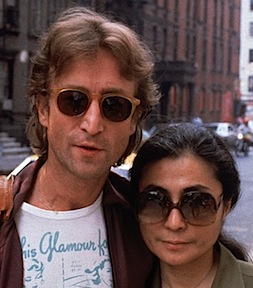
John Lennon: Born October 9, 1940


Topper

NigelHe was born John Winston Lennon on October 9, 1940. Like the other three Beatles, Lennon grew up in a working-class family in Liverpool. His parents, Julia and Fred, separated before he was two (Lennon saw his father only twice in the next 20 years), and Lennon went to live with his mother’s sister Mimi Smith; when Lennon was 17 his mother was killed by a bus. He attendedwCynthia Liverpool’s Dovedale Primary School and later the Quarry Bank High School, which supplied the name for his first band, a skiffle group called the Quarrymen, which he started in 1955.
FROM https://www.rollingstone.com/music/

BedPeaceJohn Lennon didn’t invent rock and roll, nor did he embody it as toweringly as figures like Elvis Presley and Little Richard, but he did more than anyone else to shake it up, move it forward and instill it with a conscience. As the most daring and outspoken of the four Beatles, he helped shape the agenda of the Sixties – socially and politically, no less than musically. As a solo artist, he made musicjandy that alternately disturbed and soothed, provoked and sought community. As a human being, he served as an exemplar of honesty in his art and life.
FROM https://www.rockhall.com/inductees/john-lennon

John Lennon’s first Rolling Stone interview~ http://www.rollingstone.com/music/news/john-lennon-1970-jann-wenner-rolling-stone-interview-w481395
John Lennon’s final interview~
http://www.openculture.com/2015/03/hear-john-lennons-final-interview-taped-on-the-day-of-his-death.html

Transcript~ http://www.beatlesarchive.net/john-lennons-last-interview-december-8-1980.html

JohnandYokoBottom

Alfred A. Knopf, Sr: Born September 12, 1892

Alfred Abraham Knopf Sr. (September 12, 1892-August 11, 1984) was an American publisher of the 20th century, and founder of Alfred A. Knopf, Inc. His contemporaries included the likes of Bennett Cerf and Donald Klopfer, and (of the previous generation) Frank Nelson Doubleday, J. Henry Harper and Henry Holt. Knopf paid special attention to the quality of printing, binding, and design in his books, and earned a reputation as a purist in both content and presentation.
FROM https://en.wikipedia.org/wiki/Alfred_A._Knopf_Sr.

Asked how to say his name, Knopf told the Literary Digest:
“Sound the k: k’nupf.”

Obituary in New York Times~
http://www.nytimes.com/1984/08/12/obituaries/alfred-a-knopf-91-is-dead-founder-of-publishing-house.html
The history of the house of Knopf~
http://www.randomhouse.com/knopf/about/index.html

“Capturing a City’s Emotion in the Days After 9/11”

nyt

By James Estrin Sep. 7, 2016
Nina Berman photographed the aftermath of the attacks on the World Trade Center on Sept. 11, 2001. Later she put some of those images together in diptychs and triptychs.
Ms. Berman lives in New York and is a member of the photographer-owned photo agency Noor. She spoke with James Estrin about her post-Sept. 11 work as well as her projects “Purple Hearts — Back From Iraq” (Trolley, 2004) and “Homeland” (Trolley, 2008). Their conversation has been edited for brevity and clarity.

Read more: Continue reading