Anne Frank: Born June 12, 1929

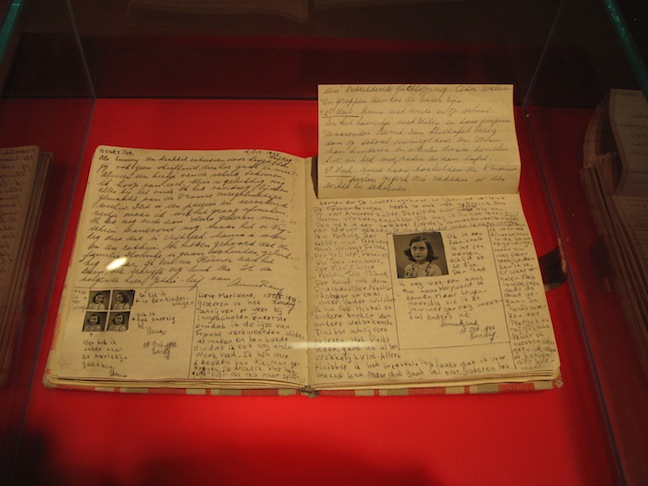
Anne_Frank_Diary_at_Anne_Frank_Museum_in_Berlin-pages-92-93Photograph: Anne_Frank_Diary_at_Anne_Frank_Museum_in_Berlin-pages-92-93.jpg
Source: http://www.heatheronhertravels.com/inspired-by-the-anne-frank-museum-in-berlin/

hoopSince it was first published in 1947, Anne Frank’s diary has become one of the most powerful memoirs of the Holocaust. Its message of courage and hope in the face of adversity has reached millions. The diary has been translated into 67 languages with over 30 million copies sold. Anne Frank’s story is especially meaningful to young people today. For many she is their first, if not their only exposure to the history of the Holocaust. https://annefrank.com/about-afc/about-anne-frank/
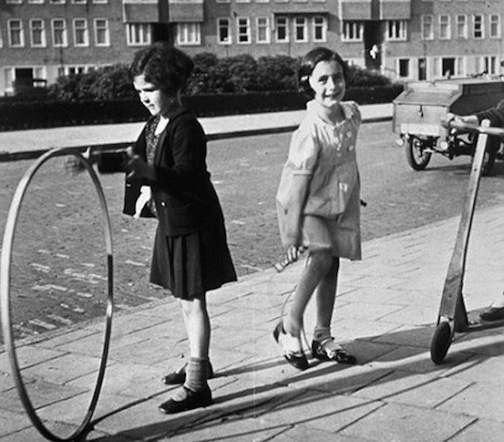
© Anne Frank Haus / Anne Frank Fonds

© Anne Frank Haus / Anne Frank Fonds

Anne Frank and Her Family~ http://www.holocaustresearchproject.org/nazioccupation/annefrank.html

The Secret Annex Online~ http://www.annefrank.org/en/Subsites/Home/Enter-the-3D-house/#/house/20/help/

Muhammad Ali RIP Champ

sallyedelstein's avatarEnvisioning The American Dream

Muhammad Ali Esquire Esquire magazine 1968 Art Director George Lois

R.I.P. Muhammad Ali – we lost a legend, a champion and an inspiration.

George Lois’s powerful Esquire cover in April 1968 of the great Muhammad Ali posing as the martyr Saint Sebastian was one of the most iconic images of the decade, dramatizing the boxing greats persecution of his beliefs concerning Vietnam, race and religion.

One of the greatest magazine covers ever….of one of the greatest.

View original post

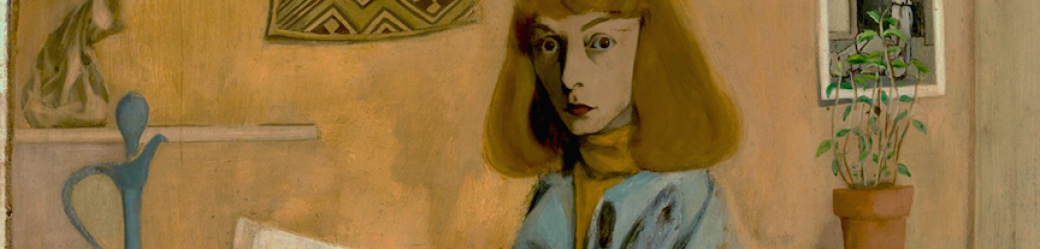
Walter Richard Sickert: Born May 31, 1860

Persuasion

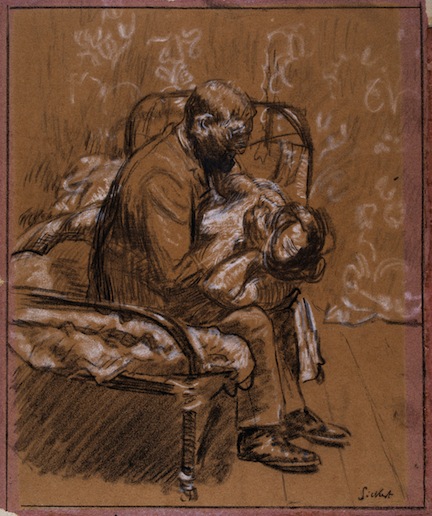
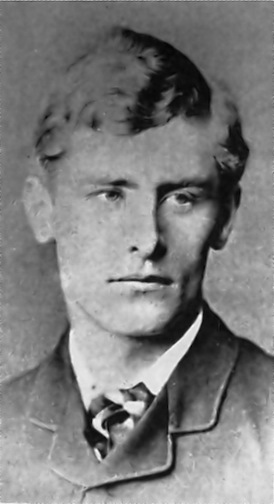
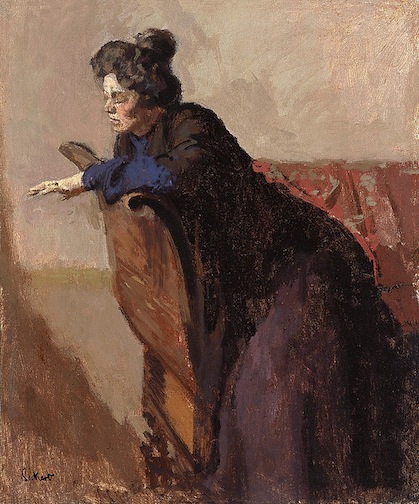
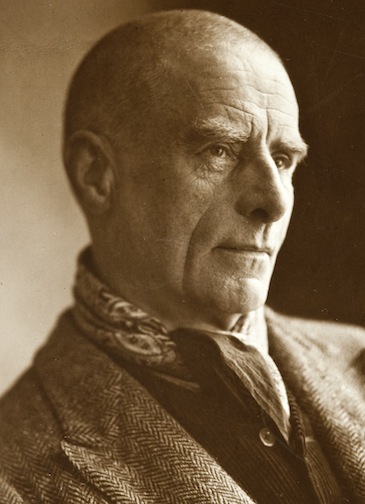
Sickert1Unlike the majority of the Camden Town Group, Walter Richard Sickert was recognised during his own lifetime as an important artist, and in the years since his death has increasingly gained a reputation as one of the most influential figures in twentieth-century British art…His art, like his personality, is multifaceted, complex and compelling.

The twenty-first century has seen a sustained period of Sickert research and exhibitions,TheRing crystallising his reputation as one of the most significant British artists of the early modern period.
FROM http://www.tate.org.uk/art/research-publications/camden-town-group/walter-richard-sickert-r1105345

Sickert2The most popular and famous theory as to the identity of Jack the Ripper…was first posited by author Stephen Knight in the 1970s.

He claimed the Ripper’s victims were really killed to cover up a scandalous secret marriage between the Queen’s son Prince Albert Victor, then second in line to the throne, and a Catholic prostitute named Annie Elizabeth Crook, who bore Albert’s child.

Knight got much of his information from Joseph Gorman-Sickert, who claimed to be the illegitimate son of painter Walter Sickert, himself a Ripper suspect.
FROM http://theunredacted.com/jack-the-ripper-the-royal-conspiracy/

Top 10 Stupidest/Weirdest Jack the Ripper theories~ http://swallowingthecamel.me/2013/11/10/top-10-stupidestweirdest-jack-the-ripper-theories/

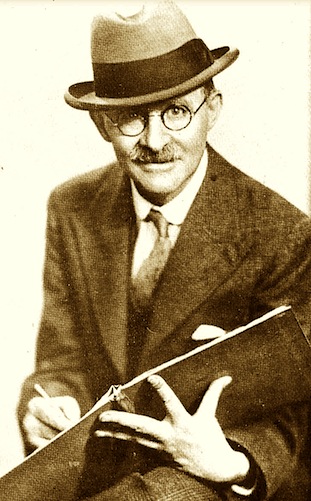
W. Heath Robinson: Born May 31, 1872

RobinsonRobinson was born into a family of artists in 1872. His father, grandfather and uncle all made their livings through art, via drawing or engraving. Robinson was educated at Islington Art School and the Royal Academy. He illustrated dozens of books, from famous works like Donoutdoors Quixote and A Midsummer Night’s Dream to lesser-known volumes such as The Incredible Adventures of Professor Branestawm and Plantation Barn Dance.
FROM http://www.abebooks.com/books/illustration-art-uncle-lubin-william/w-heath-robinson.shtml

…in World War Two the machine created by British code breakers at Bletchley Park, the golfdriverspredecessor to the world’s first computer Colossus, was nicknamed Heath Robinson. It consisted of reels and spools, which had to be precisely aligned and timed in order for it to work.
FROM http://www.bbc.com/news/magazine-27813927

waterFor his own pleasure, he continued to paint in watercolours, experimenting with effects of light and colour. His importance, as an innovator in the fields of illustration and advertising, and perhaps more importantly as the heir of Rowlandson and Cruikshank in the British humorous tradition, has yet to be fully appreciated, and his work is poorly represented in public collections.
FROM http://heathrobinson.org/robinson/index.htm

Benny Goodman: Born May 30, 1909

AlbumCover

YoungBGBefore he was in his teens, Goodman had begun performing in public…Goodman’s precocious talent allowed him to become a member of the American Federation of Musicians at the age of 14 and that same year he played with Bix Beiderbecke. By his mid-teens Goodman was already established as a leading musician, working on numerous engagements with many bands to the detriment of his formal education.
FROM http://biography.just-the-swing.com/benny-goodmanOrchestra

The second band that he formed (in 1934) got a job at Billy Rose’s Music Hall. This band made some great recordings and began appearing on the 3-hour NBC radio program called “Let’s Dance.”

After this, the Benny Goodman Orchestra began touring (with not so fantastic results) until August 21, 1935, when the Benny Goodman Orchestra opened in the Palomar Ballroom in Los Angeles. After playing a few dance tunes, he told the band to play some Fletcher Henderson arrangements. The mostly young crowd promptly started something of a riot. After this public approval of the music – this thing called “Swing” – there was no looking back!
FROM http://www.touchoftonga.com/DavidMulliss/benny-goodman.html

OlderBGBenny did for clarinet what Louis Armstrong had done for the trumpet.  He gave it a newly assertive leadership role in the jazz ensemble.
FROM http://jazzhotbigstep.com/45801.html

Benny Goodman Discography: http://www.discogs.com/artist/254768-Benny-Goodman

Bill “Bojangles” Robinson: Born May 25, 1878

“Bill “Bojangles” Robinson (May 25, 1878-November 25, 1949), was a pioneer and pre-eminent African-American tap dance performer since his childhood.”
https://www.harlemworldmagazine.com/bill-bojangles-robinson/

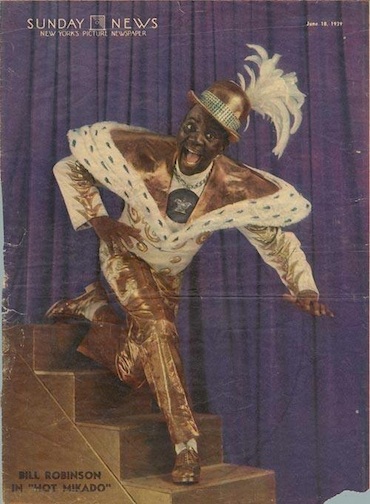
SundayNews

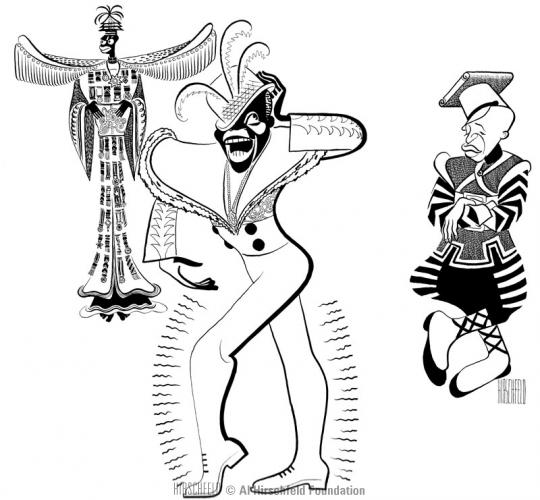
“The Hot Mikado,” starring Bill “Bojangles” Robinson, was a big Broadway hit. It was noted for its wild costuming and all black cast. It ran at the Broadhurst Theater, in Manhattan, from March 23 to June 3, 1939.
Producer Mike Todd announced he was moving the show to the New York World’s Fair. The show became one of the biggest hits at the fair and opened at the Hall of Music on June 22, 1939.
FROM http://www.qchron.com/qboro/i_have_often_walked/bill-bojangles-robinson/article_81b0281a-c1ee-5853-ae31-f810fb8b92a7.html

Silent movie film footage of the Michael Todd production at the New York World’s Fair 1939-1940:

Erskine Hawkins Orchestra – Two Selections from “Hot Mikado”~
https://archive.org/details/ErskineHawkinsOrchestra-TwoSelectionsFromhotMikado

HotMikado

Bill Robinson:
https://artsedge.kennedy-center.org/interactives/harlem/faces/bill_robinson.html

 https://www.pbs.org/wnet/broadway/stars/bill-bojangles-robinson/

https://en.wikipedia.org/wiki/Bill_Robinson

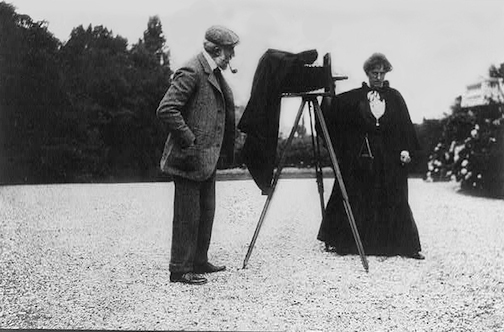
Gertrude Käsebier: Born May 18, 1852

GertrudeKasebier

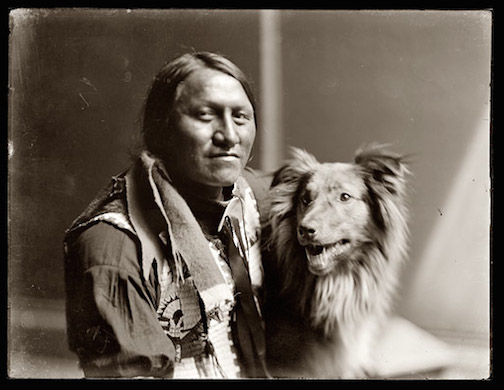
Gertrude Käsebier was a leading member of the pioneering photographic known as Pictorialism, which emphasized a subjective, painterly approach to photography rather than a documentary one.  

Kasebier1Though she had long been interested in art, Käsebier only began her formal training at the Pratt Institute after her children entered high school. She planned to be a painter, but eventually switched to photography. Following classes in Paris and apprenticeships with a German photographic chemist, and a Brooklyn portrait photographer, Käsebier opened her own portrait studio in 1897.
FROM https://nmwa.org/art/artists/gertrude-kasebier/

Stieglitz included Käsebier as a founding member of the Photo-Secession, a group that argued for a more natural, less manipulated photograph. In 1899, he published five of her photos, declaring her “beyond dispute, the leading artistic portrait photographer of the day.”
GKFROM http://www.imaging-resource.com/news/2012/05/12/nearly-forgotten-mother-of-modern-american-photography-gertrude-kaeseb

Library of Congress Biographical Essay: http://www.loc.gov/rr/print/coll/womphotoj/kasebieressay.html
Library of Congress Online Catalog: http://www.loc.gov/pictures/related/?fi=name&q=K%C3%A4sebier%2C%20Gertrude%2C%201852-1934
Shorpy Photo Gallery: http://www.shorpy.com/gertrude-kasebier-photographs

Rudolph Valentino: Born May 6, 1895

While in New York during the spring of 1923, Rudolph Valentino paid a visit to the Brunswick studios and recorded two songs. El Relicario in Spanish and The Kashmiri Song in English. According to legend, Valentino recorded these songs for his new bride, Natacha Rambova since they had recently wed after a few very tense years of legal difficulties concerning Valentino’s divorce from Jean Acker.
It was reported that after he heard his voice, he quipped “There goes my opera career!
https://www.popsike.com/19231926-Rudolph-Valentino-SingsKashmiri-Love-SongEl-Relicario-78rpm-Record/200783413331.html

May 4, 1970~ Tragedy at Kent State

NYT

This link is to a “collection…of photographs and contact sheets produced by University News Service (now University Communications and Marketing) before, during, and after the May 4, 1970 shootings at Kent State University. The first photographs were taken on April 30 to May 3, 1970. This group consists of a small number of photos. The bulk of the photographs were taken on May 4, 1970. Other photographs include events immediately after the shootings and some annual commemorations.” http://www.library.kent.edu/university-news-service-photographs-may-1-4-1970

Documenting the May 1970 Kent State Shootings
https://www.library.kent.edu/special-collections-and-archives/kent-state-shootings-may-4-collection