Tag Archives: History
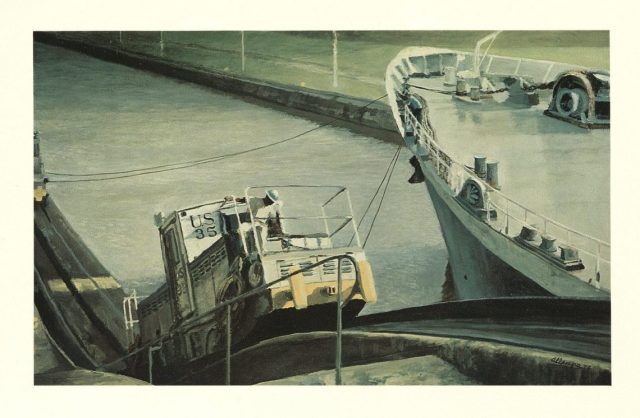
“Breathtakingly Detailed Large-Format Photographs of Opera Houses Around the World”

Photographer David Leventi captures opera houses all over the world in breathtaking detail in his series Opera. Leventi uses large-format photography to ensure the detail of rich texture and light in his work.
http://laughingsquid.com/breathtakingly-detailed-large-format-photographs-of-opera-houses-around-the-world/
“Turandot” premieres in Milan on April 25, 1926:
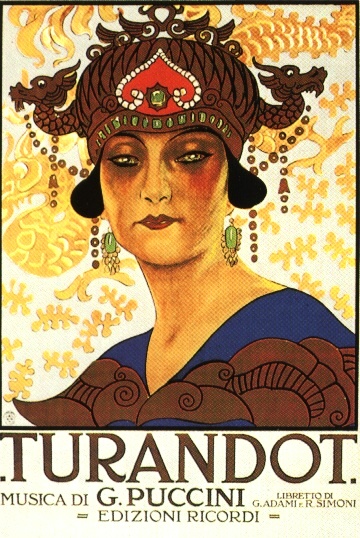
Turandot premiered at La Scala in Milan on 25 April 1926, almost a year and a half after Puccini’s death. Puccini’s friend Arturo Toscanini, who had worked on the score with the composer during the last months of Puccini’s life, conducted the premiere. As is widely recorded, when the opera reached the last note written by Puccini, Toscanini ended the performance. What he said at the time has been variously reported, from the poetic “Here death triumphed over art” to the poigniant “For me, the work ends here.” An eyewitness quoted in a recent biography puts it somewhere between the two: “Here ends the opera, because at this point the maestro was dead.”
FROM http://www.theopera101.com/operas/turandot/
Lee Miller: Born April 23, 1907
Lee Miller archives: https://bit.ly/3maYfBR
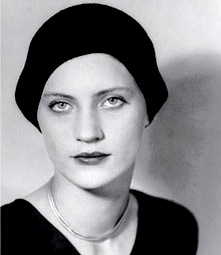 At the age of 19, Lee Miller was prevented from being hit by a truck in NYC by Condé Nast, the publisher of Vogue. Condé Nast thought she had the makings of a model, putting her on the cover of the magazine, which launched her modeling career. For a couple of years Miller was in high demand by photographers, until 1929 when a photograph of her taken by Edward Steichen was used to advertise Kotex pads, effectively ending her popularity as a model.
Miller then moved to Paris, with the intention of working with Man Ray. She became his model, muse, collaborator, and lover, thus beginning a new career on the other side of the camera as well as continuing as a model.
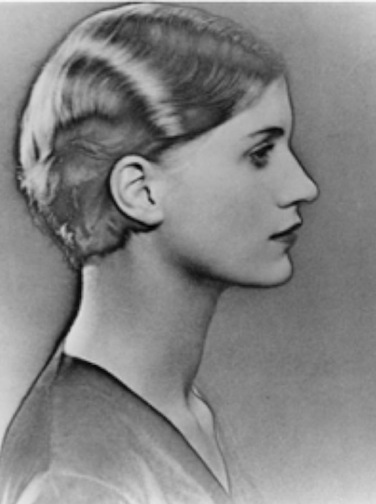
Lee Miller returned to New York in 1932, where she set up her own studio. She continued to pursue dual careers as model and photographer, however photography became her primary interest.
Miller was married in 1934 and moved to Cairo. The following years saw a succession of lovers and locations, eventually landing her in London where once again Vogue magazine had a major influence on her life, this time as a photographer: her work for them included being their war correspondent during WWII.  She covered many major events including Normandy, the Liberation of Paris, and the death camps of Dachau and Buchenwald. There was a famous photo of her taking a bath in Hitler’s apartment in Munich taken as the war drew to its close.
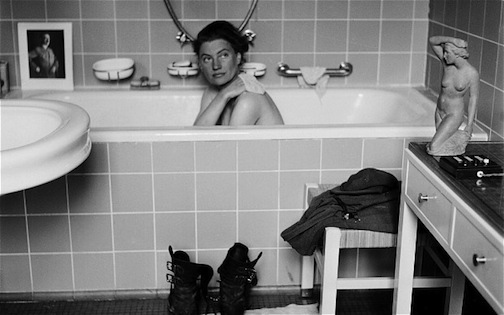
Miller’s only child was born in 1947, fathered by her lover Sir Roland Penrose, whereupon she divorced her husband and married Penrose. They settled in a farm in England. Miller became a gourmet cook and a hostess for some of the most famous artists and photographers of the time, but her life became colored by her ongoing clinical depression and she started on what her son described as a “downward spiral”. She died of lung cancer in 1977. After her death, 60,000 of her photographic negatives were found in a stash of cardboard boxes.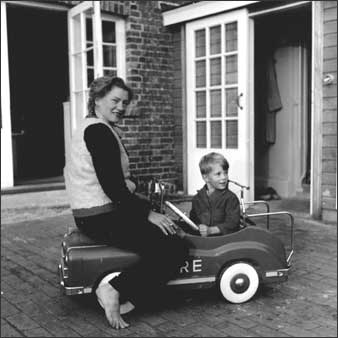
Lee Miller has such an amazing biography that I haven’t even attempted to cover it all. I recommend using Google to learn more about her life, or following some of the links I’ve posted here:
Victoria and Albert Museum~ http://www.vam.ac.uk/content/articles/l/lee-miller/
Much More Than A Muse: Lee Miller And Man Ray~ http://www.npr.org/2011/08/20/139766533/much-more-than-a-muse-lee-miller-and-man-ray
Lee Miller’s Photographs of the Second World War~
http://www.brighthub.com/multimedia/photography/articles/119376.aspx
The Roving Eye~ http://www.newyorker.com/magazine/2008/01/21/the-roving-eye
Queen Elizabeth II: Born April 21, 1926
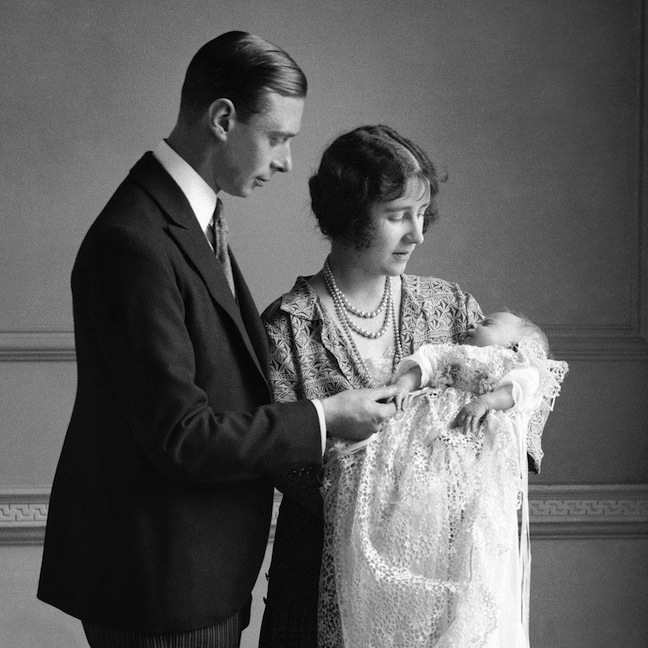 National Portrait Gallery Collection~
http://www.npg.org.uk/collections/search/person/mp01454/queen-elizabeth-ii
Queen Elizabeth II: Her first year~
http://www.cnn.com/2016/04/20/world/gallery/tbt-queen-elizabeth-ii-first-year/
Why Queen Elizabeth Has Two Different Birthdays~
http://www.vanityfair.com/style/2016/04/why-queen-elizabeth-has-two-different-birthdays
More Queen Elizabeth here~
https://schristywolfe.com/2015/04/21/elizabeth-alexandra-mary-born-april-21-1926/

April 18, 1956: The “Wedding of the Century”
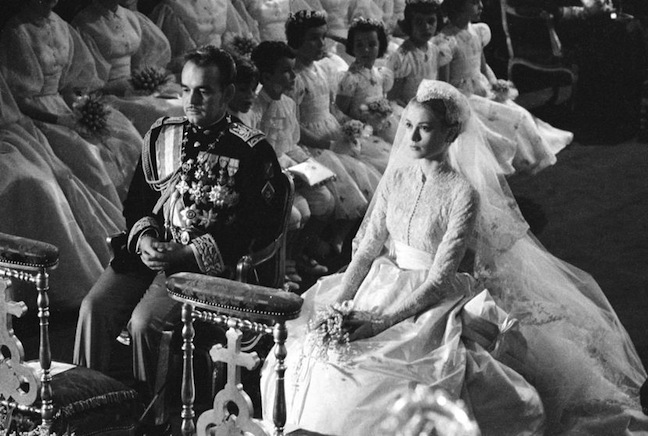
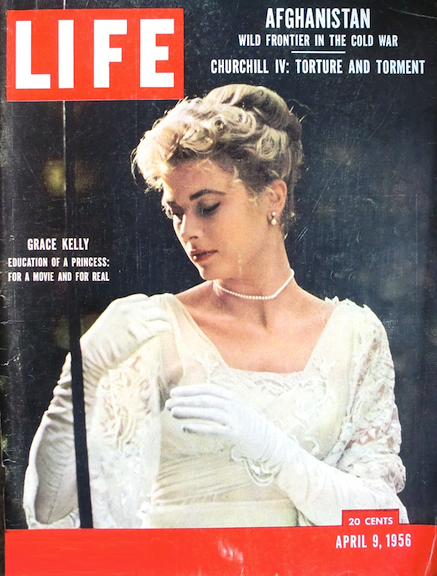
“Before William and Kate, before Charles and Di, before Liz and Dick (I and II), before any of the “storybook” weddings of the past several decades, there was the fairytale wedding of the last century: the April 1956 nuptials of Grace Kelly and Prince Rainier III of Monaco. The tale of the American movie star and Philadelphia native marrying the prince of a small, sensationally wealthy city-state was simply too perfect to ignore — and for months leading up to the event, from the time of the couple’s engagement
until the two ceremonies (civil and religious) that formalized their union, the Hollywood princess and the real-life prince were hardly ever out of the news.
Here, LIFE.com presents photos — many of which never ran in LIFE magazine — from the moment the couple announced their engagement in January 1956 until they were married three and a half months later in Monaco.”
FROM~ http://time.com/3684060/life-with-grace-kelly-and-prince-rainier-photos-from-the-wedding-of-the-century/
Leonardo da Vinci: Born April 15, 1452
 The Last Supper ~ 1494–1498 ~ Oil/tempera on dry plaster ~ Convent of Santa Maria delle Grazie, Milan
The illegitimate son of a 25-year-old notary, Ser Piero, and a peasant girl, Caterina, Leonardo was born on April 15, 1452, in Vinci, Italy, just outside Florence…Growing up in his father’s Vinci home, Leonardo had access to scholarly texts owned by family and friends. He was also exposed to Vinci’s longstanding painting tradition, and when he was about 15 his father apprenticed him to the renowned workshop of Andrea del Verrochio in Florence. Even as an apprentice, Leonardo demonstrated his colossal talent.
>>>>>> https://legacy.mos.org/leonardo/ (Museum of Science: Leonardo da Vinci, Renaissance Man)
“On Leonardo da Vinci’s Birthday MFA Boston Shows the Most Beautiful Drawing in the World”~ https://news.artnet.com/in-brief/leonardo-da-vinci-birthday-288061 (artnet news)
Slideshow~ http://www.metmuseum.org/toah/hd/leon/hd_leon.htm#slideshow1 (Metropolitan Museum of Art, Heilbrunn Timeline of Art History)
Leonardo Da Vinci timeline~ http://worldhistoryproject.org/topics/leonardo-da-vinci (World History Project)
The Story of Leonardo’s Horse~ https://www.davincisciencecenter.org/about/leonardo-and-the-horse/the-full-story-of-leonardos-horse/ (Da Vinci Science Center)
Ralph Steadman Illustrates the Life of Leonardo da Vinci~ http://www.brainpickings.org/2014/07/11/ralph-steadman-i-leonardo/ (Brain Pickings)
List of works by Leonardo da Vinci~ http://en.wikipedia.org/wiki/List_of_works_by_Leonardo_da_Vinci (Wikipedia)
 Lady with an Ermine
1489–1490
Oil on wood panel
Wawel Castle, Kraków
Mona Lisa
1503–1506 (perhaps 1517)
Oil on wood panel
Musée du Louvre, Paris
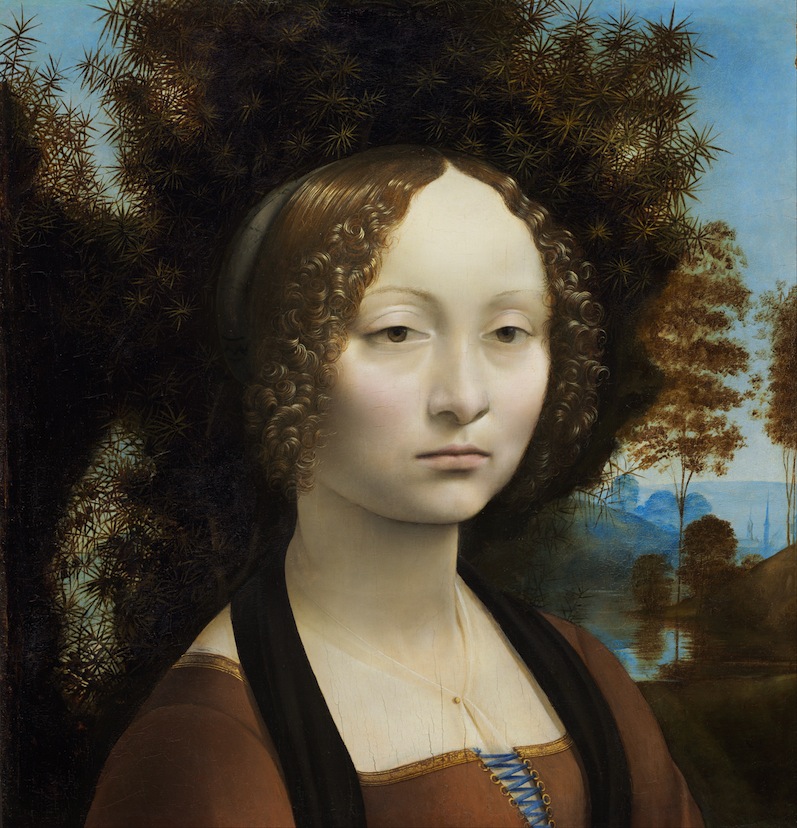
Ginevra de’Benci
1474–1478
Oil on wood panel
National Gallery of Art, Washington, D.C.
St. John the Baptist

1513–1516
Oil on wood panel
Musée du Louvre, Paris
>> Click on images to enlarge <<<
Pysanky~ Ukrainian Easter Eggs
http://www.pysanka.com/the_art.php
http://www.learnpysanky.com/designs.html
The Ukrainian pysanka (from the word pysaty, to write) was believed to possess an enormous power not only in the egg itself, which harbored the nucleus of life, but also in the symbolic designs and colors which were drawn upon the egg in a specific manner, according to prescribed rituals. The intricately colored eggs were used for various social and religious occasions and were considered to be a talisman, a protector against evil, as well as harbingers of good.
http://www.ukrainianmuseum.org/pysanky.html
Fabergé Imperial Easter Eggs
The series of Easter eggs created by Fabergé for the Russian Imperial family, from 1885 through to 1916…A centuries-old tradition of bringing hand-coloured eggs to Church to be blessed and then presented to friends and family had evolved through the years and, among the highest echelons of St Petersburg society, the custom developed of presenting valuable bejewelled Easter gifts. So it was that Emperor Alexander III had the idea of commissioning Fabergé to create a precious Easter egg as a surprise for his Empress. The first Imperial Easter egg was born…From 1887 Fabergé was given complete freedom in the design and execution, with the only prerequisite being that there had to be surprise within each creation.
http://www.faberge.com/news/49_imperial-eggs.aspx

Beautiful photographs and more information here~ https://elliottingotham.wordpress.com/1301-2/

This automaton was made as the ‘surprise’ for the Diamond Trellis Egg, made by Carl Fabergé for Tsar Alexander III. The Tsar presented the egg to his wife Tsarina Marie Feodorovna for Easter 1892.
https://www.royalcollection.org.uk/collection/9268
Edward Bruce: Born April 13, 1879
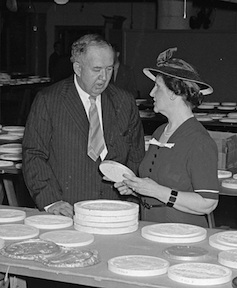 Edward Bruce was born in 1879 in Dover Plains, New York. Though he enjoyed painting at a young age, he pursued a career in law and graduated from Columbia Law School in 1904. He practiced law in New York and in Manila, Philippines and was actively involved in international issues.
In 1923 Bruce gave up his career in law and business and began to paint, particularly landscapes. He and his wife Peggy spent the next six years in Anticoli Carrado, Italy where he studied painting from his friend and fellow artist Maurice Sterne. Bruce returned to the United States in 1929 and settled in California, exhibiting his artwork to much public and critical praise. In addition, Bruce was an avid collector of Chinese art.
In 1933 Bruce was appointed Chief of the newly established Public Works of Art Project, a federal government New Deal program within the U.S. Treasury Department, that employed artists to decorate numerous public buildings and parks…In 1940 he was appointed to the Commission of Fine Arts by President Franklin Delano Roosevelt.
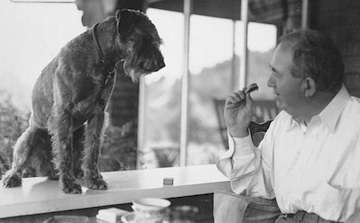 Bruce received many honors and awards during his lifetime both for his work as an artist and for his capable and dedicated administration of federal arts programs. Despite poor health, he continued his work for the Section of Fine Arts until shortly before his death in 1943.
http://www.aaa.si.edu/collections/edward-bruce-papers-7264/more
On December 8, 1933, the Advisory Committee to the Treasury on Fine Arts met to decide the
details of the Public Works of Art Project (PWAP), the first of the New Deal art programs. The PWAP came at a crucial moment for federal support of the arts during the Great Depression. As artist Olin Dows (1904–1981) recalled, “If the first crash [i.e. Depression] art program had not been so carefully
thought out and expertly organized, I doubt that other programs would have been undertaken. The man mainly responsible was Edward Bruce.” Bruce, an advisor to the Treasury Department, hosted the meeting at his home. First Lady Eleanor Roosevelt was present as were such arts leaders as Juliana Force and Forbes Watson, who worked with Bruce to organize the Public Works of Art Project.
https://www.incollect.com/articles/1934-a-new-deal-for-artists
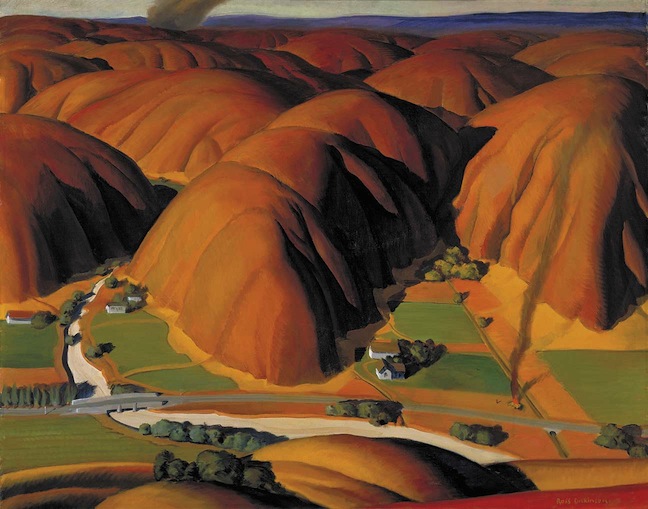
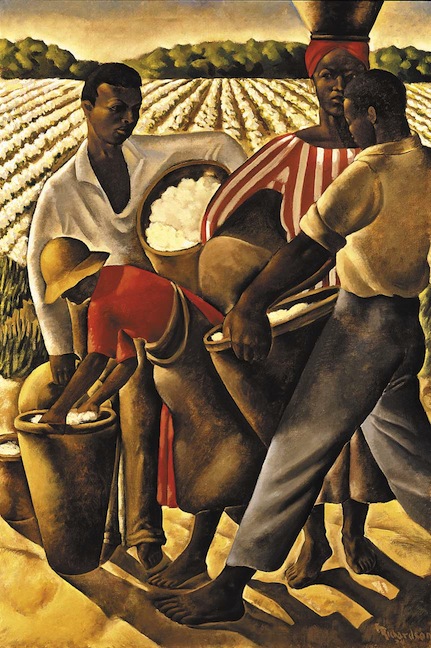
History of the New Deal Art Projects~ http://wpamurals.org/history.html
The New Deal Art Registry~ http://www.newdealartregistry.org/Home.html

