National Native American Heritage Month~ November 8

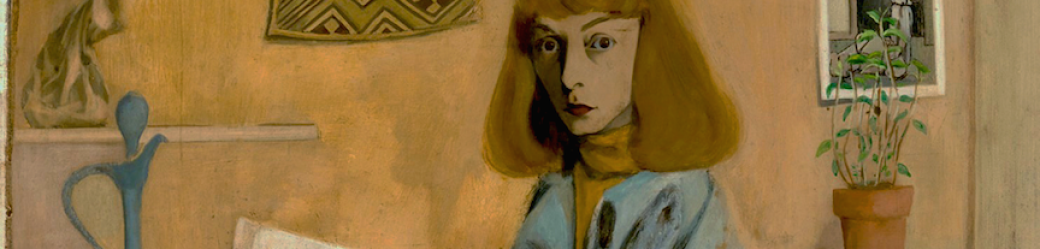
Self-portrait  by  Silver Horn/Haungooah

Silver Horn was born in southwestern Oklahoma, and worked throughout the southwestern United States, including Ft. Sill, OK. Silver Horn was perhaps the most prolific Plains Indian artist, creating more than 1000 drawings that document Kiowa culture during his life. [i]

1895 / Watercolor on paper / No size available
Edward E. Ayer Art Collection, Newberry Library, Chicago, IL

[There are three embedded links above]

[i] Edward E. Ayer Art Collection. “Silver Horn Drawings,” ND
https://collections.newberry.org/asset-management/2KXJ8ZNHTBRL

National Native American Heritage Month~ November 7

Horse Effigy  frequently attributed to
He Nupa Wanica/Joseph No Two Horns

While relatively little is known about the life of Joseph No Two Horns, what is indisputable is that he was a prolific artist and a skilled warrior, having fought in approximately forty battles, including the Battle of the Little Bighorn. No Two Horns is well-known for his horse effigy carvings, paintings/drawings, shields and shield covers, as well as a variety of other art and objects made for trade. [i]

c.1880 / Wood, pigment, tanned leather, rawhide, horsehair, brass, iron, and bird quill
38 1/2″ in length / South Dakota State Historical Society, Pierre, SD

[There are three embedded links above]

[i]Bonhams. “A He Nupa Wanica (Joseph No Two Horns) painted hide shield cover.” December 16, 2019.
https://www.bonhams.com/auction/25505/lot/183/a-he-nupa-wanica-joseph-no-two-horns-painted-hide-shield-cover/

National Native American Heritage Month~ November 5

Basket Hat with Raven Design  by  Isabella Edenshaw
Painted by her husband, Charles Edenshaw

“My mother used to weave baskets and hats all winter long. When she was going to start her weaving she soaked the roots overnight, so they’d be easy to work. She’d get up early in the morning and cook and after everyone was finished eating, she’d go to work splitting the roots again and weaving them into a hat or basket. She worked all day long, day after day.…It was just like having a business. When she finished a hat she put it in a dark place and then my dad would paint a design on it.”  Florence Edenshaw Davidson, 1982

c.1900 / Cedar bark, spruce root, paint / 8 1/4″x17″
National Museum of the American Indian, Washington, DC

[There are four embedded links above]

National Native American Heritage Month~ November 4

Vision-1  by Čhetáŋ Sápa (Black Hawk)

William Edward Caton (1846-1905), an American trader operating in the Dakotas during the late nineteenth century, was best known for his role as post‐trader at the Cheyenne River Indian Reservation. In the winter of 1880–81 he commissioned the eminent Lakota artist‐medicine-man Black Hawk (c.1832–c.1890) to render Lakota life and vision.[i]
Black Hawk drew seventy-six vivid images depicting complex scenes of ceremonial activity, personal visions, historical events, and nature studies. Black Hawk’s drawing book now stands as the most complete visual record of Lakota art of the early reservation period (1875-95).[ii]

1881 / Page from the Black Hawk Ledger / Pencil, colored pencil
16 1/4″x10 1/4″ / The Plains Indian Ledger Art Project, UC San Diego

[There are four embedded links above]

[i] William Edward Caton biography. Ruderman Rare Maps, no date.
https://raremaps.com/mapmaker/12732/william-edward-caton
[ii] George Braziller. Spirit Beings & Sun Dancers: Black Hawk’s vision of the Lakota World, no date.
https://www.georgebraziller.com/spirit-beings-sun-dancers-black-hawks-vision-of-the-lakota-world

National Native American Heritage Month~ November 3

Drawing of Artist’s World attributed to Wacochachi
of the
Meskwaki Nation

The Meskwaki people are likely the first and perhaps only tribal nation in the U.S. to purchase land rather than rely on a reservation. An important pen-and-ink drawn by Meskwaki elder Wacochachi documents the relationship between the Meskwaki and Euro-Americans and is believed to be a gift to a trader named George Davenport. The drawing depicts important events in Wacochachi’s life, including two scenes of warfare, as well as creatures that are sacred to the Meskwaki.[i]

c.1830 / Paper, ink, sealing wax / Each sheet 9 3/4″x15 1/2″ / State Historical Museum of Iowa, Des Moines, IA

[There are four embedded links above]

[i]“IHJ Exploring History: Celebrating 175 Years of Statehood — State Historical Museum of Iowa’s Newest Exhibit ‘Iowa’s People and Places’ Marks Milestones in Iowa’s History -.” 2025. August 15, 2025.
https://iowahistoryjournal.com/ihj-exploring-history-celebrating-175-years-of-statehood-state-historical-museum-of-iowas-newest-exhibit-iowas-people-and-places-marks-milestones-in-iowa/

National Native American Heritage Month~ November 2

The Christening of Asa Thompson  by Dennis Cusick

Dennis Cusick (c. 1800–1824) was a Tuscarora painter from New York and one of the founders of the Iroquois Realist Style of painting.[i] Dennis’ older brother, David Cusick, wrote and illustrated David Cusick’s Sketches of Ancient History of the Six Nations (see November 1).

1821 / Watercolor / 6 3/4″x7 1/3″ / National Museum of the American Indian, Washington, DC

[There are four embedded links above]

[i] Wikipedia contributors. “Dennis Cusick.” Wikipedia, 2026.
https://en.wikipedia.org/wiki/Dennis_Cusick

National Native American Heritage Month~ November 1

Iroquois Mythological Giant Hunter Holding Weapons,
with a Deer and Bear under His Belt  by David Cusick

David Cusick (c. 1780 – 1840) was a Tuscarora artist and the author of David Cusick’s Sketches of Ancient History of the Six Nations (1827).[i] First published in 1826 or 1827, it is likely the earliest account of Native American folklore to be written and published in English by a Native American author.[ii]

c.1827 / Watercolor, brown ink, and brown gouache over graphite on beige paper, laid on canvas
15 1/4”x11 7/8” / New-York Historical Society, NY, NY

[There are three embedded links above]

[i] Wikipedia contributors. “David Cusick.” Wikipedia, September 10, 2026.
https://en.wikipedia.org/wiki/David_Cusick
[ii] Early American Collections at Princeton. “David Cusick’s Sketches of Ancient History of the Six Nations,” November 26, 2013.
https://americana.princeton.edu/2013/11/25/david-cusicks-sketches-of-ancient-history-of-the-six-nations/