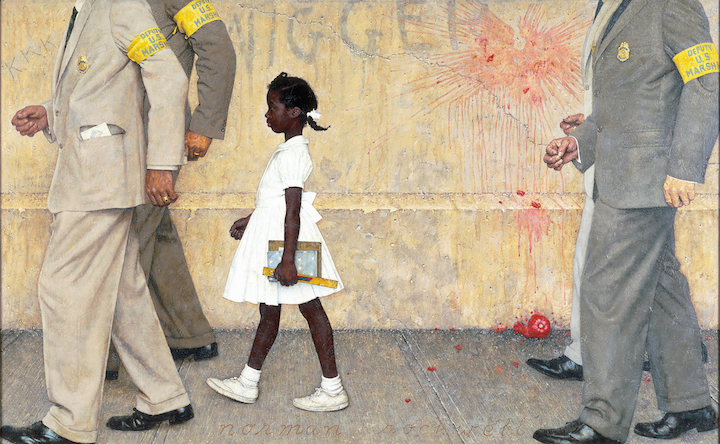
Ruby Bridges: Born September 8, 1954


https://www.biography.com/people/ruby-bridges-475426

Ruby Bridges Goes to School:
http://www.pbs.org/wnet/african-americans-many-rivers-to-cross/video/ruby-bridges-goes-to-school/

Ruby Bridges Biography:
https://www.womenshistory.org/education-resources/biographies/ruby-bridges

“The Problem We All Live With” by Norman Rockwell
1964 / Oil on canvas / 36”x58” / Norman Rockwell Museum, Stockbridge, Massachusetts
The painting was originally published as a centerfold in the January 14, 1964 issue of Look magazine

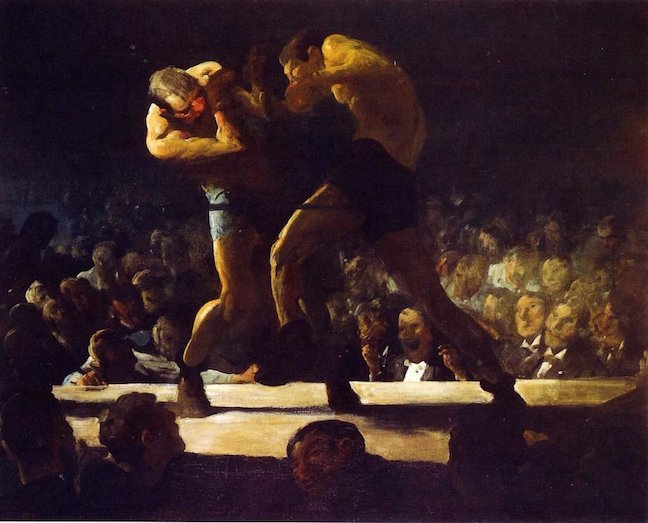
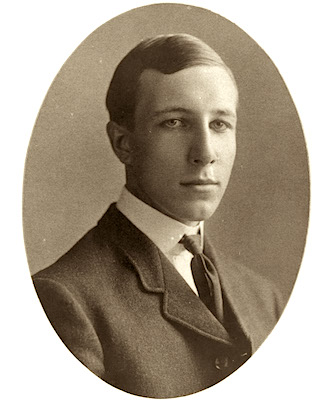
August 12 or 19: Birthday of George Bellows


George Wesley Bellows (August 12 or August 19, 1882 – January 8, 1925) was an American realist painter, known for his bold depictions of urban life in New York City, becoming, according to the Columbus Museum of Art, “the most acclaimed American artist of his generation”.   Wikipedia

Bellows once commented that “there is nothing I do not want to know that has to do with life or art.” He drew equal inspiration from municipal workers removing snow from the city’s streets, longshoremen loading and unloading cargo from ocean liners and freighters, and the ladies and gentlemen who created a rich visual pageantry as they enjoyed New York’s parks. The variety of Bellows’s urban subjects was matched by the range of palettes and techniques he employed, often on immense canvases. Few would have disputed a critic who observed of Bellows at the time of his death, “He was an adherent of ‘wallop’ in painting.” In an astute bid for broad appeal, Bellows exhibited his works widely, attracting both critics—”There’s been an awful lot written about me,” he admitted—and patrons. His dramatic paintings of familiar subjects were acquired by major museums, important regional art centers, educational institutions, and prominent collectors, from the relatively adventurous to those with more conventional tastes. Both an active academician and a keen independent, Bellows was at home among diverse factions of the art world. Writing in 1913, the critic Forbes Watson noted his “curious appeal” to “the conservative and radical alike.”
http://www.metmuseum.org/exhibitions/listings/2012/bellows


This slideshow requires JavaScript.

http://www.georgebellows.com/biography
https://www.britannica.com/biography/George-Wesley-Bellows
https://en.wikipedia.org/wiki/George_Bellows


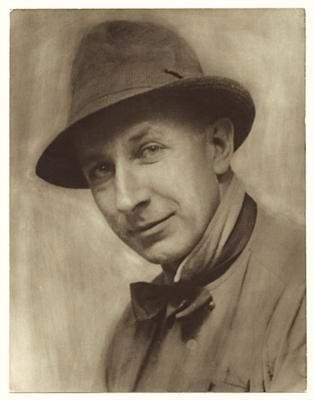
George Luks: Born August 13, 1867

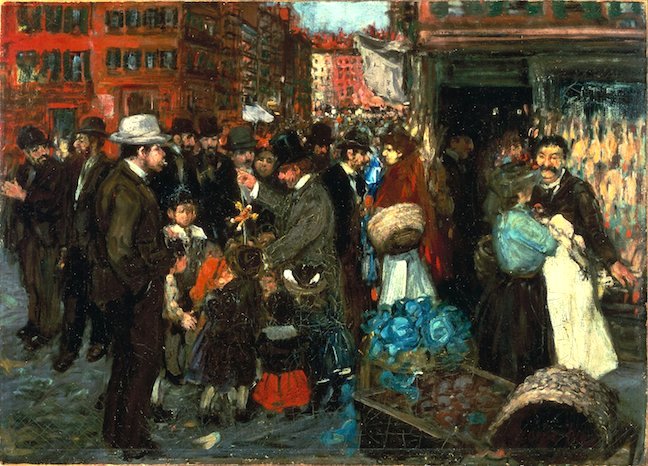
HesterStreet

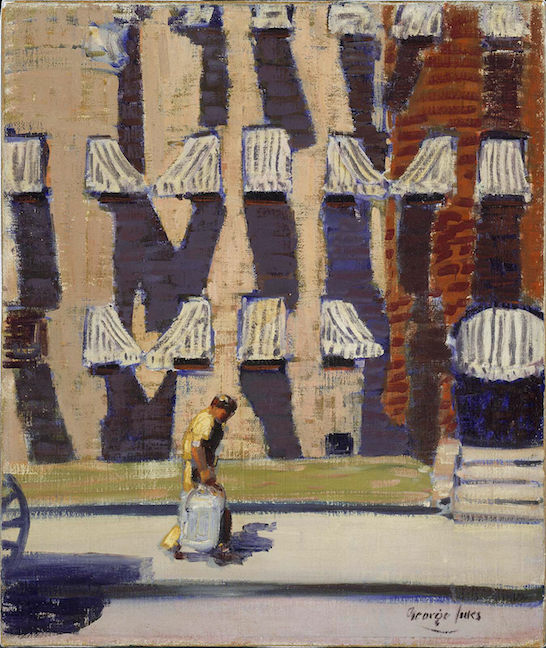
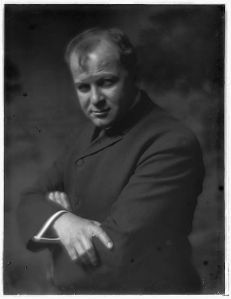
GeoBLuksGeorge Luks was an American realist painter and comic illustrator, best known for his images of New York and its inhabitants. Born in Williamsport, Pennsylvania, Luks worked as a vaudeville performer before moving to Philadelphia to study art at the Pennsylvania Academy of the Fine Arts…Luks was publishing comic illustrations in Puck and Truth, and upon his return in 1893 he accepted a job as a newspaper illustrator at the Philadelphia Press.
FROM http://www.illustrationhistory.org/artists/george-luks

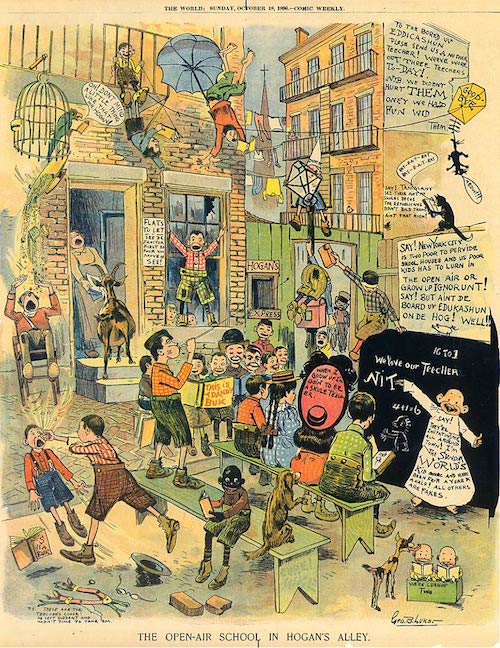
His career took a small detour in 1895 when heYellowKid traveled to Cuba as an artist-correspondent for the Philadelphia Evening Bulletin…When he returned to America in 1896, he joined the staff of Pulitzer’s World as an illustrator and cartoonist…One of his many famous colleagues at the World was Richard F. Outcault, who had joined the staff in 1894…Outcault’s Yellow Kid became so popular with the public and showed that it increased the newspaper’s sales as well as the sales of merchandise his likeness appeared on, from candy to whiskey. This awareness was occurring at the same time that William Randolph Hearst had come to town, purchased the Journal and was having an intense battle with Pulitzer’s World for dominance in New York City. Hearst knew a good thing when he saw it and lured Outcault away from Pulitzer…Pulitzer was not to be outdone, however, and assigned Luks to continue drawing the Yellow BostonKid in Hogan’s Alley for the World…Luks [continued to work] at his painting and was finally able to make a living at it. He left the newspaper in 1898.
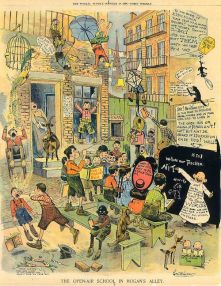
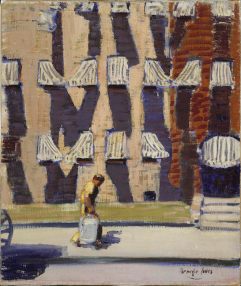
FROM https://www.hoganmag.com/blog/george-luks-the-other-yellow-kid-artist

George Luks prided himself in being the “bad boy” of American art and would be pleased that this notion has survived as his reputation as a significant painter of the twentieth century continues to grow. A heavy drinker and engaged story-teller, Luks manufactured details of his own life to make himself more colorful. Most ingrained in his biography was his tall tale of KidWithBallhaving fought in the Mid-West as “Chicago Whitey,” a middle-weight boxing champion. No one ever checked his details. However, the mythology Luks created around himself masked an insecurity that reveals itself in the diversity of styles he sometimes employed as a painter. His mainstay was realism, but he experimented with impressionism and post-impressionism and was known to alter a canvas if it was criticized, sometimes ruining it entirely. The critic, James Huneker, noted literally hundreds of unfinished canvases in Luks upper Manhattan studio which he would either re-work or paint over. But when Luks was “on” he was a forceful painter of huge talent and confidence, noted for his sure, brilliant handling of a brush.
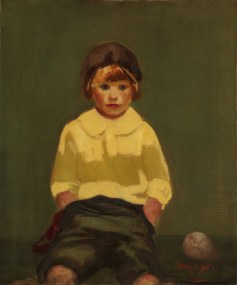
FROM http://www.tfaoi.com/aa/2aa/2aa563.htm
Ephemeral New York: Posts Tagged ‘George Luks’~
https://ephemeralnewyork.wordpress.com/tag/george-luks/

August 12 or 19: Birthday of George Bellows

George Wesley Bellows (August 12 or August 19, 1882 – January 8, 1925) was an American realist painter, known for his bold depictions of urban life in New York City, becoming, according to the Columbus Museum of Art, “the most acclaimed American artist of his generation”.   Wikipedia

Bellows once commented that “there is nothing I do not want to know that has to do with life or art.” He drew equal inspiration from municipal workers removing snow from the city’s streets, longshoremen loading and unloading cargo from ocean liners and freighters, and the ladies and gentlemen who created a rich visual pageantry as they enjoyed New York’s parks. The variety of Bellows’s urban subjects was matched by the range of palettes and techniques he employed, often on immense canvases. Few would have disputed a critic who observed of Bellows at the time of his death, “He was an adherent of ‘wallop’ in painting.” In an astute bid for broad appeal, Bellows exhibited his works widely, attracting both critics—”There’s been an awful lot written about me,” he admitted—and patrons. His dramatic paintings of familiar subjects were acquired by major museums, important regional art centers, educational institutions, and prominent collectors, from the relatively adventurous to those with more conventional tastes. Both an active academician and a keen independent, Bellows was at home among diverse factions of the art world. Writing in 1913, the critic Forbes Watson noted his “curious appeal” to “the conservative and radical alike.”
FROM http://www.metmuseum.org/exhibitions/listings/2012/bellows

This slideshow requires JavaScript.

http://www.georgebellows.com/biography

Andy Warhol: Born August 6, 1928

Andy Warhol eating a burger from Pedro Treno on Vimeo.

Open Culture: Andy Warhol Eats a Burger King Whopper, and We Watch … and Watch
http://www.openculture.com/2011/06/andy_warhol_eats_a_burger_and_we_watch_and_watch.html

The Andy Warhol Museum~ http://www.warhol.org/
The Andy Warhol Family Album~ http://www.warhola.com/index.html
Figment, a live feed of Warhol’s gravesite~ http://www.warhol.org/figment/

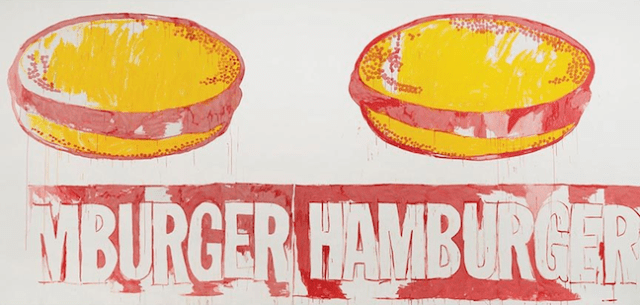
Hamburger

Andy Warhol / Double Hamburger / 1985-86 / Synthetic polymer paint on canvas / 116”x242”

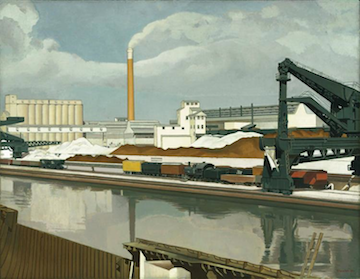
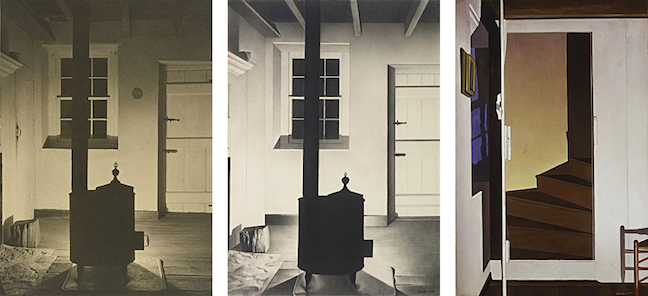
Charles Sheeler: Born July 16, 1883

Sheeler

Charles Sheeler (1883–1965)~
http://www.metmuseum.org/toah/hd/shee/hd_shee.htm
Precisionism~ http://www.metmuseum.org/toah/hd/prec/hd_prec.htm
Power / Fortune, December1940~
https://www.fulltable.com/vts/f/fortune/ills/sheeler/b.htm


The American modernist Charles Sheeler (1883–1965) explored the relationships between photography, film, and more traditional media such as painting and drawing with more rigor and intellectual discipline than perhaps any other artist of his generation. As in a well-conceived scientific experiment, Sheeler used his own photographs and film stills as the basis for paintings and drawings, thus crystallizing the differences and similarities between them. Works in one medium manage to function as independent objects while also being inextricably linked to works in other media.Charles Sheeler: Across Media


James McNeill Whistler (1834–1903)

WMother

James Abbott Whistler was born [on July 11] in 1834 in Lowell, Massachusetts, the third son of West Point graduate and civil engineer Major George Washington Whistler, and his second wife Anna Matilda McNeill. After brief stays in Stonington, Connecticut, and Springfield, Massachusetts, the Whistlers moved to St. Petersburg, Russia, where the Major served as an engineer for the construction of a railroad line to Moscow. Whistler studied drawing there at the Imperial Academy of Science. In 1848 he went to live with his sister and her husband in London, and after his father’s death the following year the family returned to the United States and settled in Pomfret, Connecticut. Whistler enrolled in the United States Military Academy at West Point in 1851, where he excelled in Robert W. Weir’s drawing class. He was dismissed from the academy in 1854, and after brief periods working for the Winans Locomotive Works in Baltimore, and the drawings division of the United States Coast and Geodetic Survey, resolved to become an artist…
FROM http://www.nga.gov/content/ngaweb/Collection/artist-info.1974.html

Victoria Thorne: Whistler’s Bridges and Those Boys on the Bank~
http://design.victoriathorne.com/2012/08/whistlers-bridges-and-those-boys-on-bank.html
Portrait of the Artist’s Mother~
http://www.musee-orsay.fr/en/collections/works-in-focus/search/commentaire/commentaire_id/portrait-of-the-artists-mother-2976.html
The Extraordinary Life of Whistler’s Mother~
http://theconversation.com/the-extraordinary-life-of-whistlers-mother-42027

This slideshow requires JavaScript.

Camille Pissarro: Born July 10, 1830

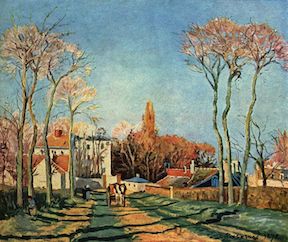
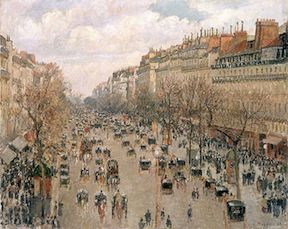
ONEPissarro in fact was the only artist who participated in all eight Impressionist exhibitions and he was a much-respected father figure to his colleagues…His talents as a teacher made him influential TWOeven among artists of greater stature than himself—Cézanne and Gauguin, for example…During the Franco-Prussian War of 1870–1, when his home at Louveciennes was overrun by the German invaders and many of his paintings were destroyed, Pissarro joined Monet in England. In 1872 he settled at Pontoise, where he THREEintroduced Cézanne to painting out of doors…In 1885 he met Seurat and for several years afterwards he experimented with Neo-Impressionism; in about 1890, however, he reverted to his Impressionist style, though with freer brushwork than in his early work…From FOURabout 1895 deterioration of his eyesight caused him to give up painting out of doors and many of his late works are urban scenes painted from windows (usually of hotels) in Paris and elsewhere…In addition to a large output of paintings and drawings, he was the most prolific printmaker among the Impressionists, working in a variety of techniques and sometimes mixing them.
FROM  http://artuk.org/discover/artists/pissarro-camille-18301903

http://www.degas-painting.info/impresionists/camille_pissarro_biography.htm