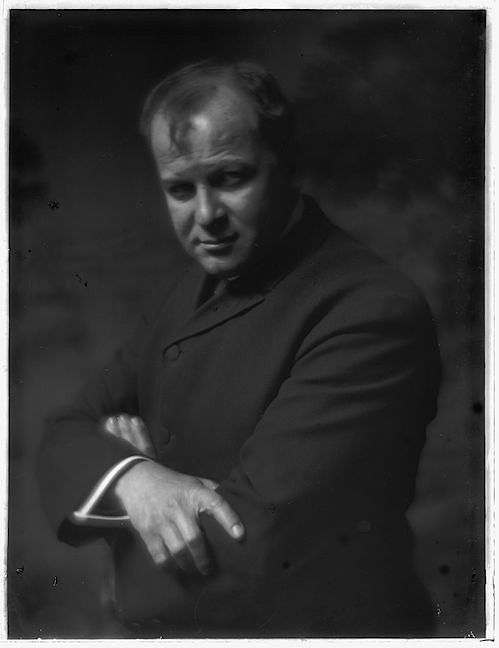
Arnold Schönberg: Born September 13, 1874

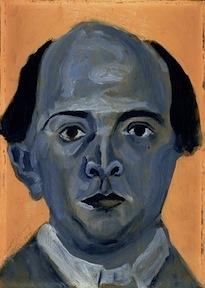
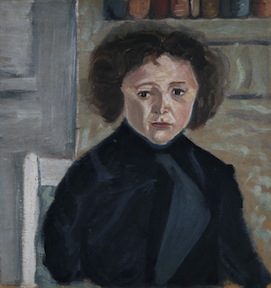
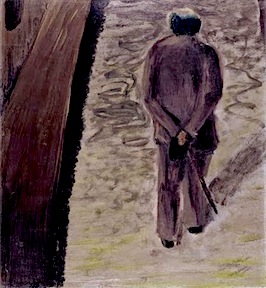
arnold_schoenbergArnold Schoenberg (1874-1951)

Born in Vienna on 13 September 1874, into a family that was not particularly musical, Schoenberg was largely self-taught as a musician. An amateur cellist, he demonstrated from early age a particular aptitude for composition. He received rudimentary instruction in harmony and counterpoint from Oskar Adler and studied composition briefly with Alexander Zemlinsky, his eventual brother-in-law. Early in his career, Schoenberg took jobs orchestrating operettas, but most of his life was spent teaching, both privately and at various institutions, and composing…Schoenberg fled the poisonous political atmosphere of Europe in 1933 and spent the remainder of his life primarily in the United States, becoming a naturalized citizen in 1941.gschoenberg
FROM http://www.allmusic.com/artist/arnold-schoenberg-mn0000691043/biograph

Arnold Schoenberg’s Many Faces~ http://www.nytimes.com/1995/10/28/style/28iht-arn.t.html

schoenbergArnold Schönberg Center~ http://www.schoenberg.at/index.php/en/

Artistic Parallels between Arnold Schönberg’s Music & Painting~ essay written by Courtney Adams~ http://symposium.music.org/index.php?option=com_k2&view=item&id=2111:artistic-parallels-between-arnold-schoenbergs-music-and-painting-1908-1912&Itemid=124

Ruby Bridges: Born September 8, 1954


https://www.biography.com/people/ruby-bridges-475426

Ruby Bridges Goes to School:
http://www.pbs.org/wnet/african-americans-many-rivers-to-cross/video/ruby-bridges-goes-to-school/

Ruby Bridges Biography:
https://www.womenshistory.org/education-resources/biographies/ruby-bridges

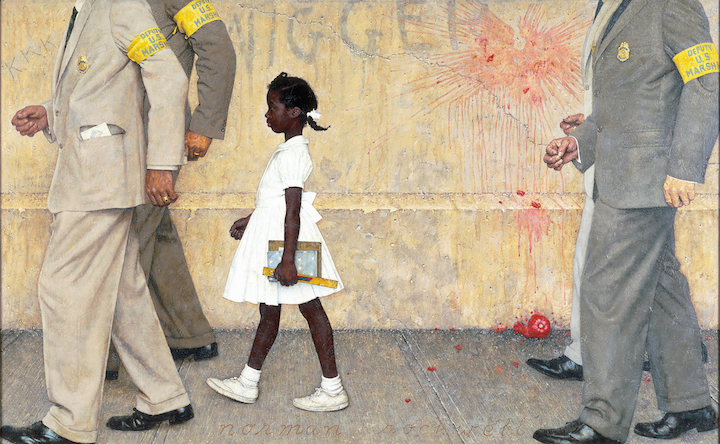
“The Problem We All Live With” by Norman Rockwell
1964 / Oil on canvas / 36”x58” / Norman Rockwell Museum, Stockbridge, Massachusetts
The painting was originally published as a centerfold in the January 14, 1964 issue of Look magazine

Man Ray: Born August 27, 1890

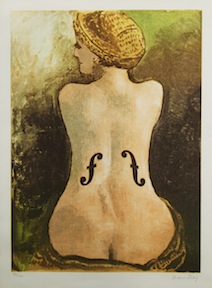
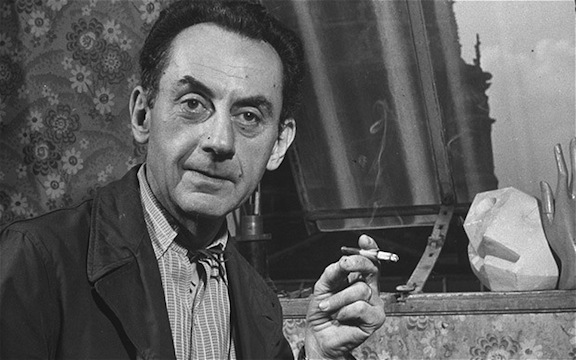
RayMan Ray, the master of experimental and fashion photography was also a painter, a filmmaker, a poet, an essayist, a philosopher, and a leader of American modernism. jazz 
Through Duchamp, Man Ray met some of the most exciting artists and thinkers in Paris. Though he didn’t speak a word of French at first, he was welcomed kikiinto this group and became its unofficial photographer. 
Though deeply immersed in the artistic life of France, World War II forced Man Ray to leave Paris, and he moved to Hollywood. He spent ten years there working as a fashion photographer. With arthis brave use of lighting and minimalist representation, Man Ray produced fashion rayographphotographs unlike any that had come before—and forever changed that discipline.
FROM http://www.pbs.org/wnet/americanmasters/episodes/man-ray/prophet-of-the-avant-garde/510/

The Man Ray Trust~ http://www.manraytrust.com/
Man Ray: The Painter~
http://structureandimagery.blogspot.com/2012/03/man-ray-painter.html
Man Ray’s Other Passion, Printmaking~
http://www.huffingtonpost.com/2013/10/12/man-ray-prints_n_4078032.html
Photographer Man Ray: A Film by Jean-Paul Fargier 1998~
https://youtu.be/s8gJJaUuWco

Man

Alexander Milne Calder: Born August 23(?), 1846

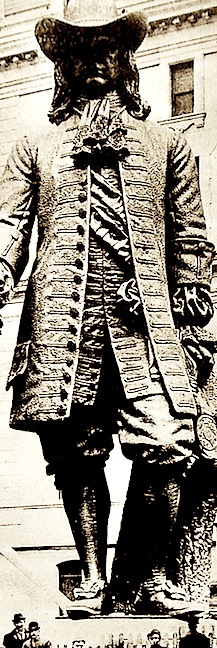
BigBillyAlexander Milne Calder was born in Aberdeen, Scotland, the son of a tombstone carver. He began his career in Scotland, working for sculptor John Rhind, the father of sculptor J. Massey Rhind while attending the Royal Academy in Edinburgh. He moved to London and worked on the Albert Memorial. Calder immigrated to the United States in 1868 and settled in Philadelphia…In 1873, he was hired by architect John McArthur, Jr. to produce models for the architectural sculpture of Philadelphia City Hall. The commission involved more than 250 pieces in marble and bronze, and took Calder 20 years to complete.~Wikipedia

City Hall (Philadelphia)~ http://philadelphiaencyclopedia.org/archive/city-hall-philadelphia/

Three Generations of Calders in Philadelphia~
https://www.associationforpublicart.org/apa-now/story/three-generations-of-calders-in-philadelphia/

Henri Cartier-Bresson: Born August 22, 1908

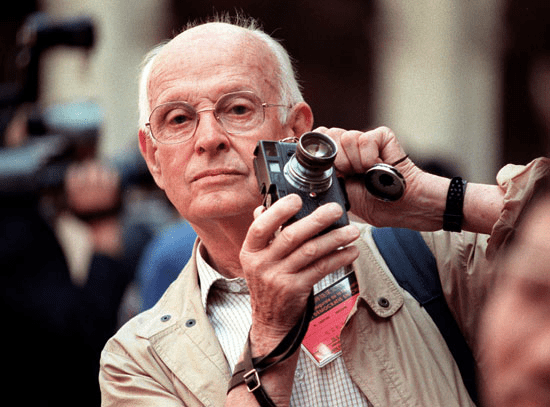
Henri Cartier-Bresson was born on August 22, 1908 in Chanteloup, France. A pioneer in photojournalism, Cartier-Bresson wandered around the world with his camera, becoming totally immersed in his current environment. Considered one of the major artists of the 20th century, he covered many of the world biggest events from the Spanish Civil War to the French uprisings in 1968.
FROM Henri Cartier-Bresson Biography.com

Henri Cartier-Bresson developed a passion for filmmaking in the 1930’s. He studied cinema with Paul Strand in New York in 1935. When he returned to France, he was hired as the second assistant director to Jean Renoir in 1936 for La vie est à nous and Une partie de campagne, and in 1939 for La Règle du Jeu.
LINK TO Filmography

In 1947, with Robert Capa, George Rodger, David ‘Chim’ Seymour and William Vandivert, he founded Magnum Photos.
LINK TO Henri Cartier-Bresson : French, b. 1908, d. 2004

Henri Cartier-Bresson : Selected Photo Essays

Claude Debussy: Born August 22, 1862

Claude Debussy (born Achille-Claude Debussy) was among the most influential composers of the late 19th and early 20th centuries. His mature compositions, distinctive and appealing, combined modernism and sensuality so successfully that their sheer beauty often obscures their technical innovation. Debussy is considered the founder and leading exponent of musical Impressionism (although he resisted the label), and his adoption of non-traditional scales and tonal structures was paradigmatic for many composers who followed.

FROM Achille-Claude Debussy (1862-1918): Biography:
http://www.allmusic.com/artist/claude-debussy-mn0000768781/biography

August 12 or 19: Birthday of George Bellows


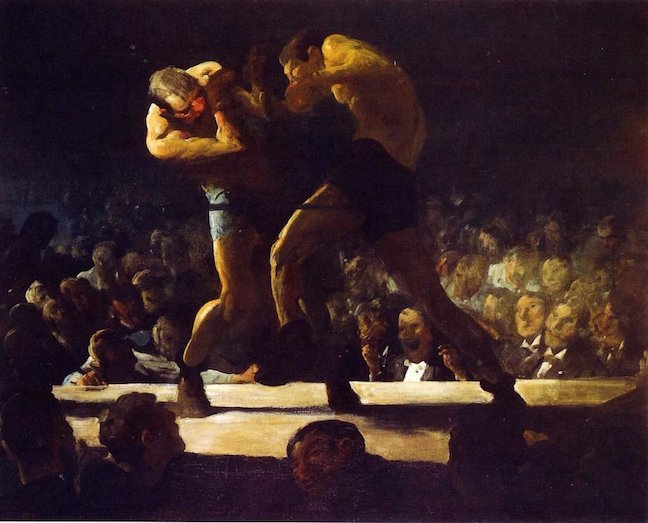
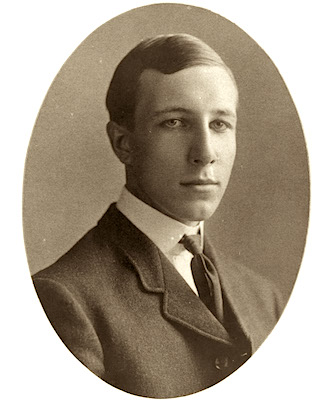
George Wesley Bellows (August 12 or August 19, 1882 – January 8, 1925) was an American realist painter, known for his bold depictions of urban life in New York City, becoming, according to the Columbus Museum of Art, “the most acclaimed American artist of his generation”.   Wikipedia

Bellows once commented that “there is nothing I do not want to know that has to do with life or art.” He drew equal inspiration from municipal workers removing snow from the city’s streets, longshoremen loading and unloading cargo from ocean liners and freighters, and the ladies and gentlemen who created a rich visual pageantry as they enjoyed New York’s parks. The variety of Bellows’s urban subjects was matched by the range of palettes and techniques he employed, often on immense canvases. Few would have disputed a critic who observed of Bellows at the time of his death, “He was an adherent of ‘wallop’ in painting.” In an astute bid for broad appeal, Bellows exhibited his works widely, attracting both critics—”There’s been an awful lot written about me,” he admitted—and patrons. His dramatic paintings of familiar subjects were acquired by major museums, important regional art centers, educational institutions, and prominent collectors, from the relatively adventurous to those with more conventional tastes. Both an active academician and a keen independent, Bellows was at home among diverse factions of the art world. Writing in 1913, the critic Forbes Watson noted his “curious appeal” to “the conservative and radical alike.”
http://www.metmuseum.org/exhibitions/listings/2012/bellows


This slideshow requires JavaScript.

http://www.georgebellows.com/biography
https://www.britannica.com/biography/George-Wesley-Bellows
https://en.wikipedia.org/wiki/George_Bellows


George Luks: Born August 13, 1867

HesterStreet

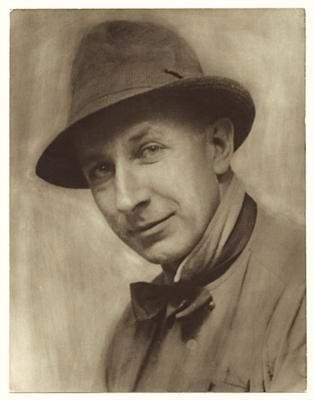
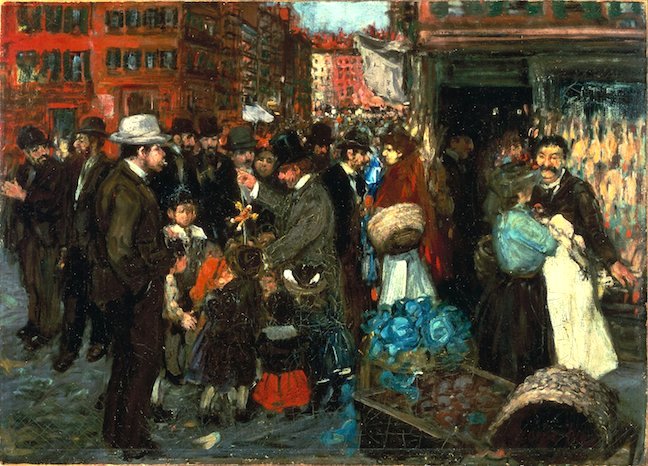
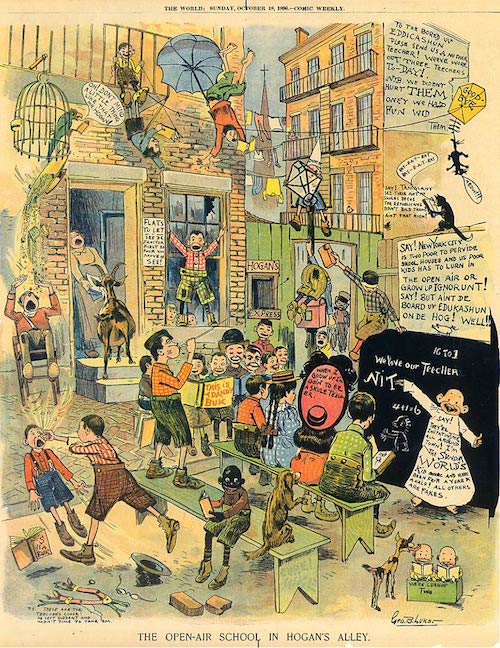
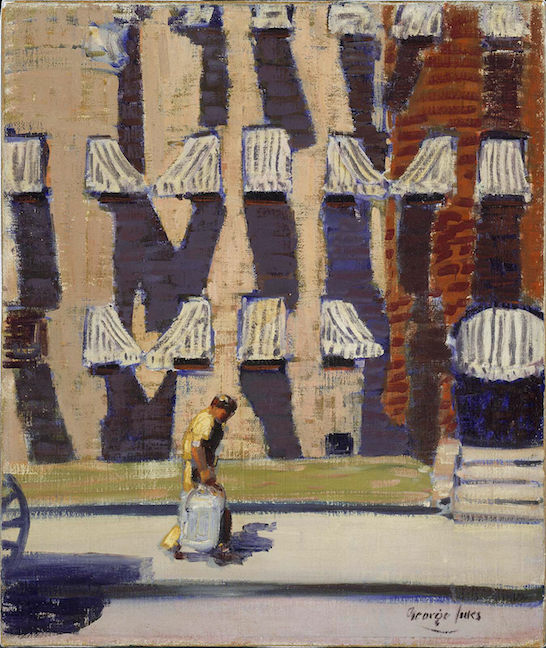
GeoBLuksGeorge Luks was an American realist painter and comic illustrator, best known for his images of New York and its inhabitants. Born in Williamsport, Pennsylvania, Luks worked as a vaudeville performer before moving to Philadelphia to study art at the Pennsylvania Academy of the Fine Arts…Luks was publishing comic illustrations in Puck and Truth, and upon his return in 1893 he accepted a job as a newspaper illustrator at the Philadelphia Press.
FROM http://www.illustrationhistory.org/artists/george-luks

His career took a small detour in 1895 when heYellowKid traveled to Cuba as an artist-correspondent for the Philadelphia Evening Bulletin…When he returned to America in 1896, he joined the staff of Pulitzer’s World as an illustrator and cartoonist…One of his many famous colleagues at the World was Richard F. Outcault, who had joined the staff in 1894…Outcault’s Yellow Kid became so popular with the public and showed that it increased the newspaper’s sales as well as the sales of merchandise his likeness appeared on, from candy to whiskey. This awareness was occurring at the same time that William Randolph Hearst had come to town, purchased the Journal and was having an intense battle with Pulitzer’s World for dominance in New York City. Hearst knew a good thing when he saw it and lured Outcault away from Pulitzer…Pulitzer was not to be outdone, however, and assigned Luks to continue drawing the Yellow BostonKid in Hogan’s Alley for the World…Luks [continued to work] at his painting and was finally able to make a living at it. He left the newspaper in 1898.
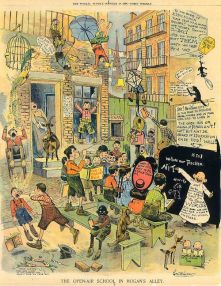
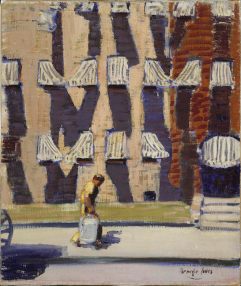
FROM https://www.hoganmag.com/blog/george-luks-the-other-yellow-kid-artist

George Luks prided himself in being the “bad boy” of American art and would be pleased that this notion has survived as his reputation as a significant painter of the twentieth century continues to grow. A heavy drinker and engaged story-teller, Luks manufactured details of his own life to make himself more colorful. Most ingrained in his biography was his tall tale of KidWithBallhaving fought in the Mid-West as “Chicago Whitey,” a middle-weight boxing champion. No one ever checked his details. However, the mythology Luks created around himself masked an insecurity that reveals itself in the diversity of styles he sometimes employed as a painter. His mainstay was realism, but he experimented with impressionism and post-impressionism and was known to alter a canvas if it was criticized, sometimes ruining it entirely. The critic, James Huneker, noted literally hundreds of unfinished canvases in Luks upper Manhattan studio which he would either re-work or paint over. But when Luks was “on” he was a forceful painter of huge talent and confidence, noted for his sure, brilliant handling of a brush.
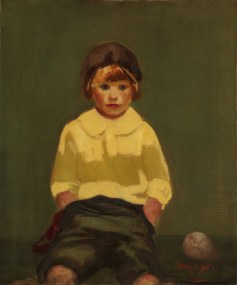
FROM http://www.tfaoi.com/aa/2aa/2aa563.htm
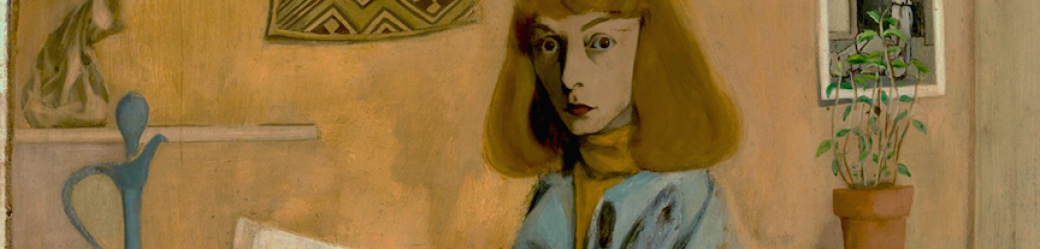
Ephemeral New York: Posts Tagged ‘George Luks’~
https://ephemeralnewyork.wordpress.com/tag/george-luks/

August 12 or 19: Birthday of George Bellows

George Wesley Bellows (August 12 or August 19, 1882 – January 8, 1925) was an American realist painter, known for his bold depictions of urban life in New York City, becoming, according to the Columbus Museum of Art, “the most acclaimed American artist of his generation”.   Wikipedia

Bellows once commented that “there is nothing I do not want to know that has to do with life or art.” He drew equal inspiration from municipal workers removing snow from the city’s streets, longshoremen loading and unloading cargo from ocean liners and freighters, and the ladies and gentlemen who created a rich visual pageantry as they enjoyed New York’s parks. The variety of Bellows’s urban subjects was matched by the range of palettes and techniques he employed, often on immense canvases. Few would have disputed a critic who observed of Bellows at the time of his death, “He was an adherent of ‘wallop’ in painting.” In an astute bid for broad appeal, Bellows exhibited his works widely, attracting both critics—”There’s been an awful lot written about me,” he admitted—and patrons. His dramatic paintings of familiar subjects were acquired by major museums, important regional art centers, educational institutions, and prominent collectors, from the relatively adventurous to those with more conventional tastes. Both an active academician and a keen independent, Bellows was at home among diverse factions of the art world. Writing in 1913, the critic Forbes Watson noted his “curious appeal” to “the conservative and radical alike.”
FROM http://www.metmuseum.org/exhibitions/listings/2012/bellows

This slideshow requires JavaScript.

http://www.georgebellows.com/biography