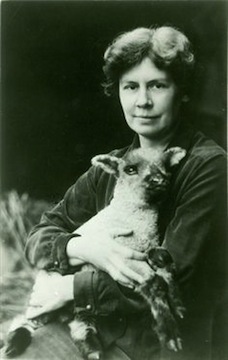
Dorothy P. Lathrop: Born April 16, 1891

DPLwLamb

“Dorothy Pulis Lathrop was born April 16, 1891 in Albany, New York. One of the most influential and important illustrators of children’s books in the thirties and forties, she began her career in 1918. At that time she was a 27 year old teacher of art in Albany. Arguably her most famous works were the illustrations for Rachel Field’s, Hitty, Her First Hundred Years, the story of a doll. The book was awarded the Newbery Medal in 1930 and a new edition was in the stores for Christmas 1999. An image from the book is at the right. Lathrop was awarded the very first Caldecott Medal in 1938 for her book Animals of the Bible (1937).
”
FROM http://lathropgenealogy.blogspot.com/2005/03/dorothy-lathrop-biography.html

Read/download The Three Mulla-mulgars~ http://www.gutenberg.org/ebooks/32620
Read/download Down-adown-derry~ https://archive.org/details/downadownderrybo00delauoft

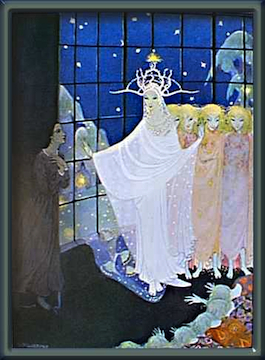
Fairieswomen

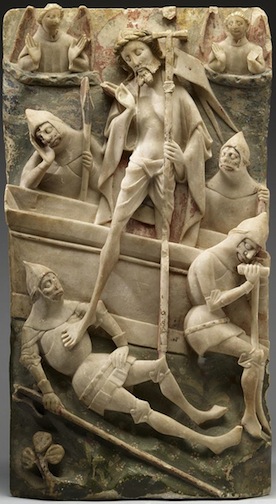
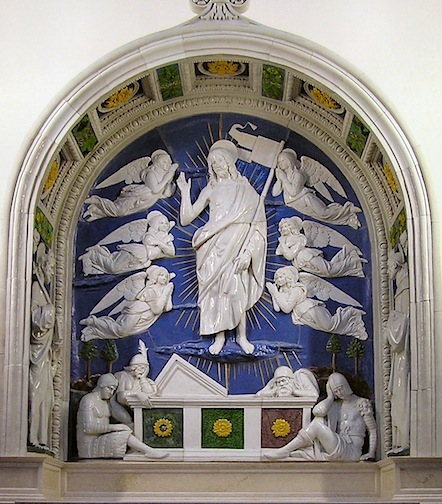
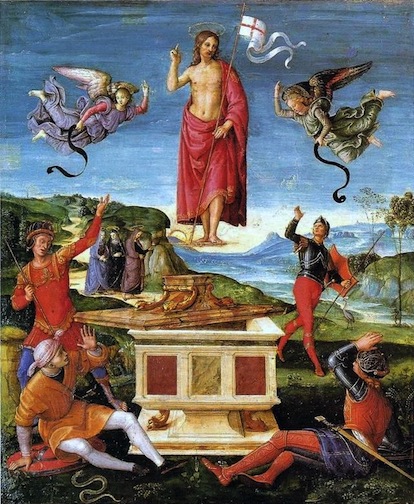
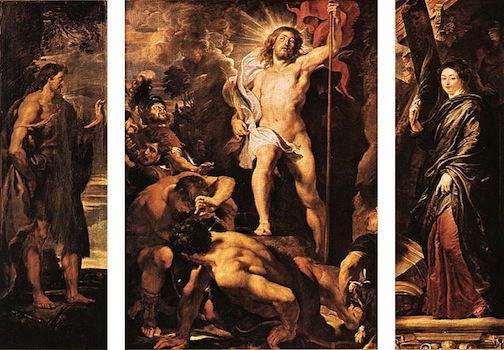
The Resurrection in Art

Christians celebrate the resurrection of Jesus on Easter Sunday, two days after Good Friday, the day of his crucifixion. It is the central tenet of Christian theology. The Resurrection of Christ has been portrayed by artists for 2,000 years; I thought it would be appropriate at Easter to take an (obviously lightning fast) overview of how some painters have depicted it. (Click image to enlarge).

GreekAnonymous
The Resurrection
11th century
Mosaic
Monastery of Hosios Loukas, Greece

Psalter

Anonymous
Manuscript Leaf with the Resurrection, from a Psalter
13th century
Tempera, ink, gold, and silver on parchment
Metropolitan Museum of Art, New York

AlabasterAnonymous
Paneled altarpiece section with Resurrection of Christ
15th century
English Nottingham alabaster with remains of colour
Walters Art Museum, Baltimore, MD

Andrea della Robbia (1435–1525)OLYMPUS DIGITAL CAMERA
Resurrection
15th century
Enamelled Terracotta
Bode-Museum, Berlin, Germany

FrancescaPiero della Francesca (1420-1492)
The Resurrection of Jesus Christ
1463
Mural in fresco and tempera
Museo Civico, Sansepolcro, Italy

Raphael (1483-1520)Raphael
The Resurrection of Jesus Christ
1499-1502
Oil on panel
São Paulo Museum of Art, Brazil

RubensPeter Paul Rubens (1577-1640)
The Resurrection of Christ
1611-1612
Oil on panel
Antwerp Cathedral, Belgium

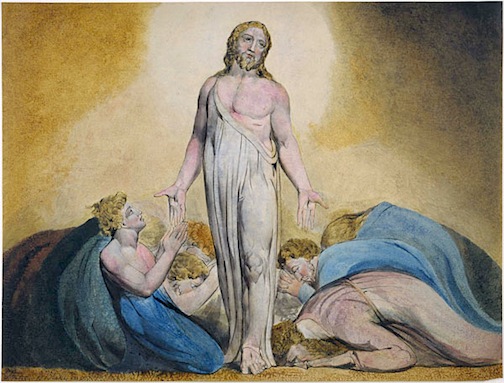
Blake

William Blake (1757-1827)
Christ Appearing to His Disciples After the Resurrection
1795
Monotype hand-colored with watercolor and tempera
National Gallery of Art, Washington DC

ManetÉdouard Manet (1832–1883)
The Dead Christ with Angels
1864
Oil on canvasMetropolitan Museum of Art, New York City

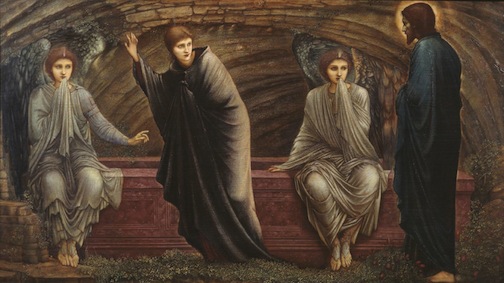
Sir Edward Coley Burne-Jones (1833–1898)
The Morning of the Resurrection
1886
Oil paint on wood
Tate Gallery, London, UKThe Morning of the Resurrection 1886 by Sir Edward Coley Burne-Jones, Bt 1833-1898

Leonardo da Vinci: Born April 15, 1452

LastSupperThe Last Supper ~ 1494–1498 ~ Oil/tempera on dry plaster ~ Convent of Santa Maria delle Grazie, Milan

The illegitimate son of a 25-year-old notary, Ser Piero, and a peasant girl, Caterina, Leonardo was born on April 15, 1452, in Vinci, Italy, just outside Florence…Growing up in his father’s Vinci home, Leonardo had access to scholarly texts owned by family and friends. He was also exposed to Vinci’s longstanding painting tradition, and when he was about 15 his father apprenticed him to the renowned workshop of Andrea del Verrochio in Florence. Even as an apprentice, Leonardo demonstrated his colossal talent.
>>>>>>   https://legacy.mos.org/leonardo/ (Museum of Science: Leonardo da Vinci, Renaissance Man)

“On Leonardo da Vinci’s Birthday MFA Boston Shows the Most Beautiful Drawing in the World”~ https://news.artnet.com/in-brief/leonardo-da-vinci-birthday-288061 (artnet news)

Slideshow~ http://www.metmuseum.org/toah/hd/leon/hd_leon.htm#slideshow1 (Metropolitan Museum of Art, Heilbrunn Timeline of Art History)

Leonardo Da Vinci timeline~ http://worldhistoryproject.org/topics/leonardo-da-vinci (World History Project)


The Story of Leonardo’s Horse~ https://www.davincisciencecenter.org/about/leonardo-and-the-horse/the-full-story-of-leonardos-horse/ (Da Vinci Science Center)


Ralph Steadman Illustrates the Life of Leonardo da Vinci~ http://www.brainpickings.org/2014/07/11/ralph-steadman-i-leonardo/ (Brain Pickings)

List of works by Leonardo da Vinci~ http://en.wikipedia.org/wiki/List_of_works_by_Leonardo_da_Vinci (Wikipedia)

Portrait of Cecilia Gallerani (Lady with the Ermine), about 1488Lady with an Ermine
1489–1490
Oil on wood panel
Wawel Castle, Kraków

Mona LisaMonaLisa
1503–1506 (perhaps 1517)
Oil on wood panel
Musée du Louvre, Paris

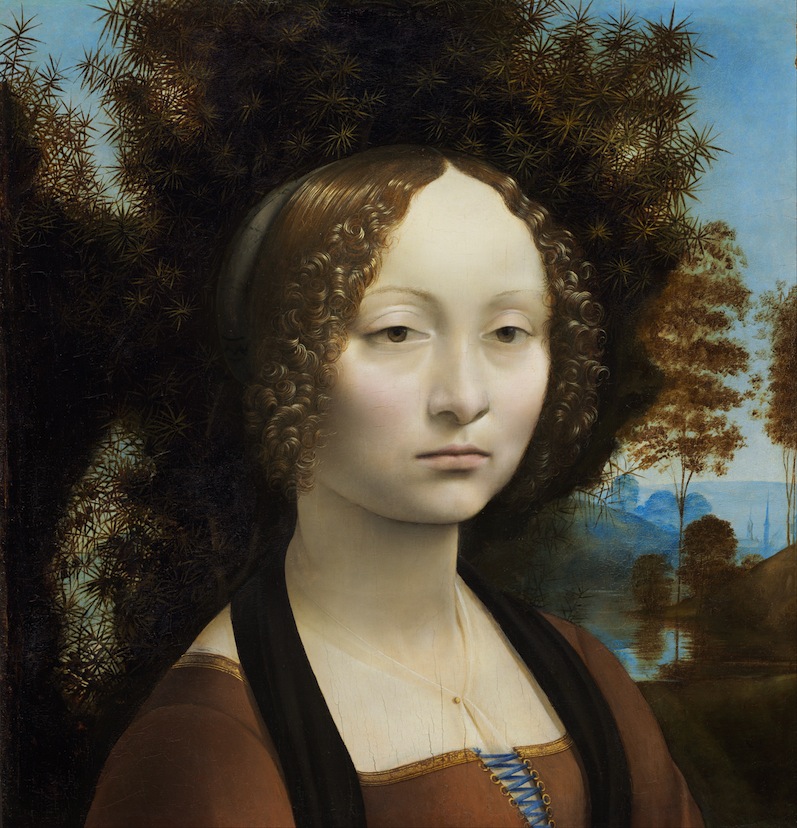
Ginevra
Ginevra de’Benci
1474–1478
Oil on wood panel
National Gallery of Art, Washington, D.C.

St. John the BaptistJohnTheBaptist
1513–1516

Oil on wood panel
Musée du Louvre, Paris

>> Click on images to enlarge <<<

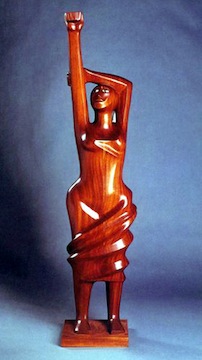
Elizabeth Catlett (April 15, 1915-April 2, 2012)

CatlettPic

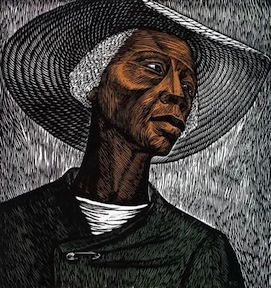
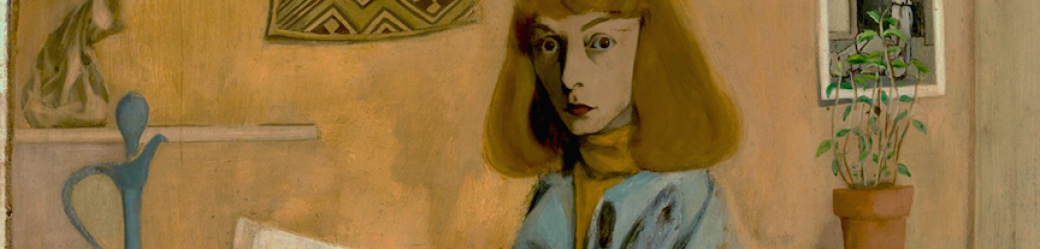
Sculptor and printmaker Elizabeth Catlett used her art to advocate for social change in both the U.S. and her adopted country of Mexico for almost three-quarters of a century. The granddaughter of former slaves, Catlett was raised in Washington, D.C. Her father died before she was born and her mother held several jobs to raise three children. Refused admission to Carnegie Institute of Technology because of her race, Catlett enrolled at Howard University, where her teachers included artist Catlett1Loïs Mailou Jones and philospher Alain Locke. She graduated with honors in 1935 and went on to earn the first the first M.F.A. in sculpture at the University of Iowa five years later.
Grant Wood, her painting teacher at Iowa, encouraged students to make art about what they knew best and to experiment with different mediums, inspiring Catlett to create lithographs, linoleum cuts, and sculpture in wood, stone, clay, and bronze. She drew subjects from African American and later Mexican life.
In 1946, a grant from the Rosenwald Foundation enabled Catlett to move to Mexico City with her husband, Catlett2printmaker Charles White. There she joined the Taller de Gráfica Popular, an influential and political group of printmakers. At the Taller, Catlett met the Mexican artist Francisco Mora, whom she married after divorcing White and with whom she had three sons.

https://nmwa.org/explore/artist-profiles/elizabeth-catlett

Biography: https://www.elizabethcatlettart.com/bio
NYT~”Elizabeth Catlett, Sculptor With Eye on Social Issues, Is Dead at 96″: http://www.nytimes.com/2012/04/04/arts/design/elizabeth-catlett-sculptor-with-eye-on-social-issues-dies-at-96.html

Bessie Smith: Born on April 15, 1894

Smith’s childhood in 1890s Tennessee began with a series of setbacks that most people don’t get over: Her parents were dead by the time she was 10, and she and her siblings were raised in Chattanooga by an aggrieved older sister. They nearly starved. For money, her sister took in laundry. Young Bessie sang on the street and at churches that sent for the child with the extraordinary voice.

By the age of nine, she had a following. By 16, she’d met blues great Ma Rainey and begun traveling with the Rabbit Foot Minstrels, a touring variety show that played to rural populations of the South and Midwest. By 24, Smith had lit out as a solo act…
FROM https://www.npr.org/2018/01/05/575422226/forebears-bessie-smith-the-empress-of-the-blues

https://www.rockhall.com/inductees/bessie-smith
http://www.allmusic.com/artist/bessie-smith-mn0000054707/biography
http://www.naxos.com/person/Bessie_Smith_2941/2941.htm

Pysanky~ Ukrainian Easter Eggs

http://www.pysanka.com/the_art.php
http://www.learnpysanky.com/designs.html

The Ukrainian pysanka (from the word pysaty, to write) was believed to possess an enormous power not only in the egg itself, which harbored the nucleus of life, but also in the symbolic designs and colors which were drawn upon the egg in a specific manner, according to prescribed rituals. The intricately colored eggs were used for various social and religious occasions and were considered to be a talisman, a protector against evil, as well as harbingers of good.
http://www.ukrainianmuseum.org/pysanky.html

Fabergé Imperial Easter Eggs

The series of Easter eggs created by Fabergé for the Russian Imperial family, from 1885 through to 1916…A centuries-old tradition of bringing hand-coloured eggs to Church to be blessed and then presented to friends and family had evolved through the years and, among the highest echelons of St Petersburg society, the custom developed of presenting valuable bejewelled Easter gifts. So it was that Emperor Alexander III had the idea of commissioning Fabergé to create a precious Easter egg as a surprise for his Empress. The first Imperial Easter egg was born…From 1887 Fabergé was given complete freedom in the design and execution, with the only prerequisite being that there had to be surprise within each creation.
http://www.faberge.com/news/49_imperial-eggs.aspx

fabergeczarevichegg

Beautiful photographs and more information here~ https://elliottingotham.wordpress.com/1301-2/

This automaton was made as the ‘surprise’ for the Diamond Trellis Egg, made by Carl Fabergé for Tsar Alexander III. The Tsar presented the egg to his wife Tsarina Marie Feodorovna for Easter 1892.
https://www.royalcollection.org.uk/collection/9268