July 14, 1916~ The Dada Manifesto

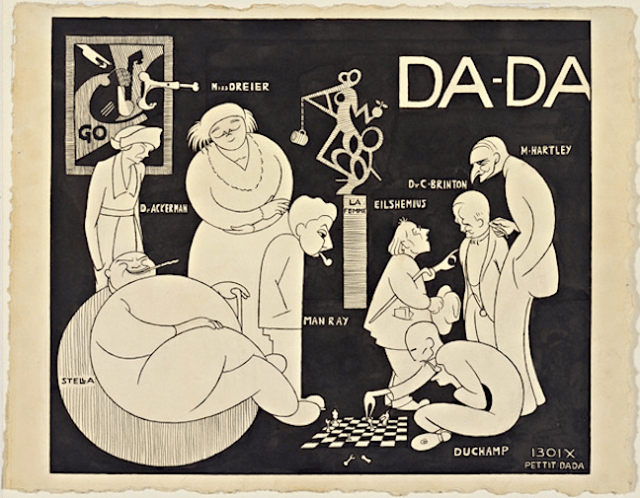
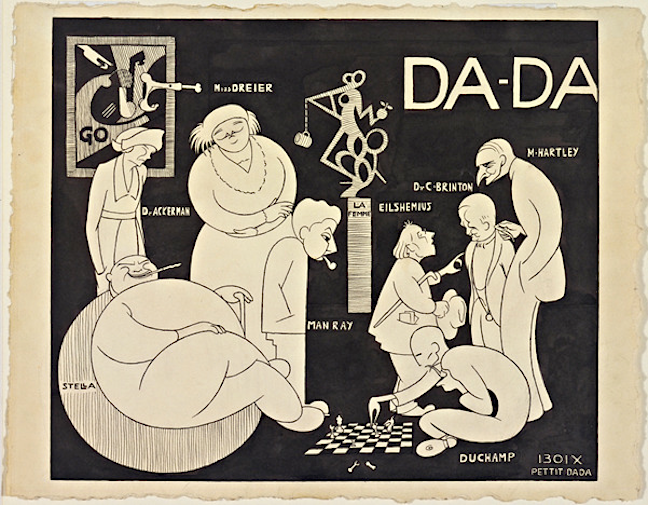
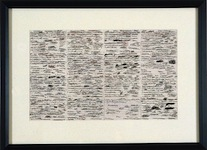
Richard Boix. Da-da (New York Dada Group). 1921. Ink on paper. 11 1/4″ x 14 1/2″ (28.6 x 36.8 cm)
Museum of Modern Art / Katherine S. Dreier Bequest

On July 14, 1916, the poet Hugo Ball proclaimed the manifesto for a new movement. Its name: Dada. Its aim: to “get rid of everything that smacks of journalism, worms, everything nice and right, blinkered, moralistic, europeanised, enervated.” This aim could be achieved simply by saying: “Dada.”
https://www.nytimes.com/2016/07/10/arts/dada-100-years-later.html

Dada~ Born February 5, 1916            100th anniversary of DADA~

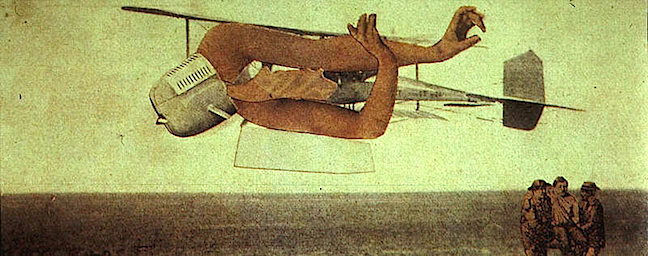
  Max Ernst. Murdering Airplane. 1920. Collage. 2 1/2” x 5 1/2” (6.35 cm × 13.97 cm). Private collection.

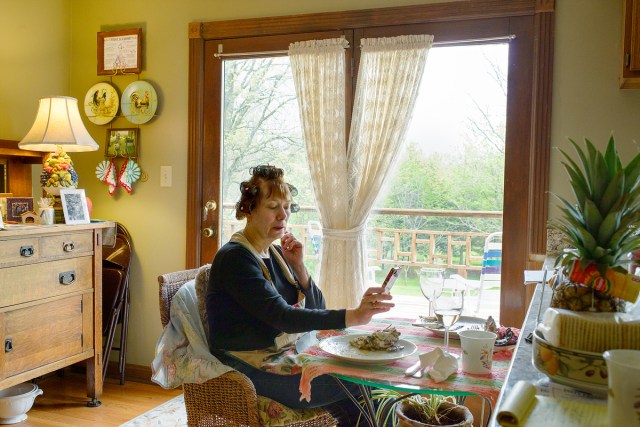
Photographer Captures 100 Female Artists In Their Homes And Studios

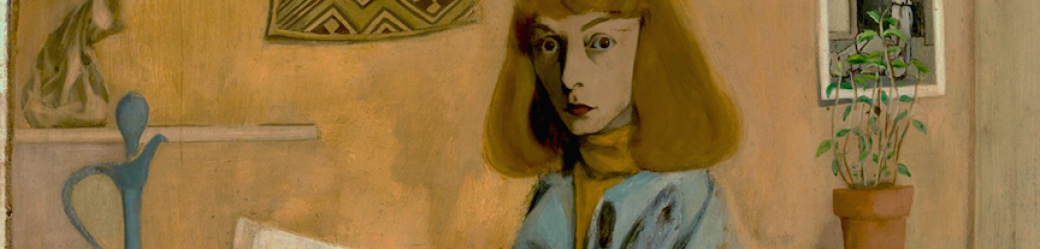
A great portrait is more than just a frozen reflection of the subject’s appearance. It’s a chance moment, blanketed in natural light, in which the subject’s authentic self is visible in her expression, her stance, her aura. A great portrait blurs the line between a subject and her surroundings, all contributing equally to the overall impression of a singular human being.

Photographer Barbara Yoshida captured not one great portrait, but 100. And to make it all the more glorious, her subjects are all female artists, groundbreaking in their own right.

Source: Photographer Captures 100 Female Artists In Their Homes And Studios | HuffPost

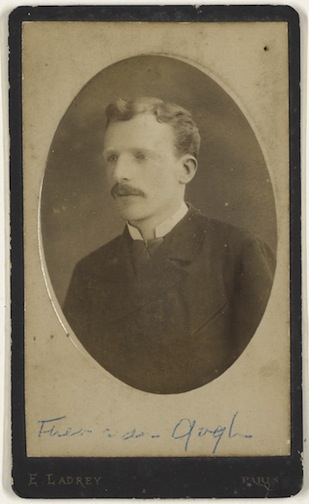
Theo van Gogh: Born May 1, 1857

Theo van Gogh *1882Theo van Gogh (1857-1891) first worked as an art dealer in 1873 in the Brussels art gallery owned by his uncle Hendrick van Gogh. A few months later, he was sent to the Hague as an employee of Goupil & Co., an internationally-known Parisian merchant…

Vincent, his brother and elder by four years, preceded him in this career as early as TvG21869. He acted as Theo’s mentor…These exchanges continued in Paris, where Theo was sent for the 1878 World Fair. He settled there and around 1880 he became director of the Paris branch of Goupil & Co. As for Vincent, he left Goupil & Co. in 1876 and decided, after much hesitation, to become a painter. In 1886 he came to Paris, staying with his brother, before going two years later to the south of France.TvG3
FROM Theo van Gogh : art-dealer, collector, Vincent’s brother  ~Musée d’Orsay

The Letters From Vincent to Theo~
http://www.vggallery.com/letters/to_theo_main.htm

The Letters From Theo to Vincent~ http://www.vggallery.com/letters/to_vincent.htm

April 29, 1945: U.S. Seventh Army’s 45th Infantry Division liberates Dachau

music

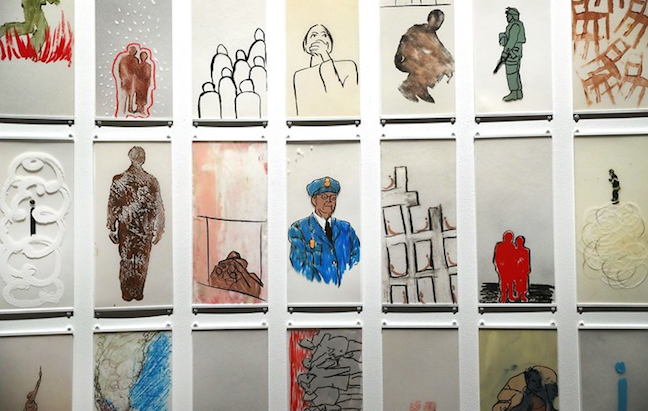
“In 1944 Zoran Music was arrested by the Gestapo in Venice and deported to the concentration campo in Dachau, an experience that marked his life and his art thereafter. In 1945 he made a series of drawings depicting scenes related to the Holocaust: cremation ovens, hanged men and piles of corpses. These drawings would be the inspiration, in the 1970s, for the series Nous ne sommes pas les derniers (We Are Not the Last)…”
FROM http://www.museoreinasofia.es/en/collection/artwork/nous-ne-sommes-pas-derniers-we-are-not-last

When we were in the camp, people would often declare that this sort of thing could never happen again. When the war is over, they said, a better world will come into being and such horrors will never recur. . . But then, as time went by, I saw the same sort of thing starting to happen again all over the world—in Vietnam, in the Gulag, in Latin America—everywhere. And I realized that what we had said in those days—that we would be the last people to experience such things—was not true: the truth is that we were not the last. – Zoran Music
FROM http://thejewishmuseum.org/exhibitions/an-artists-response-to-evil-we-are-not-the-last-by-zoran-music#about

Zoran Mušič on Wikipedia: https://en.wikipedia.org/wiki/Zoran_Mušič

100th anniversary of the Dada Manifesto~

This slideshow requires JavaScript.

http://www.tate.org.uk/search?gm=300

The 1st and 2nd DADA Art Manifestos~
http://www.arthistoryarchive.com/arthistory/dada/Dada-Manifesto.html
DADA: the art movement that questioned everything~
http://www.swissinfo.ch/eng/culture/100-years_dada–the-art-movement-that-questioned-everything/41939442
Dada as a worldview~ http://retroavangarda.com/dada-as-a-worldview/
Dada~ Born February 5, 1916~
https://schristywolfe.com/2016/02/05/dada-born-february-5-1916/

John Waters: Born April 22, 1946

WatersFace

“Beverly Hills John,” 2012, C-Print

The Hollywood Reporter: You made a hilarious, new 74-minute version of your X-rated 1972 cult film Pink Flamingos, rewritten as a “desexualized sequel” — a children’s movie with an all-kid cast. Why did you decide to exhibit the video here, in this way?
John Waters: I don’t think of it as the next movie in my filmography at all.I don’t want it showing in a movie theater where people have to come in and take a seat and have to watch it straight through. You understand what the piece is if you watch it for 20 minutes.
The Hollywood Reporter: Tell me a little bit about how you reconcile your work in the worlds of art and of film, pop and pulp culture?
John Waters: I have gone to great lengths in my career to keep my art career and my film career completely separate. But my art work is as equal to me as making movies.

FROM http://www.hollywoodreporter.com/news/director-john-waters-has-a-762318

Interview, 2015, The Guardian~
http://www.theguardian.com/artanddesign/2015/jun/30/john-waters-art-lassie-justin-bieber-ansel-adams
Interview, 2004, BOMB~ http://bombmagazine.org/article/2628/john-waters
John Waters: Born April 22, 1946~
https://schristywolfe.com/2015/04/22/john-waters-born-april-22-1946/
New John Waters Bathrooms at the BMA~ https://bmoreart.com/2021/10/speeches-champagne-and-lines-for-the-loo-new-john-waters-bathrooms-at-the-bma.html

FrameScreenersArt

The Resurrection in Art

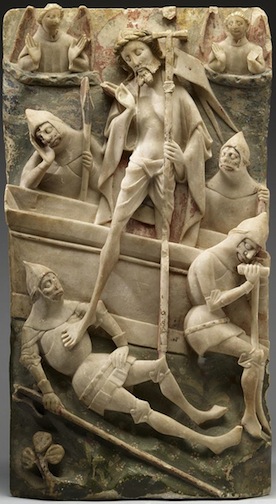
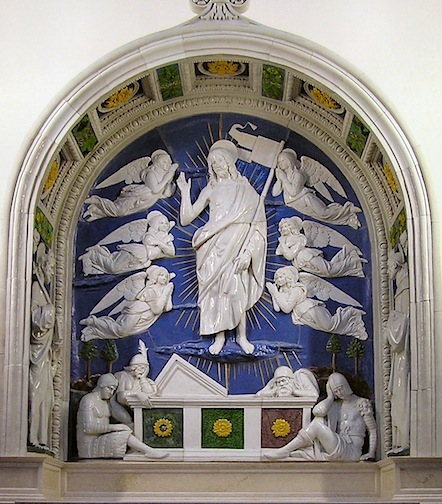
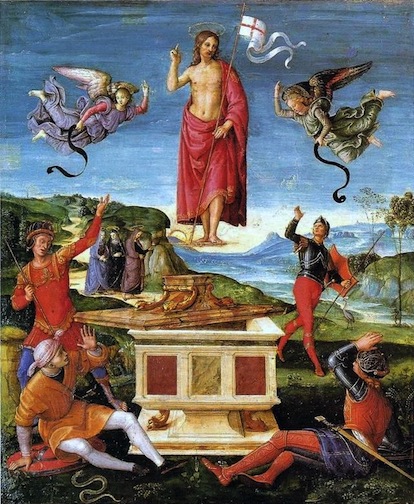
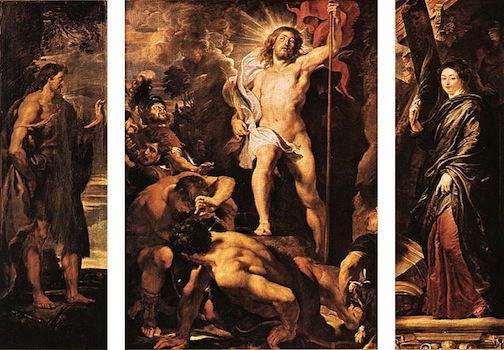
Christians celebrate the resurrection of Jesus on Easter Sunday, two days after Good Friday, the day of his crucifixion. It is the central tenet of Christian theology. The Resurrection of Christ has been portrayed by artists for 2,000 years; I thought it would be appropriate at Easter to take an (obviously lightning fast) overview of how some painters have depicted it. (Click image to enlarge).
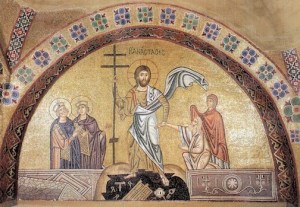
GreekAnonymous
The Resurrection
11th century
Mosaic
Monastery of Hosios Loukas, Greece

Psalter

Anonymous
Manuscript Leaf with the Resurrection, from a Psalter
13th century
Tempera, ink, gold, and silver on parchment
Metropolitan Museum of Art, New York
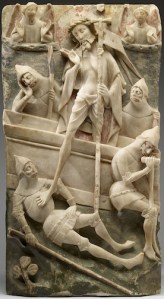
AlabasterAnonymous
Paneled altarpiece section with Resurrection of Christ
15th century
English Nottingham alabaster with remains of colour
Walters Art Museum, Baltimore, MD

Andrea della Robbia (1435–1525)OLYMPUS DIGITAL CAMERA
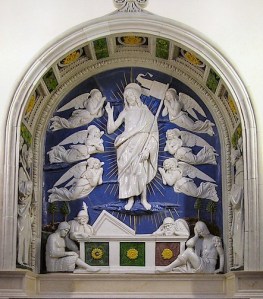
Resurrection
15th century
Enamelled Terracotta
Bode-Museum, Berlin, Germany
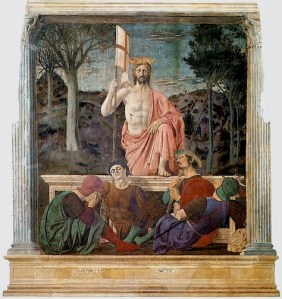
FrancescaPiero della Francesca (1420-1492)
The Resurrection of Jesus Christ
1463
Mural in fresco and tempera
Museo Civico, Sansepolcro, Italy

Raphael (1483-1520)Raphael
The Resurrection of Jesus Christ
1499-1502
Oil on panel
São Paulo Museum of Art, Brazil
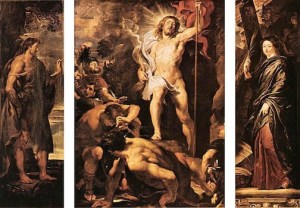
RubensPeter Paul Rubens (1577-1640)
The Resurrection of Christ
1611-1612
Oil on panel
Antwerp Cathedral, Belgium
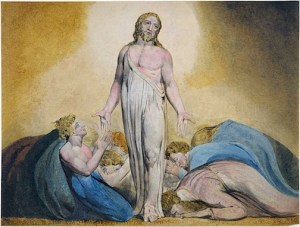
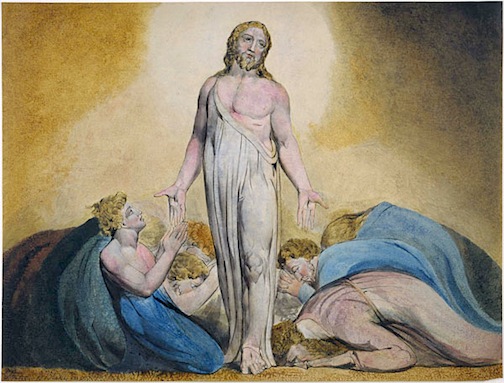
Blake

William Blake (1757-1827)
Christ Appearing to His Disciples After the Resurrection
1795
Monotype hand-colored with watercolor and tempera
National Gallery of Art, Washington DC
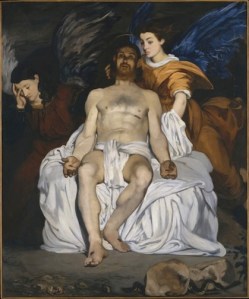
ManetÉdouard Manet (1832–1883)
The Dead Christ with Angels
1864
Oil on canvasMetropolitan Museum of Art, New York City

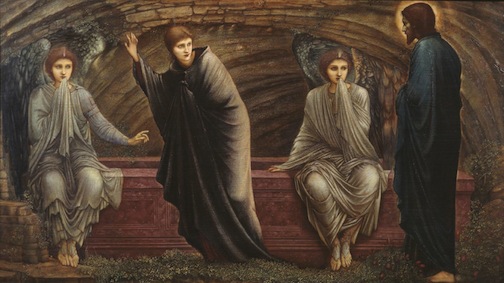
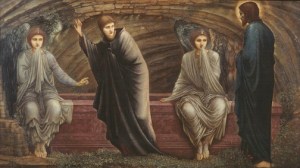
Sir Edward Coley Burne-Jones (1833–1898)
The Morning of the Resurrection
1886
Oil paint on wood
Tate Gallery, London, UKThe Morning of the Resurrection 1886 by Sir Edward Coley Burne-Jones, Bt 1833-1898
Pysanky~ Ukrainian Easter Eggs

http://www.pysanka.com/the_art.php
http://www.learnpysanky.com/designs.html

The Ukrainian pysanka (from the word pysaty, to write) was believed to possess an enormous power not only in the egg itself, which harbored the nucleus of life, but also in the symbolic designs and colors which were drawn upon the egg in a specific manner, according to prescribed rituals. The intricately colored eggs were used for various social and religious occasions and were considered to be a talisman, a protector against evil, as well as harbingers of good.
http://www.ukrainianmuseum.org/pysanky.html

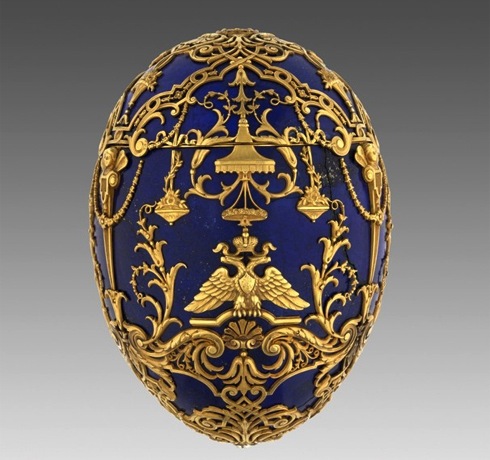
Fabergé Imperial Easter Eggs

The series of Easter eggs created by Fabergé for the Russian Imperial family, from 1885 through to 1916…A centuries-old tradition of bringing hand-coloured eggs to Church to be blessed and then presented to friends and family had evolved through the years and, among the highest echelons of St Petersburg society, the custom developed of presenting valuable bejewelled Easter gifts. So it was that Emperor Alexander III had the idea of commissioning Fabergé to create a precious Easter egg as a surprise for his Empress. The first Imperial Easter egg was born…From 1887 Fabergé was given complete freedom in the design and execution, with the only prerequisite being that there had to be surprise within each creation.
http://www.faberge.com/news/49_imperial-eggs.aspx

fabergeczarevichegg

Beautiful photographs and more information here~ https://elliottingotham.wordpress.com/1301-2/

This automaton was made as the ‘surprise’ for the Diamond Trellis Egg, made by Carl Fabergé for Tsar Alexander III. The Tsar presented the egg to his wife Tsarina Marie Feodorovna for Easter 1892.
https://www.royalcollection.org.uk/collection/9268