February 5~ African-American visual artists

Henry Ossawa Tanner (1859-1937), First African-American painter to gain international acclaim
https://www.britannica.com/biography/Henry-Ossawa-Tanner

The Annunciation / 1898 / Oil on canvas / 57”x71 1/4”


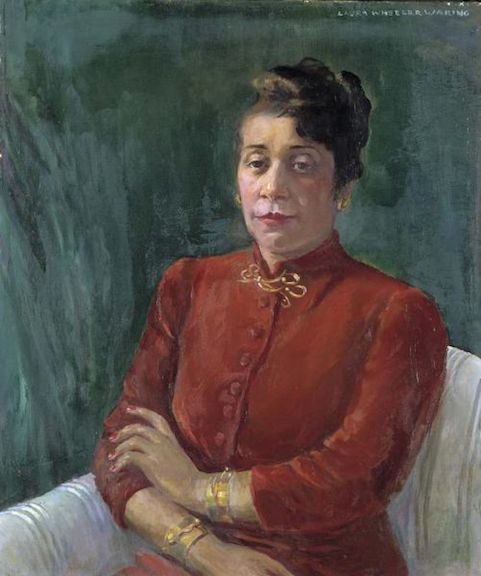
Laura Wheeler Waring (1877-1948)
African-American artist, illustrator, and educator
http://tmlarts.com/laura-wheeler-waring/

Portrait of Alma Thomas / c.1945 / Oil on canvas / 30”x25 1/8”

February 4~ African-American visual artists

Edmonia Lewis (1844-1907)
Neoclassical African-American and Native American sculptor
https://www.britannica.com/biography/Edmonia-Lewis

Hiawatha / 1868 / Marble / 13 3/4”x7 3/4”x5 1/2”


Bill Traylor (1853/54-1949)
African-American self-taught artist
https://americanart.si.edu/artist/bill-traylor-4852

Untitled (Radio) / 1939–42 / Opaque watercolor & pencil on printed advertising cardboard / 32 1/2”x24 1/2”

February 3~ African-American visual artists

Edward Mitchell Bannister (1828-1901), African-American painter of landscapes and pastoral subjects
https://americanart.si.edu/artist/edward-mitchell-bannister-226

Scene along the Connecticut River, Westmoreland / c.1870 / Oil on canvas / 30”x20”


Harriet Powers (1837-1910), African-American folk artist and quilt maker
https://www.civilwarwomenblog.com/harriet-powers/

Pictorial quilt / 1895–98 / Cotton plain weave, pieced, appliqued, embroidered, and quilted / 68 7/8”x105”

February 2~ African-American visual artists


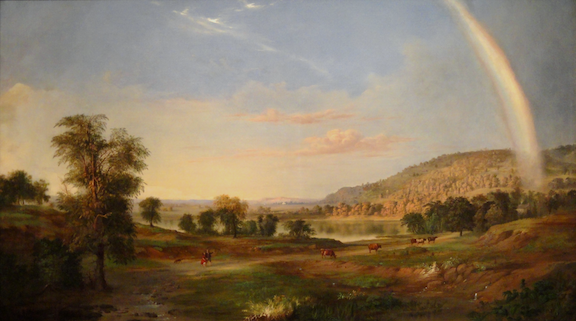
Robert S. Duncanson (1821-1872),  Nineteenth century African-American painter
https://www.google.com/culturalinstitute/beta/exhibit/NQJyYinFqXw_Lw

Landscape with Rainbow / 1859 / Oil on canvas / 30”x52 1/4”


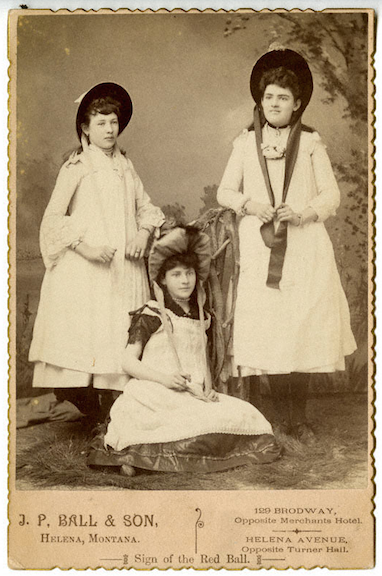
James Presley “JP” Ball (1825-1904)
African-American photographer, abolitionist, and entrepreneur
https://danishimmigrants.weebly.com/montana.html

Three girls photographed in Helena, Montana

February 1~ African-American visual artists


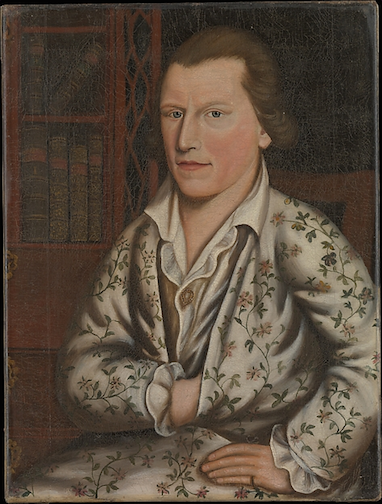
Prince Demah (c.1745 – March 1778)

African-American painter active in Boston in the late 1700s
https://outofthearchives.org/2015/01/10/prince-demah-portrait-painter

Portrait of William Duguid / 1773 / Oil on canvas / 20 3/4”x15 3/4”x1 1/8”


Joshua Johnson (c.1763-c.1824)
Biracial American painter
https://americanart.si.edu/artist/joshua-johnson-2479

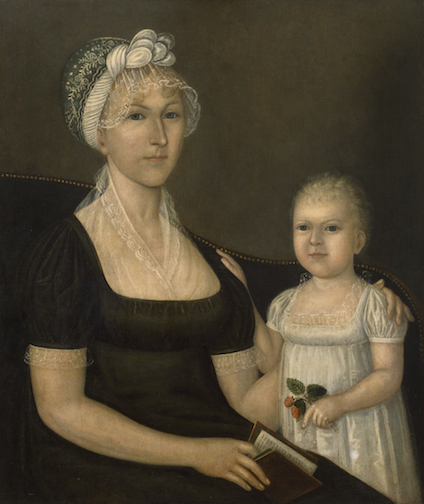
Mrs. Abraham White, Jr., and Daughter Rose / 1808-09 / Oil on canvas / 30”x25 1/2”


Kerry James Marshall: Born October 17, 1955

“For me,” he said in his MCA Chicago lecture, “the thing that has the greatest transformative capacity in the art world today, in terms of what people expect to see when they go to the art museum, is a painting that has a black figure in it, because 95 percent of all the other paintings you see are going to have white figures in them. The whole history of representation is built on the representation of white folks. Now, all of that stuff is good, so you have to figure out how to get good like that, and then get in there on the terms that are relevant for now.” Marshall has done this “from the ground up,” as Metropolitan Museum curator Ian Alteveer put it, working through historical styles and genres, including Rococo love scenes, large-scale history paintings, and Impressionist plein air fetes.
http://www.artnews.com/2016/03/02/the-painter-of-modern-life-kerry-james-marshall-aims-to-get-more-images-of-black-figures-into-museums/?singlepage=1

http://hyperallergic.com/310477/how-kerry-james-marshall-rewrites-art-history/
http://www.nga.gov/content/ngaweb/Collection/artist-info.35534.html#biography

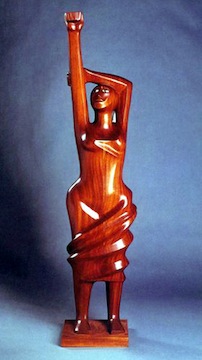
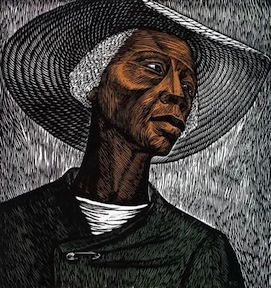
Elizabeth Catlett (April 15, 1915-April 2, 2012)

CatlettPic

Sculptor and printmaker Elizabeth Catlett used her art to advocate for social change in both the U.S. and her adopted country of Mexico for almost three-quarters of a century. The granddaughter of former slaves, Catlett was raised in Washington, D.C. Her father died before she was born and her mother held several jobs to raise three children. Refused admission to Carnegie Institute of Technology because of her race, Catlett enrolled at Howard University, where her teachers included artist Catlett1Loïs Mailou Jones and philospher Alain Locke. She graduated with honors in 1935 and went on to earn the first the first M.F.A. in sculpture at the University of Iowa five years later.
Grant Wood, her painting teacher at Iowa, encouraged students to make art about what they knew best and to experiment with different mediums, inspiring Catlett to create lithographs, linoleum cuts, and sculpture in wood, stone, clay, and bronze. She drew subjects from African American and later Mexican life.
In 1946, a grant from the Rosenwald Foundation enabled Catlett to move to Mexico City with her husband, Catlett2printmaker Charles White. There she joined the Taller de Gráfica Popular, an influential and political group of printmakers. At the Taller, Catlett met the Mexican artist Francisco Mora, whom she married after divorcing White and with whom she had three sons.

https://nmwa.org/explore/artist-profiles/elizabeth-catlett

Biography: https://www.elizabethcatlettart.com/bio
NYT~”Elizabeth Catlett, Sculptor With Eye on Social Issues, Is Dead at 96″: http://www.nytimes.com/2012/04/04/arts/design/elizabeth-catlett-sculptor-with-eye-on-social-issues-dies-at-96.html

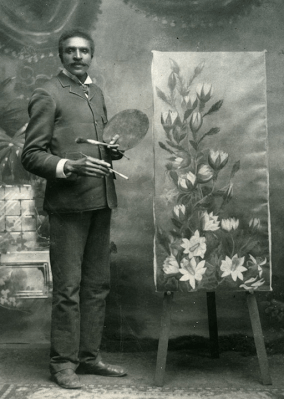
George Washington Carver: c.1864 – January 5, 1943

“Probably one of the most recognized names in agricultural research, George Washington Carver (c.1865-1943) overcame numerous obstacles to achieve a graduate education and gain international fame as an educator, inventor, and scientist. FROM http://www.encyclopediaofalabama.org/article/h-1064

Born a slave, [Carver] is one of the most historically prominent African American scientists. Carver was a pioneer as an agriculturalist and botanist by introducing methods of soil conservation for farmers, inventing hundreds of by-products from peanuts, pecans, sweet potatoes, and soybeans, and practicing “zero waste” sustainability. Scholars have recognized Carver’s talent as a painter and his ability to develop paints and dyes from various natural sources; however, there is very little scholarship documenting his work as a textile artist.”
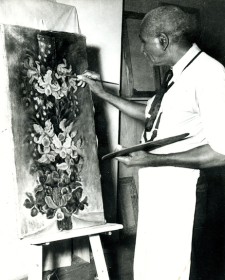
FROM http://digitalcommons.unl.edu/cgi/viewcontent.cgi?article=1922&context=tsaconf

“Throughout Carver’s life, he balanced two interests and talents that may seem at odds – the creative arts and the natural sciences. Skills of observation, experimentation, replication, and communication applied to both art and science, making Carver as comfortable in the sciences as in the arts.” FROM https://www.thehenryford.org/explore/stories-of-innovation/what-if/george-washington-carver
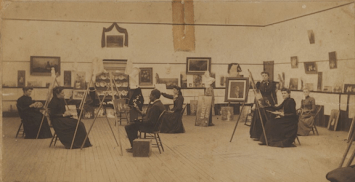

“In the late 1880s, [Carver] made his way to Winterset, Iowa, where a white couple encouraged him to apply to Simpson College in Indianola, Iowa. The only African American student, Carver enrolled in Simpson in September 1890 as an art major. His art teacher recognized his considerable talents, but she was concerned that as a black man, he would have difficulties finding work as a professional artist. After Carver showed her some plants he had hybridized, she suggested that he transfer to Iowa State College of Agricultural and Mechanic Arts (now Iowa State University), in Ames, Iowa, where her father, J. L. Budd, taught horticulture”. FROM http://www.encyclopediaofalabama.org/article/h-1064

“Holdings at the G.W. Carver National Monument and Tuskegee Institute National Historic indicate that Carver was proficient in textile techniques such as embroidery, weaving, crocheting, knitting and basketry. According to a document written by the National Park Service Carver created, ’embroideries on burlap, ornaments made of chicken feathers, seed and colored peanut necklaces, woven textiles’ (p. 24) and that ‘He was an honorary member of the Royal Society of Arts in London, England’.” FROM http://digitalcommons.unl.edu/cgi/viewcontent.cgi?article=1922&context=tsaconf
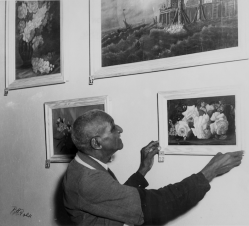
“What spare time he salvaged from his hectic schedule usually went for the pursuit of loves Carver had sacrificed, like botany and art. He found time to crochet, knit, and do needlework. He found these activities satisfactory and they enabled him to produce useful items for friends. He had great appreciation for the world around him, in particular, the materials found in nature. He dyed many of his own threads and fibers with natural dyes made from local walnut, mulberry, and ochre clay.

He became a scientist, a teacher, a speaker, and more, but he never entirely let go of his art. Rather he brought it to his other pursuits, and at times even let it guide them. Carver taught art classes at Tuskegee in addition to his regular roster of courses. He also allowed his artistic talents to improve his scientific work. He drew diagrams with the fine pen of an illustrator, collected specimens with the attention of a painter and crossbred plants with profound creativity. Through out his life he maintained the soul of an artist and continued to paint. Carver was driven by science, but art remained his passion.” FROM https://www.nps.gov/teachers/classrooms/george-washington-carver-the-artist-resource-to-his-people.htm

This slideshow requires JavaScript.
December 31~

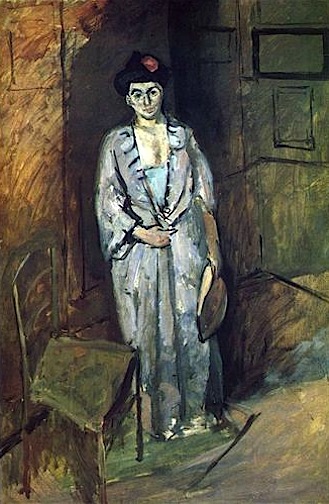
Henri Matisse (1869-1954)
http://www.metmuseum.org/toah/hd/mati/hd_mati.htm
Matisse


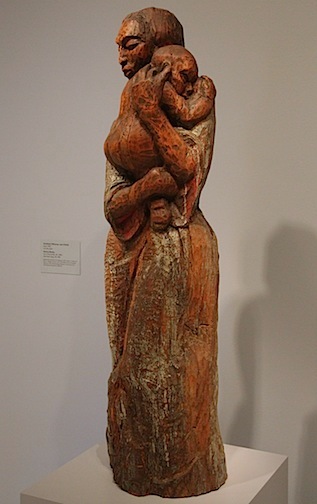
Selma Burke (1900-1995)
https://en.wikipedia.org/wiki/Selma_Burke
Burke