Carl Barks (March 27, 1901-August 25, 2000)

Carl Barks (March 27, 1901 – August 25, 2000) was a famous Disney Studio illustrator and comic book creator, who invented Duckburg and many of its inhabitants, such as Scrooge McDuck (1947), Gladstone Gander (1948), the Beagle Boys (1951), Gyro Gearloose (1952), Flintheart Glomgold (1956), John D. Rockerduck (1961) and Magica De Spell (1961). The quality of his scripts and drawings earned him the nicknames The Duck Man and The Good Duck Artist. Fellow comic writer Will Eisner called him “the Hans Christian Andersen of comic books.”
FROM http://disney.wikia.com/wiki/Carl_Barks

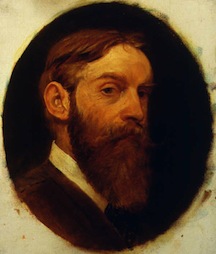
Randolph Caldecott: Born on March 22, 1846

artMedal

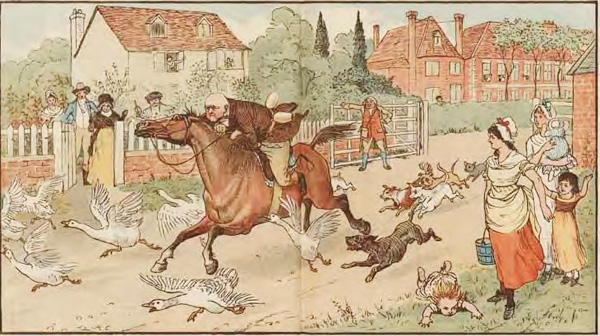
The full-color illustration adapted for the image depicted on the Caldecott Medal, from The Diverting History of John Gilpin (1878). Source: http://www.publishersweekly.com/images/data/ARTICLE_PHOTO/photo/000/017/17815-1.JPG

Randolph Caldecott was born in Chester on 22 March 1846. He was the third son of John Caldecott and his first wife Mary Dinah Brookes, and one of 13 siblings or half-siblings. Caldecott attended King Henry VIII School, Chester, where he became head boy.

From an early age Caldecott showed artistic talent. He won a prize for drawing while at school in Chester, and in 1861, when he was 15 years old, the Illustrated London News published his drawing and written account of a major fire at a railway hotel in Chester.

Caldecott was also interested in sculpture, and studied for a time with the French sculptor Jules Dalou. He also produced decorative murals, panels and bas-reliefs, and painted in oils.

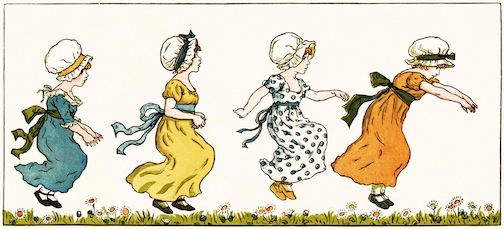
Caldecott is most famous for his 16 picture books, published annually in pairs by George Routledge & Sons, London.
https://www.natwestgroup.com/heritage/people/randolph-caldecott.html

selfportraitThe Randolph Caldecott Medal
Frederic G. Melcher suggested in 1937 the establishment of a…medal is to be given to the artist who had created the most distinguished picture book of the year and named in honor of the nineteenth-century English illustrator Randolph J. Caldecott.
The Caldecott Medal “shall be awarded to the artist of the most distinguished American Picture Book for Children published in the United States during the preceding year.”
http://www.ala.org/alsc/awardsgrants/bookmedia/caldecottmedal/aboutcaldecott/aboutcaldecott

Caldecott Medal & Honor Books, 1938-Present
http://www.ala.org/alsc/awardsgrants/bookmedia/caldecottmedal/caldecotthonors/caldecottmedal

An excerpt from ‘Randolph Caldecott: The Man Who Could Not Stop Drawing’
http://www.publishersweekly.com/pw/by-topic/childrens/childrens-book-news/article/58869-randolph-caldecott-the-man-who-could-not-stop-drawing-a-pw-excerpt.html

JackBuilt

THE HOUSE THAT JACK BUILT:
One of R. Caldecott’s Picture Books
http://www.gutenberg.org/files/12109/12109-h/12109-h.htm
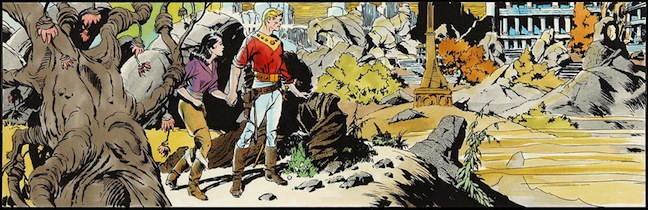
Al Williamson: Born March 21, 1931

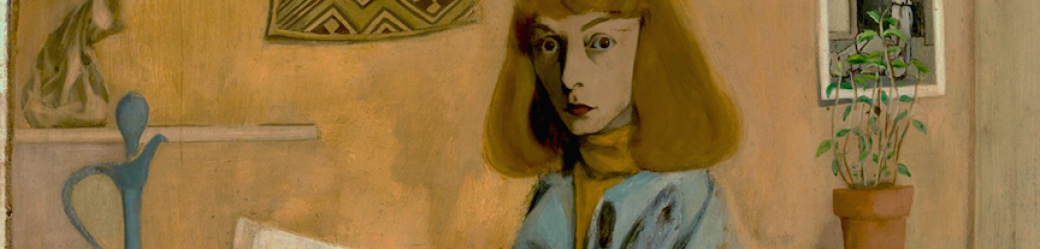
WilliamsonAlfonso Williamson (March 21, 1931-June 12, 2010) was an American cartoonist, comic book artist,
and illustrator specializing in adventure, Western, and science-fiction/fantasy  ~ Wikipedia

http://www.comicbookresources.com/?page=article&id=28503
http://www.inkwellawards.com/?page_id=316
https://www.lambiek.net/artists/w/williamson_a.htm

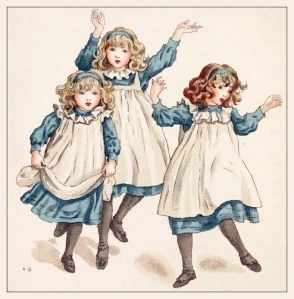
Kate Greenaway: Born on March 17, 1846

Greenaway2

K is for Kate…Kate Greenaway

English artist and writer, known for her children’s book illustrations. She studied graphic design and art at the South Kensington School of Art; the Royal Female School of Art and the Slade School of Fine Art. She began her career designing for the burgeoning holiday card market, producing Christmas and Valentine’s cards. In 1879 wood-block engraver and printer, Edmund Evans, printed Under the Window, an instant best-seller, which established her reputation. Her collaboration with Evans continued throughout the 1880s and 1890s.
https://www.royalacademy.org.uk/art-artists/name/kate-greenaway

Still more about Kate Greenaway here: http://www.victorianweb.org/victorian/art/illustration/greenaway/index.html and here: https://www.illustrationhistory.org/artists/kate-greenaway

Al Jaffee: Born March 13, 1921

Jaffee

…And in 1964 he had an idea. Playboy, Life and other magazines had their lavish color fold-outs, so Mad, he thought, should parody them with a cheap black-and-white fold-in.
From 2008: http://www.nytimes.com/2008/03/30/arts/design/30genz.html?pagewanted=all

Instead of conducting a formal interview, we invited Mr. Jaffee to explain the thought process behind his favorite Fold-Ins from over the years. He certainly didn’t disappoint. Read on to discover how one of the world’s finest optical satirists creates his magic on a monthly basis.
 From 2014: https://www.pastemagazine.com/books/state-of-the-art-mad-magazine-icon-al-jaffee-on-hi/

Al Jaffee, Iconic Mad Magazine Cartoonist, Retires at Age 99 … and Leaves Behind Advice About Living the Creative Life
From 2020: https://www.openculture.com/2020/06/al-jaffee-iconic-mad-magazine-cartoonist-retires-at-age-99.html

Al Jaffee, Now 102, Is Ready to Be Added to Mount Rushmore:
MAD’s longest-serving contributor on comedy, art, and the origins of the “Fold-in.”

From 2023: https://www.vulture.com/article/al-jaffee-interview.html

Al Jaffee on Artnet: https://www.artnet.com/artists/al-jaffee/

(updated 2023)

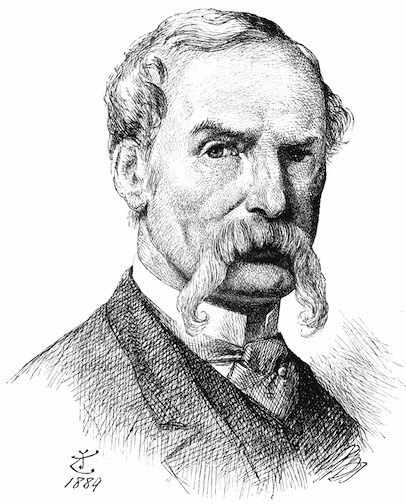
Sir John Tenniel: Born February 28, 1820

John_Tenniel

John Tenniel was born in Kensington, London, on 28 February 1820, the youngest son of John Baptist Tenniel, of Huguenot lineage. He was a skilful artist from an early age, and later studied at the Royal Academy Schools, but became dissatisfied with the teaching there, and decided to follow a more independent line…in 1845 he was commissioned to paint a fresco for the House of Lords. He spent a short time in Munich to study the art of fresco in preparation for his mural painting in the House entitled, “Saint Cecilia.”

Continues~ https://illustratorsjournal.wordpress.com/tag/alice-in-wonderland/
allegory

Realising that paintings in oils were unlikely to bring him either fame or fortune, he decided to turn his hand to book illustration…His skill at drawing animals and men in dramatic situations caught the eye of Mark Lemon, editor of Punch, a magazine then in the early stages of establishing itself as a popular Victorian weekly publication of satire and humour. Richard Doyle, one of the key artists associated with the magazine resigned in 1850 leaving a vacancy which, on the suggestion of Douglas Jerrold, was filled by Tenniel. Thus began a lifelong position at the Punch Office culminating in Tenniel becoming the foremost illustrator of its pages.

Continues~ https://illustratorsjournal.wordpress.com/tag/alice-in-wonderland/
Tenniel cartoons for PUNCH:
http://punch.photoshelter.com/gallery/John-Tenniel-Cartoons/G0000JCRWVO.C79Y/
Tenniel illustrations for Alice in Wonderland:
http://commons.wikimedia.org/wiki/Category:John_Tenniel%27s_illustrations_of_Alice%27s_Adventures_in_Wonderland
Tenniel illustrations for Through the Looking-Glass and What Alice Found There:
http://commons.wikimedia.org/wiki/Category:John_Tenniel%27s_illustrations_of_Through_the_Looking-Glass_and_What_Alice_Found_There

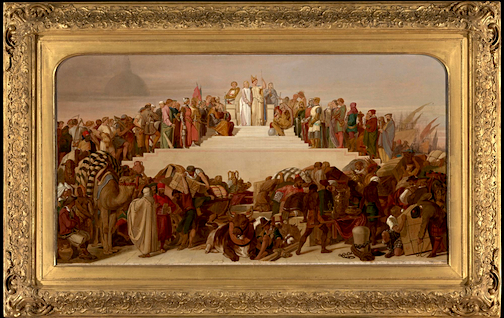
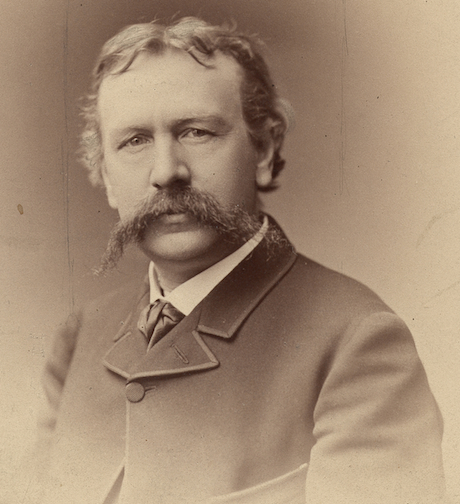
Elihu Vedder: Born February 26, 1836

During the second half of the nineteenth century Elihu Vedder was among the ev1870most imaginative and independent of the American expatriate artists. After studying with the genre painter Tompkins H. Matteson in New York, Vedder traveled to Paris…In 1857 he moved to Florence…Vedder returned to the United States in 1860 and began to establish a reputation for imaginative literary paintings and book illustrations. He became a member of the Tile Club and the Century Association and an intimate of notable artistic and literary circles in New York.
FROM About This Artist~ https://collections.lacma.org/node/167054

Elihu Vedder (1836–1923)~ http://www.questroyalfineart.com/artist/elihu-vedder/
From the Met Collection~ https://bit.ly/3guaUML

Andy Warhol (1928-1987)

2016-02-22-warhol-e1456088647797

Andy Warhol Died 29 Years Ago Today,
Here’s a Look at One of His First Silkscreens.
artnetnews

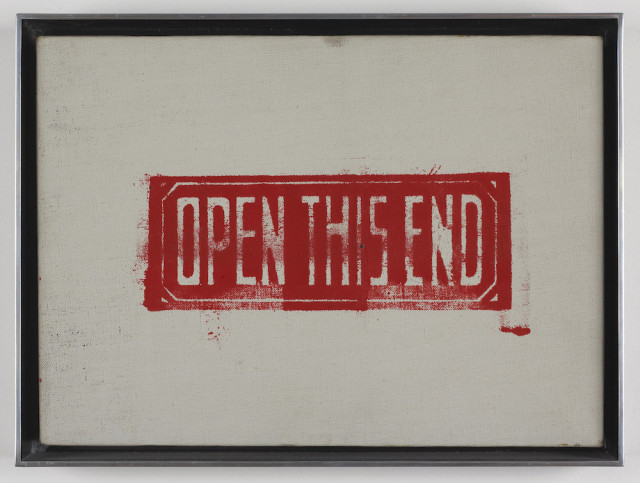
Blake Gopnik, Monday, February 22, 2016  Andy Warhol died 29 years ago today in a hospital in New York, after a routine gallbladder operation. It seems only fitting to commemorate the end of his artmaking by revisiting its beginnings. The work I’ve chosen as today’s Daily Pic was made in the spring of 1962, as one of the very first of the silkscreened canvases that became Warhol’s signature mode for the next quarter century. It’s the titular work in a touring exhibition called “Open This End: Contemporary Art from the Collection of Blake Byrne,” curated by the art historian Joseph Wolin and now at the Wallach Art Gallery of Columbia University.
https://news.artnet.com/art-world/andy-warhol-died-29-years-ago-today-here-is-when-he-started-to-matter-431666

Andy Warhol, A Documentary Film~

Andy Warhol Biography


The Andy Warhol Museum~ http://www.warhol.org/museum/
The Andy Warhol Foundation for the Visual Arts~ http://warholfoundation.org/

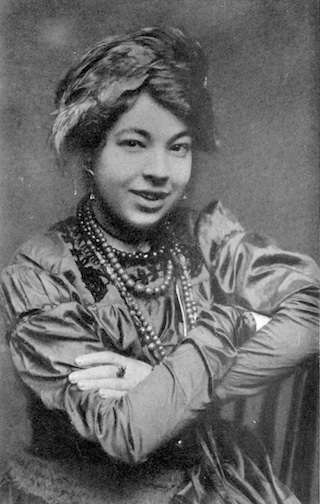
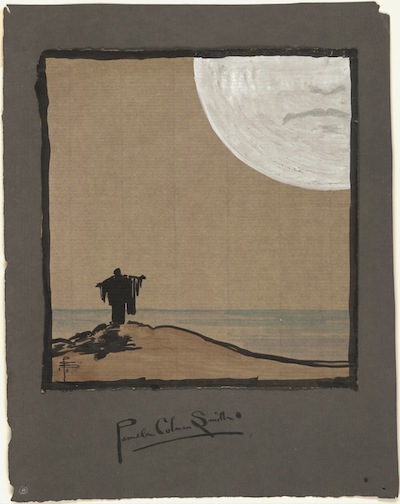
Illustrator Pamela Colman Smith: Born February 16, 1878

I’ve never given any thought to who might have designed and/or illustrated Tarot Cards, I suppose because I figured they were something that evolved over time and were already established by the time card/game companies began printing them. The popular version that I am familiar with turns out to have been illustrated by one Pamela Colman Smith, an illustrator who attended (but did not finish) Pratt.

Smith1912

sample

Pamela Colman Smith (16 February 1878 – 18 September 1951), also nicknamed Pixie, was an artist, illustrator, and writer. She is best known for designing the Waite-Smith deck of divinatory tarot cards (also called the Rider-Waite or the Rider-Waite-Smith deck) for Arthur Edward Waite.
http://en.wikipedia.org/wiki/Pamela_Colman_Smith

The Beinecke Rare Book & Manuscript Library of the Yale University Library:
https://collections.library.yale.edu/catalog?search_field=all_fields&q=Pamela%20Colman%20Smithdeck

Apotheosis of Washington and Lincoln

WandL“Apotheosis” is a Greek word meaning to deify or to glorify in a divine way. It can refer to the theological act of raising an individual to a divine status, and also a glorification of a subject in a work of art.

When Washington died in 1799, the country was beside itself with grief. And things got a little strange. Shortly after his death, artwork appeared representing Washington ascending to heaven.

This kind of thing was pretty un-Republican however, and thankfully it didn’t catch on for future presidents. At least not until Lincoln’s assassination, after which artists directly referenced the images of the 1st president’s divine ascension and applied them to the 16th.
> > > > >http://www.philosophersguild.com

Lincoln and Washington~ https://www.loc.gov/pictures/resource/pga.01775/

Washington & Lincoln Apotheosis~ https://rememberinglincoln.fords.org/node/240