What painter, born in 1725, is fabled to have convinced his father of his natural aptitude for painting when the parent mistook his son’s pen-and-ink drawing of Saint James for an engraving?
What illustrator’s fame was established when the first volume of The Yellow Book — an art and literature quarterly for which he served as art editor as well as contributing drawings and covers — appeared in April 1894?
This house-painter and handyman was the center of a furor in 1927 when he became the first living self-taught artist to be recognized by the American art establishment, upon his acceptance to the Carnegie International exhibition.
One of the members of the Bloomsbury circle, this painter, sculptor, writer, and educator began to study pottery at the age of 25 and in 1935 went to Staffordshire to acquire the necessary technical knowledge.
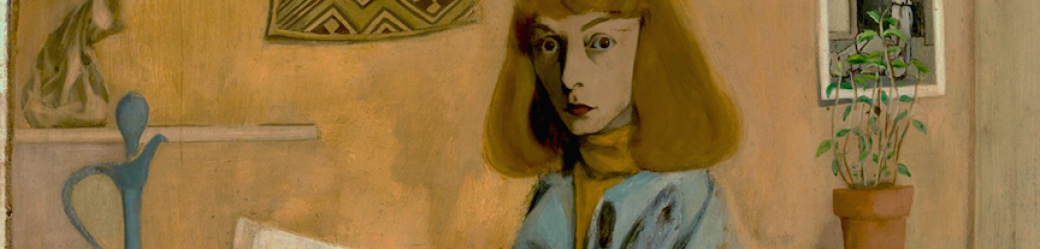
Which realist painter-printmaker had significant experience as an actress from 1909 into the 1920s, supplementing her income from acting with work as a muralist and illustrator as well as studying at the Chicago Art Institute?
Which artist is considered one of the most important painters and engravers in Puerto Rico, and has been instrumental in promoting art and art education in her country?
Which Italian painter and printmaker, born into a family of renowned artists, was also a popular and skilled teacher whose anatomical studies were later engraved and used for almost two centuries as academic teaching aids?
Which photographer had brief careers as model, stage actress, and silent film actress — appearing in three films, the last one in 1922 — before discovering her true talent as a photographer?
This 18th Century Italian landscape painter, whose Arcadian scenes with picturesque peasants earned him an international reputation, often included a figure with a gourd bottle because zucco is Italian for “gourd”.
This contemporary sculptor has moved between laminated wood, stainless steel, corrugated iron, polycarbonate, marble, clay, vinyl, foam and leather; he explained in 2005, “Changing materials from one work to the next is a way of beginning again each time”.
This French painter moved to Rome in 1734 and stayed until he was recalled to Paris in 1753 to begin an official commission on paintings of French seaports, for which he is best known.
This French painter and lithographer was an avid equestrian, known primarily as an exceptional painter of horses in full movement — either racing, hunting or in cavalry portraits.
What turn-of-the-20th-century painter, although renowned for his winged figures of the “infinite beauty of angelic women”, never went to church and believed that formal religion smacked of hypocrisy and narrowness?
What sculptor cast his best-known work, the winged statue in Piccadilly Circus generally (though mistakenly) known as Eros, in aluminum — the first use of that metal on a public statue?
Which American artist sketched and painted more than 1200 portraits of Native Americans from 125 tribes and is believed to be the only person to paint Geronimo from life?
Which American sculptor was influenced by Abstract Expressionism, with highly textured surfaces, improvisational gesture, and broad pictorial interpretation?
Which artist attended the Académie Royale des Beaux-Arts in Brussels from 1860 to 1867 and designed the statues of all 48 historical professions in the Petit Sablon garden in Brussels?
Which artist was best known for “Alamo” (“the Cube”), originally part of a temporary installation in 1967 in the East Village which became permanent after residents in the Astor Place area petitioned the city?