
http://www.phillipscollection.org/research/american_art/bios/miller-bio.htm
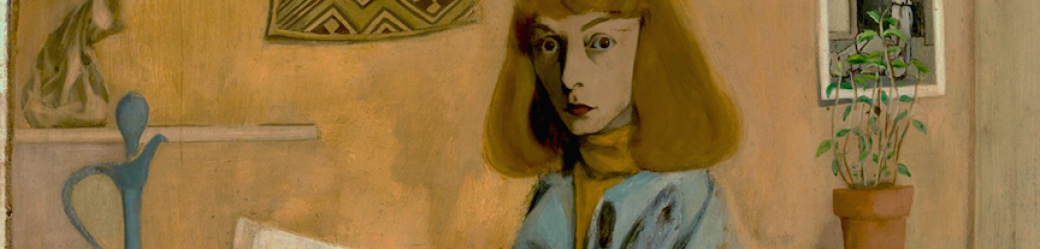
A gallery of paintings can be found on this blog: Kenneth Hayes Miller (1876 – 1952)
http://www.phillipscollection.org/research/american_art/bios/miller-bio.htm
A gallery of paintings can be found on this blog: Kenneth Hayes Miller (1876 – 1952)
In the 1820’s, in his early career, Etty received critical acclaim. An 1826 review for his ‘Choice of Paris’, described him as having talent that “no artist of the present day can equal”. Etty continued to exhibit at the Royal Academy throughout his career but his work was not universally popular. His nudes were a particular source of criticism. A review in the Times newspaper said, “nakedness without purity is offensive and indecent, and in Mr. Etty’s canvas is mere dirty flesh”. Etty was seen by others as the best English painter of the nude, but he has never become a household name.
http://www.historyofyork.org.uk/themes/victorian/william-etty-artisthttp://www.yorkartgallery.org.uk/exhibition/previous-exhibition-william-etty-art-and-controversy/
http://www.tate.org.uk/art/artists/william-etty-172
 Biography~ https://www.guggenheim.org/artwork/artist/david-hare
Exhibition catalogue at Weinstein Gallery, September 2012~
https://issuu.com/weinstein_gallery/docs/david-hare-exhibit-catalogue
Tamarind lithographs~ https://tamarind.unm.edu/?s=David+Hare
New York Times obituary~
http://www.nytimes.com/1992/12/25/arts/david-hare-sculptor-and-photographer-dies-at-75.html
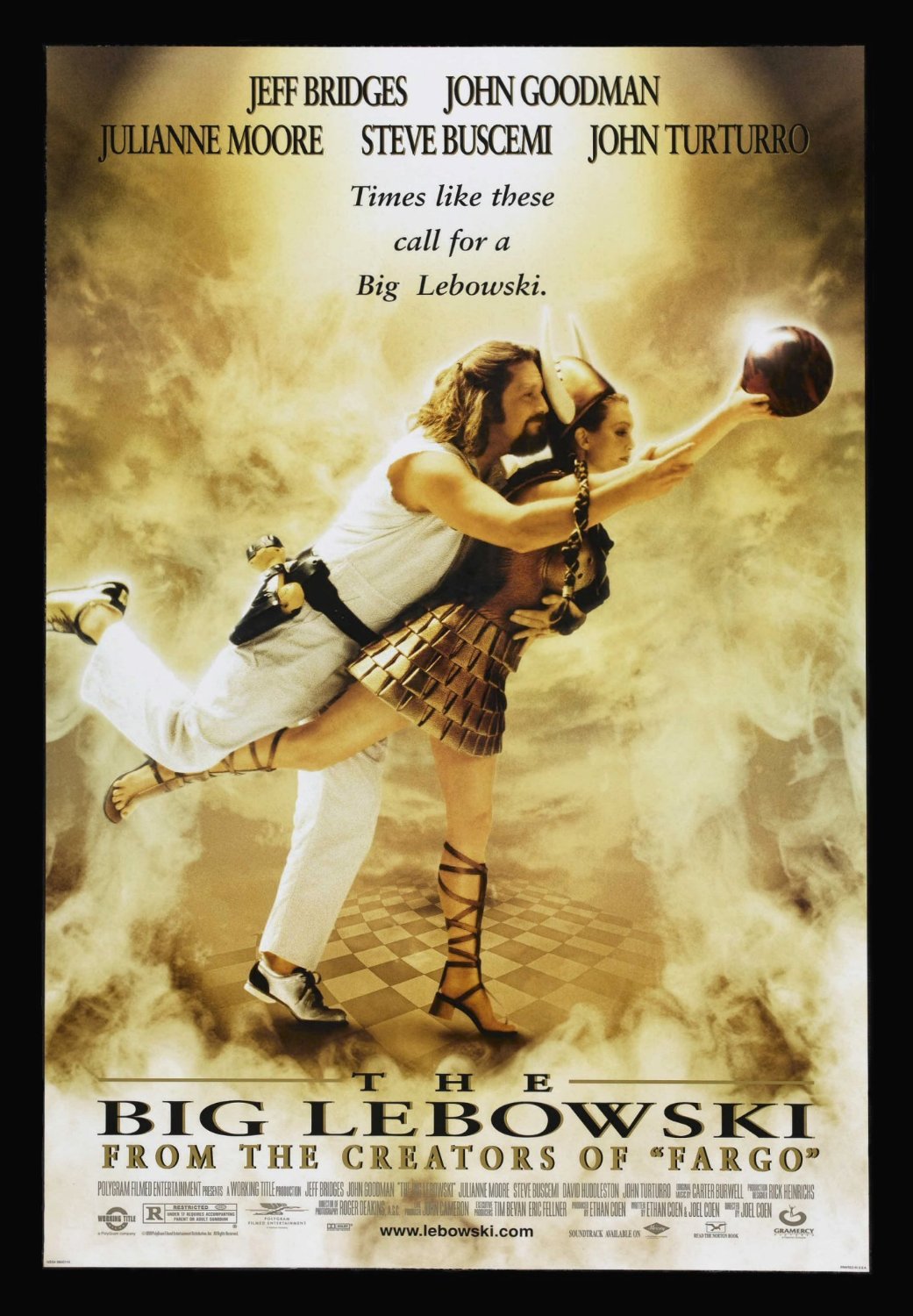 The Big Lebowski, struggled upon release with both audiences and critics, grossing only $17 million at the box office. But over the next decade, it became an object of adoration, inspiring a festival, a religion, and an enormous cult following.
http://www.vulture.com/2016/02/breaking-down-the-coens-box-office-history.html
The best single way to explain its unique appeal is that The Big Lebowski is the only film I know of that is more enjoyable upon second or third, or even fifth or sixth, viewing than the first.
http://www.theatlantic.com/entertainment/archive/2014/09/30-years-of-coens-the-big-lebowski/380220/

http://player.pbs.org/viralplayer/1739091116
Today, Howard Pyle is not nearly as well known as his images. However, he was one of America’s most popular illustrators and storytellers at a time when top illustrators were celebrities. At his death, he was designated by the New York Times “the father of American magazine illustration as it is known to-day.” His illustrations appeared in magazines like Harper’s Monthly, Collier’s Weekly, St. Nicholas, and Scribner’s Magazine, gaining him national and international exposure. And because magazines so influenced the nation’s visual culture, Pyle’s images and stories—including American history and tales of pirates and medieval adventurers—reached millions, helping to shape the American imagination.
https://www.delart.org/collections/howard-pyle/about-howard-pyle/
Howard Pyle: Born: March 5, 1853 | Died: November 9, 1911~
https://en.wikipedia.org/wiki/Howard_Pyle
Howard Pyle: 1853–1911
https://americanillustration.org/project/howard-pyle/
John Edward Costigan (1888-1972)
https://en.wikipedia.org/wiki/John_Edward_Costigan


Augusta Savage (1892-1962)
http://dos.myflorida.com/cultural/programs/florida-artists-hall-of-fame/augusta-savage/
During the second half of the nineteenth century Elihu Vedder was among the
most imaginative and independent of the American expatriate artists. After studying with the genre painter Tompkins H. Matteson in New York, Vedder traveled to Paris…In 1857 he moved to Florence…Vedder returned to the United States in 1860 and began to establish a reputation for imaginative literary paintings and book illustrations. He became a member of the Tile Club and the Century Association and an intimate of notable artistic and literary circles in New York.
FROM About This Artist~ https://collections.lacma.org/node/167054
Elihu Vedder (1836–1923)~ http://www.questroyalfineart.com/artist/elihu-vedder/
From the Met Collection~ https://bit.ly/3guaUML
Armand Guillaumin (born February 16, 1841, Paris, France – died June 26, 1927, Paris) was a French landscape painter and lithographer who was a member of the Impressionist group.
http://www.britannica.com/biography/Armand-Guillaumin
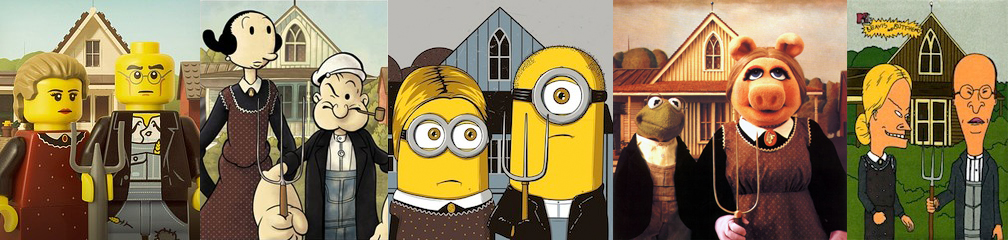
The painting endures, Biel concludes, because it is both itself and a parody of itself. Its meaning has more to do with the viewer’s perception than Wood’s intention. In this, Biel is identifying something common to all visual material. Paintings (like films) never change, but they are subject to differing responses and interpretations as times change. Those that survive cultural, aesthetic and historical shifts share the characteristics that can be seen in ”American Gothic.” It’s simple — two people and a house — and easily remembered. It’s ambiguous and thus can evoke the ambivalent. Wood’s choice of clothing, hairstyle, color and sober posture denies specifics, yet suggests a time, a place and an attitude. It opens the door to popularity (anyone can enjoy it for any reason); argument (does it criticize Middle America or affirm its values?); hatred (it’s an ugly cliché and she’s got rickrack on her dress); parody (the Barbie and Ken or Mickey and Minnie Mouse versions); rebellion (Gordon Parks’s photograph of a black cleaning woman uses the pose to remind us of its basic whiteness); commerce (Paul Newman and his daughter posing on their organic snack packages); politics (representations of a long line of American presidents and their first ladies); and endless pop cultural references (the small-town tableau of ”The Music Man” or the credits for ”Green Acres”)
http://www.nytimes.com/2005/07/10/books/review/10BASSING.html?pagewanted=all&_r=0


 The Misty Miss Christy