Emanuel Gottlieb Leutze: Born May 24, 1816

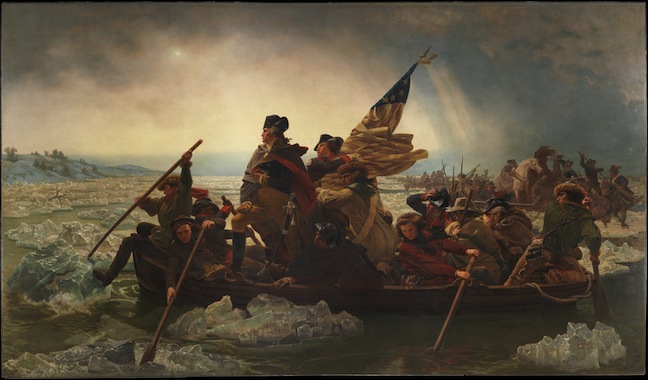
WashingtonWashington Crossing the Delaware, 1851 • Emanuel Gottlieb Leutze
Oil on canvas; 149 x 255 in. (378.5 x 647.7 cm)

Leutze’s depiction of a critical moment during the American revolution has become one of the best known and most extensively published images in American history. He portrays George Washington, accompanied by some 2,500 of his troops, crossing the Delaware River about nine miles above Trenton, New Jersey, in a surprise attack on the Hessians. The strategic crossing took place after midnight on December 25, 1776; ice floes and a heavy snowstorm kept the American soldiers and their allies from reaching shore until daybreak, which Leutze captured with the morning star overhead.
http://www.metmuseum.org/toah/works-of-art/97.34

Crossing of the Delaware: http://www.mountvernon.org/research-collections/digital-encyclopedia/article/crossing-of-the-delaware/
Emanuel Gottlieb Leutze…German-born American historical painter whose picture Washington Crossing the Delaware (1851) numbers among the most popular and widely reproduced images of an American historical event.
http://www.britannica.com/EBchecked/topic/337776/Emanuel-Gottlieb-Leutze

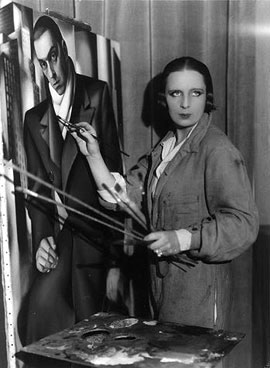
Tamara de Lempicka~ Born May 16, 1898(?)


Who was she? De Lempicka shuffled the facts of her biography much as she  meddled with her birth date.


Her time was the 1920s: a period of transition, an era in which functionalism merged with fantasy and formal social structures lurched into the frenetic. In essence, De Lempicka was a classicist, having admired Renaissance painting since her adolescent travels in Italy. But she astutely combined traditional portraiture with advertising techniques, photographic lighting, vistas of the tower architecture of great cities.

In 1939, urged by Tamara, who was partly Jewish, Kuffner sold his estates in Hungary and they moved to the US. In New York, she tried abstract expressionism unsuccessfully, and was reduced to the role of a chic curiosity, “the painting baroness”.
FROM https://www.theguardian.com/artanddesign/2004/may/15/art

http://www.nytimes.com/books/99/10/24/reviews/991024.24vincent.html
http://culture.pl/en/artist/tamara-lempicka-tamara-de-lempicka

Andrew John Henry Way: Born April 27, 1826

In 1860, Way came to the attention of visiting history painter Emanuel Leutze who encouraged him to pursue still life subject matter in the Düsseldorf style. Taking this advice to heart, Way began to paint fruit, primarily grapes, executed with great detail to form, a particular brilliance of light and typically staged against a dark background.…Despite the market demand and critical preference for vast panoramic landscapes and historic scenes, Way prospered, becoming the most important still life painter in the mid-Atlantic area during the late nineteenth century.

FROM http://thejohnsoncollection.org/andrew-way/

http://americanart.si.edu/collections/search/artist/?id=5261
https://art.thewalters.org/detail/18788//

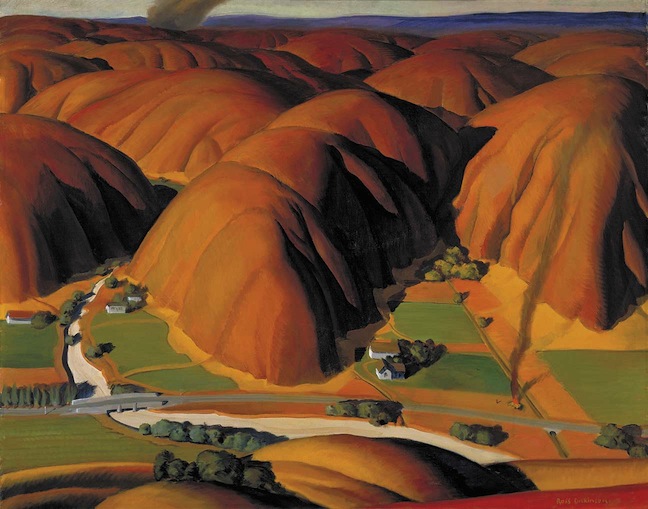
Edward Bruce: Born April 13, 1879

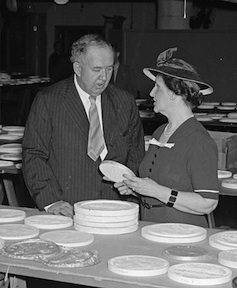
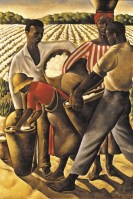
Bruce1Edward Bruce was born in 1879 in Dover Plains, New York. Though he enjoyed painting at a young age, he pursued a career in law and graduated from Columbia Law School in 1904. He practiced law in New York and in Manila, Philippines and was actively involved in international issues.SH143
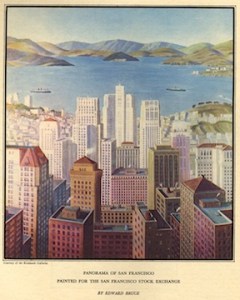
In 1923 Bruce gave up his career in law and business and began to paint, particularly landscapes. He and his wife Peggy spent the next six years in Anticoli Carrado, Italy where he studied painting from his friend and fellow artist Maurice Sterne. Bruce returned to the United States in 1929 and settled in California, exhibiting his artwork to much public and critical praise. In addition, Bruce was an avid collector of Chinese art.
In 1933 Bruce was appointed Chief of the newly established Public Works of Art Project, a federal government New Deal program within the U.S. Treasury Department, that employed artists to decorate numerous public buildings and parks…In 1940 he was appointed to the Commission of Fine Arts by President Franklin Delano Roosevelt.
Bruce2Bruce received many honors and awards during his lifetime both for his work as an artist and for his capable and dedicated administration of federal arts programs. Despite poor health, he continued his work for the Section of Fine Arts until shortly before his death in 1943.
http://www.aaa.si.edu/collections/edward-bruce-papers-7264/more

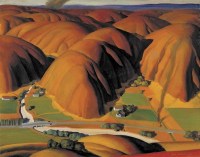
On December 8, 1933, the Advisory Committee to the Treasury on Fine Arts met to decide the newdealartdetails of the Public Works of Art Project (PWAP), the first of the New Deal art programs. The PWAP came at a crucial moment for federal support of the arts during the Great Depression. As artist Olin Dows (1904–1981) recalled, “If the first crash [i.e. Depression] art program had not been so carefully newdealarttoothought out and expertly organized, I doubt that other programs would have been undertaken. The man mainly responsible was Edward Bruce.” Bruce, an advisor to the Treasury Department, hosted the meeting at his home. First Lady Eleanor Roosevelt was present as were such arts leaders as Juliana Force and Forbes Watson, who worked with Bruce to organize the Public Works of Art Project.
https://www.incollect.com/articles/1934-a-new-deal-for-artists

History of the New Deal Art Projects~ http://wpamurals.org/history.html
The New Deal Art Registry~ http://www.newdealartregistry.org/Home.html
Hardie Gramatky: Born on April 12, 1907

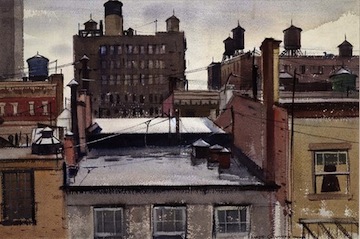
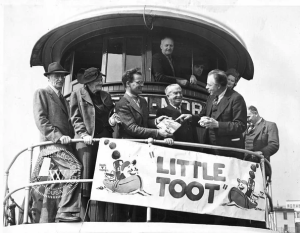
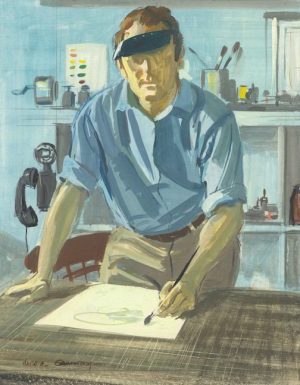
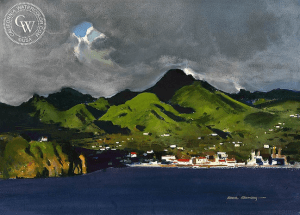
Bernhard August “Hardie” Gramatky, Jr. (April 12, 1907-April 29, 1979) was an American painter, writer, animator, and illustrator. In a 2006 article in Watercolor Magazine, Andrew Wyeth named him as one of America’s 20 greatest watercolorists. He wrote and illustrated several children’s books, most notably Little Toot.
FROM https://en.wikipedia.org/wiki/Hardie_Gramatky

ROOF

http://www.californiawatercolor.com/pages/hardie-gramatky-biography

https://www.mazzamuseum.org/project/miles-gallery/

https://www.lambiek.net/artists/g/gramatky_hardie.htm

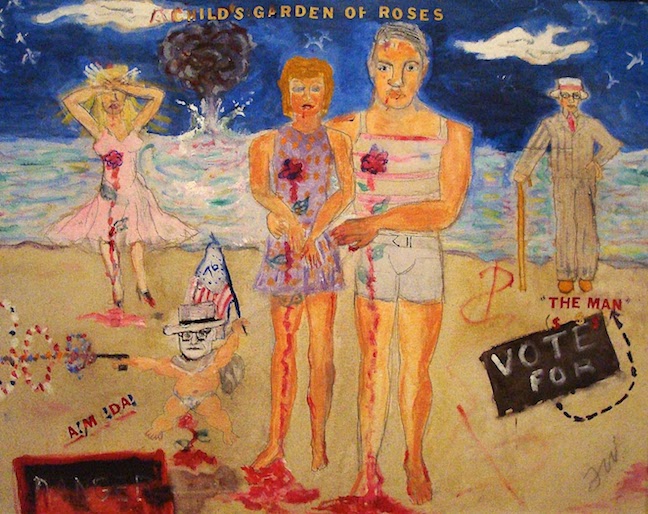
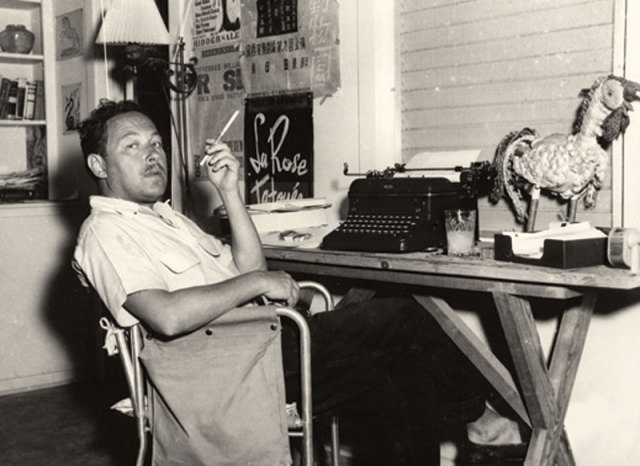
Tennessee Williams: Born on March 26, 1911

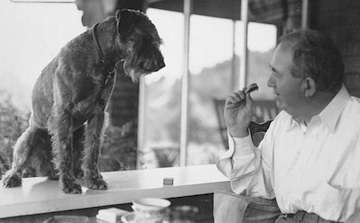
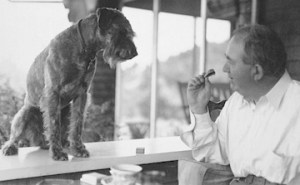
Williams first took up painting in the early 1960s when his career as a playwright ebbed.  He often relaxed on the patio of his Key West home and painted.  Williams’ patio was his preferred art studio.  People frequently visited his house on Duncan Street and purchased his artwork before the paint was dry.
Painting was a passion for him, almost to the point that it became a second profession.  Toward the end of his life, Williams gradually gave up writing for painting; a less harsh way to express himself.  Critics did not think as much of his painting as his plays, however his artwork remains widely popular among collectors.
FROM https://www.kwahs.org/exhibit/tw-painter/

https://www.washingtonpost.com/entertainment/museums/tennessee-williams-writer-poet-painter/2015/04/09/dc93fe00-c7fb-11e4-aa1a-86135599fb0f_story.html
http://hyperallergic.com/209906/the-lonely-private-paintings-of-tennessee-williams/

https://www.poetryfoundation.org/poems-and-poets/poets/detail/tennessee-williams
https://historicmissourians.shsmo.org/?page_id=3966

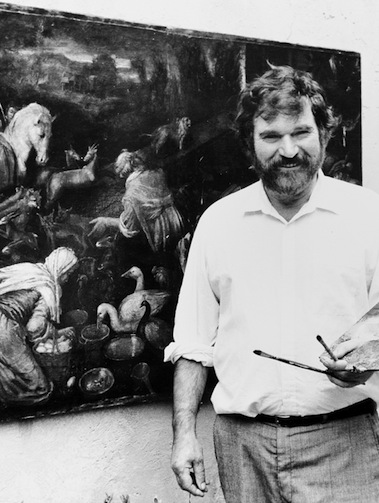
Art Forger Eric Hebborn: Born March 20, 1934

Hebbornhttp://www.intenttodeceive.org/forger-profiles/eric-hebborn/
<<<<<<<

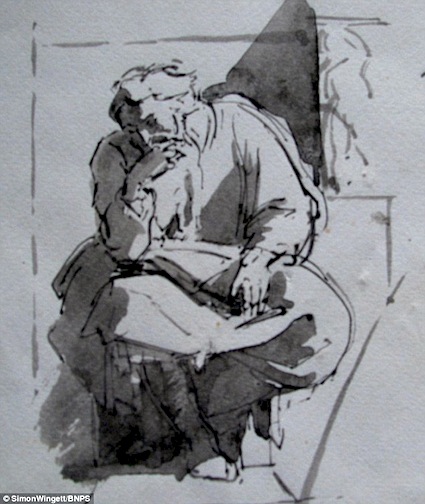
The number of works by Eric Hebborn in public collections will never be certain. Between the early 1960s and his death in 1996, Hebborn created an estimated 1,000 drawings in the manner of various Old Masters, artfully mixed in with thousands more of legitimate origin that he handled as a dealer. Though dozens of the fakes have been detected by curators, and more were revealed by Hebborn himself in his notoriously mischievous 1991 autobiography, Drawn to Trouble, the vast majority remain in circulation under names other than his own.
The sheer variety of known Hebborn fakes has further complicated the task of finding his undisclosed forgeries. He drew convincingly as Andrea Mantegna and Nicolas Poussin, Giovanni Battista Piranesi and Peter Paul Rubens, Thomas Gainsborough and Jean-Baptiste-Camille Corot. He could even limn the 20th century, illicitly expanding the oeuvres of Augustus John and David Hockney.
http://www.artandantiquesmag.com/2011/07/forging-a-career/

Forgery and Plagiarism
Encyclopedia of Applied Ethics, edited by Ruth Chadwick. 4 vols. San Diego: Academic Press, 1998.
Denis Dutton    http://www.denisdutton.com/forgery_and_plagiarism.htm

Art forger Eric Hebborn collection sells for thousands
http://www.bbc.com/news/uk-england-wiltshire-29750380Fake