Clarence Hudson White: Born on April 8, 1871

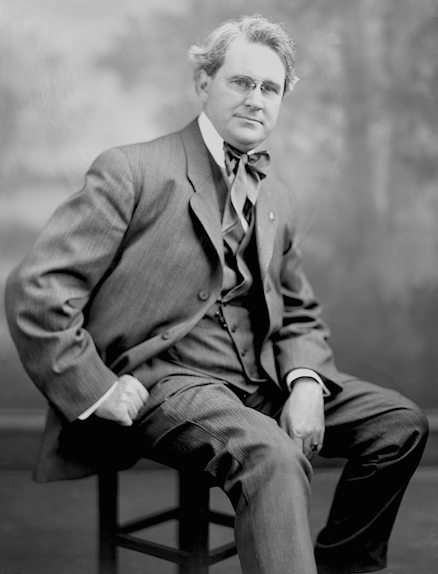
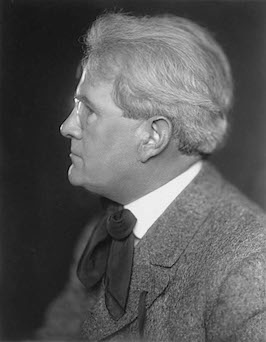
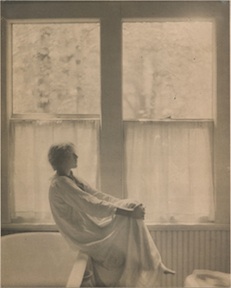
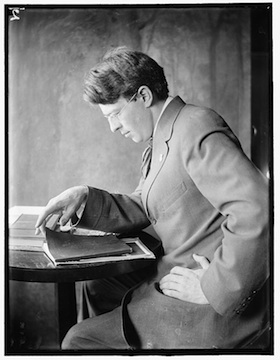
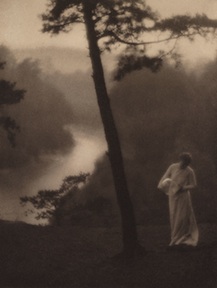
white1“Before White was able to become a full-time artist and teacher, he worked for nearly a decade in Newark, Ohio, balancing a bookkeeping job with his avocation as a photographer. Featured in the third issue of Camera Work, White received international recognition for his work…In 1906 he moved to New York and assisted Alfred Stieglitz in the operation of his newly opened gallery.”
FROM http://americanart.si.edu/collections/search/artist/?id=6761
white2

“When White first began teaching, the medium of photography was coming into its own as a means of artistic expression, and its advantages for communication had been acknowledged. Photographs were preferred over wood engravings and often over drawings for illustration in newspapers and magazines. The use of photographs in advertisements was on the rise. But no place existed for people to learn how to use the camera in the art of seeing.

white3Charismatic amateur photographer and teacher Clarence H. White was inspired to found a school that would advocate applying art principles to professional and commercial as well as art photography.”
FROM http://www.loc.gov/loc/lcib/0112/white.html
Clarence H. White: https://media.artic.edu/stieglitz/clarence-h-white/
Wikipedia entry: https://en.wikipedia.org/wiki/Clarence_Hudson_White

Herbert Bayer: Born April 5, 1900

HerbertBayerStadelwand1936© M.T. Abraham Center© M.T. Abraham Center – Provided by copyright owner of both photograph and artwork, CC BY 3.0
https://commons.wikimedia.org/w/index.php?curid=24556654

Herbert Bayer (1900-1985) is one of the individuals most closely identified with the famous Bauhaus program in Weimar, Germany. Together with Walter Gropius, Laszlo Moholy-Nagy, and Wassily Kandinsky, Bayer helped shape a philosophy of functional design that extended across disciplines ranging from architecture to typography and graphic design. Endowed with enormous talent and energy, Bayer went on to produce an impressive body of work, including freelance graphics commissions, Modernist exhibition design, corporate identity programs, and architecture and environmental design…Though Bayer came to the Bauhaus as a student, he stayed on to become one of its most prominent faculty members.
FROM https://library.rit.edu/gda/designers/herbert-bayer

Collection at MoMA~ http://www.moma.org/collection/artists/399
New York Times Obituary~
http://www.nytimes.com/1985/10/01/arts/herbert-bayer-85-a-designer-and-artist-of-bauhaus-school.html

This slideshow requires JavaScript.

Clifford Berryman: Born April 2, 1869

Clifford K. Berryman (1869-1949) was a Pulitzer Prize–winning editorial cartoonist, perhaps best known for inspiring the Teddy Bear toy. As a draftsman, illustrator, and cartoonist, Berryman always worked in pen and ink. Berryman satirized both Democrats and Republicans with a light-hearted approach.

Born April 2, 1869 in Clifton, Kentucky, he never attended art school and was entirely self-taught. His first job, in 1886, was as a draftsman at the United States Patent Office in D.C. From 1891 to 1896, he worked as a general illustrator and it was during this time that he learned cartooning by studying contemporary cartoons and copying the artist’ styles.

Berryman’s illustration entitled “And Boys, Remember the Maine!”, which appeared in the Washington Post on April 3, 1898, depicts an angry Uncle Sam addressing sailors as the USS Maine sinks in the background. “Remember the Maine,” became the battle-cry for American sailors during the Spanish-American War.

Berryman originated the “Teddy Bear” in his illustration “Drawing the Line in Mississippi”, published November 16, 1902 in the Post. It showed President Theodore Roosevelt refusing to shoot a captured cub during a bear hunt. This is the cartoon which inspired New York store owner Morris Michtom to create a new toy and call it the Teddy Bear. This little bear appeared in cartoons drawn by Berryman throughout Roosevelt’s career.


Berryman drew thousands of cartoons, first with the Washington Post and then with the Washington Star, where he drew cartoons until his death on December 11, 1949. Berryman’s cartoons can be found at the Library of Congress, the National Archives, and George Washington University.

Biography~ https://alchetron.com/Clifford-K-Berryman-1222344-W

Running for Office: Candidates, Campaigns, and the Cartoons of Clifford Berryman~
https://www.archives.gov/exhibits/running-for-office/

Jan Tschichold: Born April 2, 1902


TSCHICHOLD, JAN 1963 © ERLING MANDELMANNBy 1945, Tschichold had gained fame in the typographic world for the books he designed, as well as those he wrote, altogether an impressive list. His beautiful work and impeccable craftsmanship made him the logical choice when Allen Lane wanted somebody to develop an orderly system of design for his Penguin Books.


Tschichold combined a series of grids with a set of rules of composition and forced their acceptance by a reluctant, sometimes rebellious, printing craft. His perseverance served to inspire tremendous improvement in the quality of all British books, as his techniques were admired and imitated.

FROM https://creativehalloffame.org/inductees/jan-tschichold/

http://www.theguardian.com/artanddesign/2008/dec/05/jan-tschichold-typography
http://www.theguardian.com/culture/gallery/2008/dec/05/design

Raymond Hood: Born March 29, 1881


American architect Raymond Mathewson Hood was born March 29, 1881 in Pawtucket, Rhode Island. He attended Brown University, transferring to and graduating from the MIT School of Architecture. He later continued his education at the École des Beaux-Arts, earning a degree in 1911. Hood has been associated with the architectural styles of Neo-Gothic, Art Deco, Streamlined Moderne, and International.

Hood made his name in 1922 when he and John Mead Howells (whom he had met while in Paris) won a competition to design the Chicago Tribune Tower (completed 1925).

Projects which Hood worked on include:
American Radiator Building, NYC ( completed 1924)
Masonic Temple (Scranton Cultural Center) Scranton, PA (completed 1930)
Daily News Building, NYC (completed 1930)
McGraw-Hill Building, NYC (completed 1934)

Raymond Hood is perhaps best known for his work on Rockefeller Center (completed 1930-40) in Midtown Manhattan. Covering 22 acres, Rockefeller Center encompasses 19 buildings, including the Art Deco Radio City Music Hall.

Hood promoted visionary proposals for Manhattan, including his “City under a Single Roof” (1931) and “Manhattan 1950” (1931) Hood championed the tower as the ideal form for the skyscraper; he imagined slender shafts soaring above expansive open spaces.

Raymond Hood died on August 14, 1934 in Stamford, Connecticut.


⬇️ Youtube Playlist: BUILDING RADIO CITY MUSIC HALL
⬇️

Carl Barks (March 27, 1901-August 25, 2000)

Carl Barks (March 27, 1901 – August 25, 2000) was a famous Disney Studio illustrator and comic book creator, who invented Duckburg and many of its inhabitants, such as Scrooge McDuck (1947), Gladstone Gander (1948), the Beagle Boys (1951), Gyro Gearloose (1952), Flintheart Glomgold (1956), John D. Rockerduck (1961) and Magica De Spell (1961). The quality of his scripts and drawings earned him the nicknames The Duck Man and The Good Duck Artist. Fellow comic writer Will Eisner called him “the Hans Christian Andersen of comic books.”
FROM http://disney.wikia.com/wiki/Carl_Barks

Edward Steichen: Born March 27, 1879

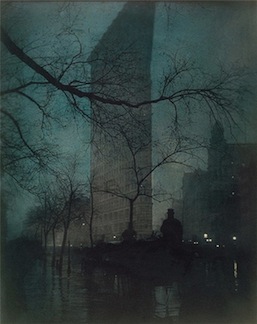
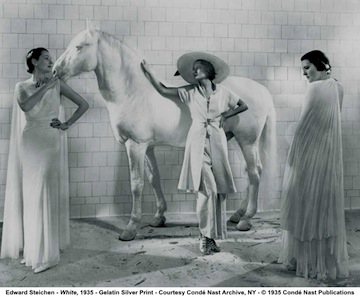
flatironThe audience for Steichen’s early photographs—readers of Camera Work, visitors to 291, and members of amateur camera clubs—were important within artistic circles, but their number was small compared to the audience he would address following the war. Indeed, Steichen’s large and painterly early prints, perhaps because of their rarity, are now far less known by the general public than his portraits of Greta Garbo, Marlene Dietrich, Gloria Swanson, and other celebrities that appeared in Condé Nast’s Vogue and Vanity Fair in the 1920s and 1930s, or his fashion and advertising photographs that shared those same pages. Moreover, while the circulation of Camera Work never topped a Whitethousand (and was often much less) and its intended audience was an intellectual elite, the Condé Nast publications catered to a much larger and broader readership, one hungry for just the sort of glamorous celebrity portraiture at which Steichen excelled.
FROM http://www.metmuseum.org/toah/hd/stei/hd_stei.htm

Edward Steichen photos from the International Center of Photography:
https://www.icp.org/browse/archive/constituents/edward-steichen?all/all/all/all/0

Edward Weston: Born March 24, 1886

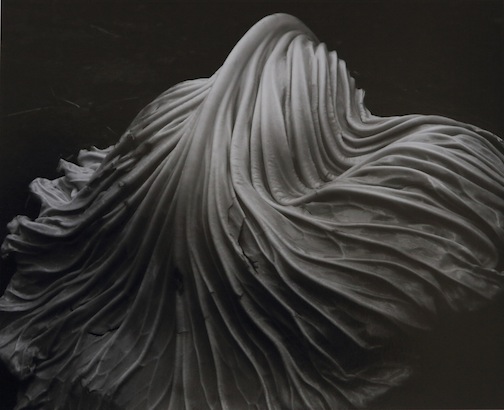
Cabbage-Leaf

After moving back to California in 1926, Weston began his work for which he is most deservedly famous: natural forms, close-ups, nudes, and landscapes. Between 1927 and 1930, Weston made a series of monumental close-ups of seashells, peppers, and halved cabbages, bringing out the rich textures of their sculpture-like forms. Weston moved to Carmel, California in 1929 and shot the first of many photographs of rocks and trees at Point Lobos, California. Weston became one of the founding members of Group f/64 in 1932 with Ansel Adams, Willard Van Dyke, Imogen Cunningham and Sonya Noskowiak. The group chose this optical term because they habitually set their lenses to that aperture to secure maximum image sharpness of both foreground and distance. 1936 marked the start of Weston’s series of nudes and sand dunes in Oceano, California, which are often considered some of his finest work. Weston became the first photographer to receive a Guggenheim Fellowship for experimental work in 1936.

FROM https://www.edward-weston.com/edwardweston

Randolph Caldecott: Born on March 22, 1846

artMedal

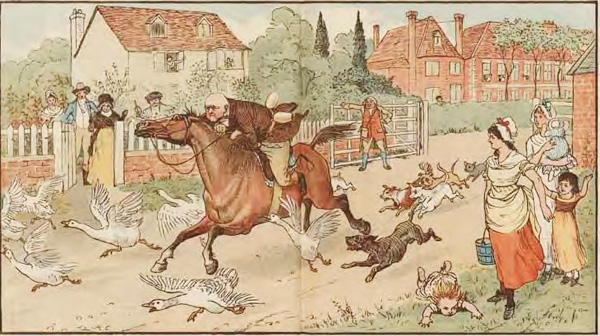
The full-color illustration adapted for the image depicted on the Caldecott Medal, from The Diverting History of John Gilpin (1878). Source: http://www.publishersweekly.com/images/data/ARTICLE_PHOTO/photo/000/017/17815-1.JPG

Randolph Caldecott was born in Chester on 22 March 1846. He was the third son of John Caldecott and his first wife Mary Dinah Brookes, and one of 13 siblings or half-siblings. Caldecott attended King Henry VIII School, Chester, where he became head boy.

From an early age Caldecott showed artistic talent. He won a prize for drawing while at school in Chester, and in 1861, when he was 15 years old, the Illustrated London News published his drawing and written account of a major fire at a railway hotel in Chester.

Caldecott was also interested in sculpture, and studied for a time with the French sculptor Jules Dalou. He also produced decorative murals, panels and bas-reliefs, and painted in oils.

Caldecott is most famous for his 16 picture books, published annually in pairs by George Routledge & Sons, London.
https://www.natwestgroup.com/heritage/people/randolph-caldecott.html

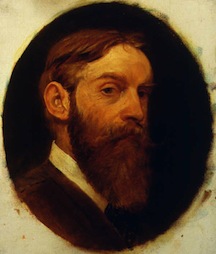
selfportraitThe Randolph Caldecott Medal
Frederic G. Melcher suggested in 1937 the establishment of a…medal is to be given to the artist who had created the most distinguished picture book of the year and named in honor of the nineteenth-century English illustrator Randolph J. Caldecott.
The Caldecott Medal “shall be awarded to the artist of the most distinguished American Picture Book for Children published in the United States during the preceding year.”
http://www.ala.org/alsc/awardsgrants/bookmedia/caldecottmedal/aboutcaldecott/aboutcaldecott

Caldecott Medal & Honor Books, 1938-Present
http://www.ala.org/alsc/awardsgrants/bookmedia/caldecottmedal/caldecotthonors/caldecottmedal

An excerpt from ‘Randolph Caldecott: The Man Who Could Not Stop Drawing’
http://www.publishersweekly.com/pw/by-topic/childrens/childrens-book-news/article/58869-randolph-caldecott-the-man-who-could-not-stop-drawing-a-pw-excerpt.html

JackBuilt

THE HOUSE THAT JACK BUILT:
One of R. Caldecott’s Picture Books
http://www.gutenberg.org/files/12109/12109-h/12109-h.htm