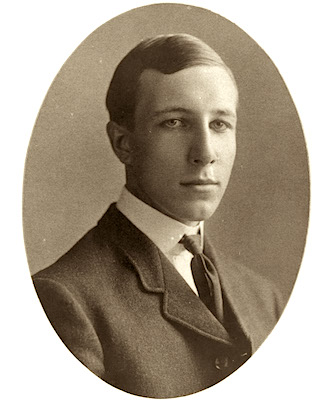
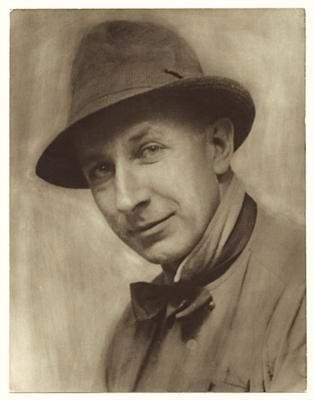
George Wesley Bellows (August 12 or August 19, 1882 – January 8, 1925) was an American realist painter, known for his bold depictions of urban life in New York City, becoming, according to the Columbus Museum of Art, “the most acclaimed American artist of his generation”. Wikipedia
Bellows once commented that “there is nothing I do not want to know that has to do with life or art.” He drew equal inspiration from municipal workers removing snow from the city’s streets, longshoremen loading and unloading cargo from ocean liners and freighters, and the ladies and gentlemen who created a rich visual pageantry as they enjoyed New York’s parks. The variety of Bellows’s urban subjects was matched by the range of palettes and techniques he employed, often on immense canvases. Few would have disputed a critic who observed of Bellows at the time of his death, “He was an adherent of ‘wallop’ in painting.” In an astute bid for broad appeal, Bellows exhibited his works widely, attracting both critics—”There’s been an awful lot written about me,” he admitted—and patrons. His dramatic paintings of familiar subjects were acquired by major museums, important regional art centers, educational institutions, and prominent collectors, from the relatively adventurous to those with more conventional tastes. Both an active academician and a keen independent, Bellows was at home among diverse factions of the art world. Writing in 1913, the critic Forbes Watson noted his “curious appeal” to “the conservative and radical alike.” FROMhttp://www.metmuseum.org/exhibitions/listings/2012/bellows
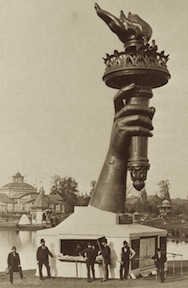
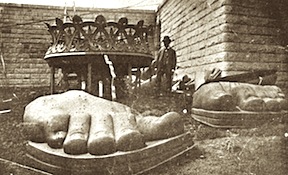
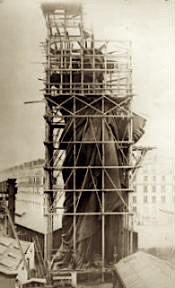
In 1865, a French political intellectual and anti-slavery activist named Edouard de Laboulaye proposed that a statue representing liberty be built for the United States. This monument would honor the United States’ centennial of independence and the friendship with France. French sculptor Auguste Bartholdi supported Laboulaye’s idea and in 1870 began designing the statue of “Liberty Enlightening the World.” While Bartholdi was designing the Statue, he also took a trip to the United States in 1871. During the trip, Bartholdi selected Bedloe’s Island as the site for the Statue. Although the island was small, it was visible to every ship entering New York Harbor, which Bartholdi viewed as the “gateway to America.” Creating the Statue of Liberty~http://www.nps.gov/stli/learn/historyculture/places_creating_statue.htm
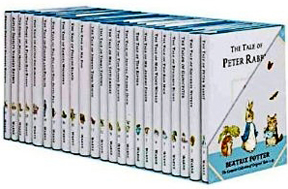
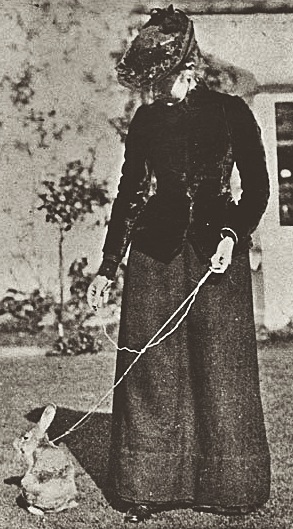
Helen Beatrix Potter was born on 28th July 1866 at 2 Bolton Gardens, in Kensington, London to a wealthy family. Both Beatrix’s parents lived on inheritances from the cotton trade and, though qualified as a barrister, her father, Rupert, focused much of his time on his passion for art and photography. He and his wife, Helen, enjoyed an active social life among a group of writers, artists and politicians and the family included many connoisseurs and practitioners of art. Helen herself was a fine embroiderer and watercolourist and Edmund Potter, Beatrix’s paternal grandfather, was co-founder and president of the Manchester School of Design. FROM http://www.vam.ac.uk/content/articles/b/biography-beatrix-potter/
Art lessons were provided but Beatrix found them barely tolerable. She politely rebelled, secretly worried that copying another artist would compromise her own originality, and hoped that she “wouldn’t catch it.” More to her liking were outings with her father, an
sometime amateur photographer, to the great art galleries of London which constituted her real artistic apprenticeship. Her education was limited only by her capacity to observe. Although she experimented with a variety of media, by 19 she had chosen watercolour and was rapidly perfecting her dry-brush technique. FROM http://www.bpotter.com/Beatrix.aspx
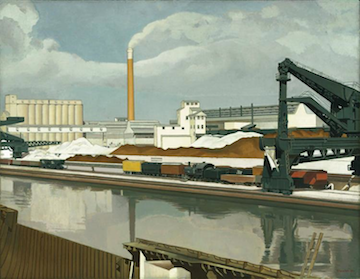
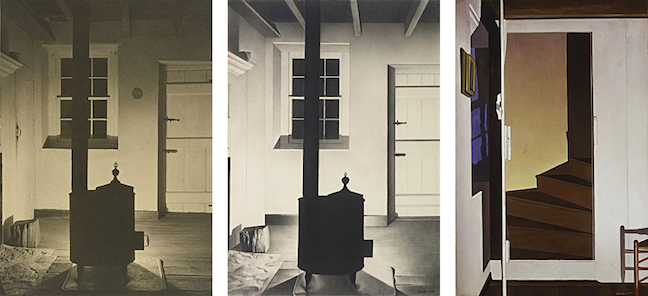
The American modernist Charles Sheeler (1883–1965) explored the relationships between photography, film, and more traditional media such as painting and drawing with more rigor and intellectual discipline than perhaps any other artist of his generation. As in a well-conceived scientific experiment, Sheeler used his own photographs and film stills as the basis for paintings and drawings, thus crystallizing the differences and similarities between them. Works in one medium manage to function as independent objects while also being inextricably linked to works in other media.Charles Sheeler: Across Media
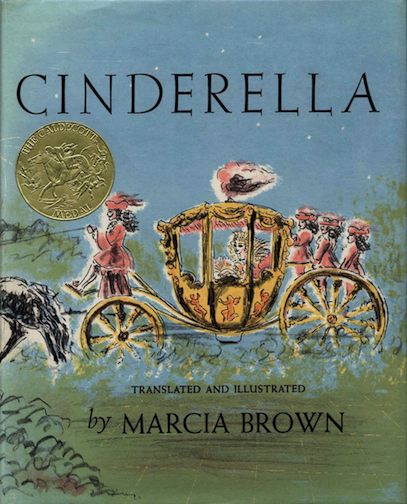
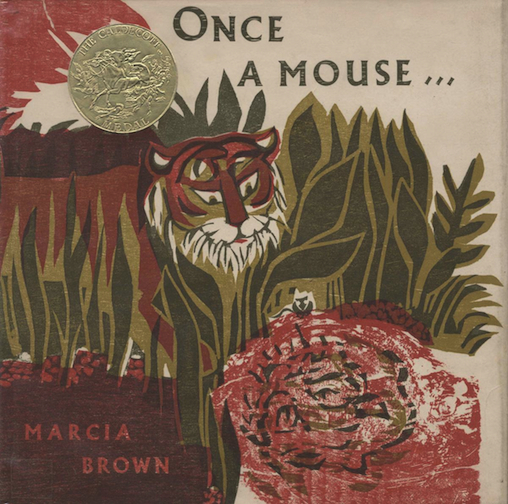
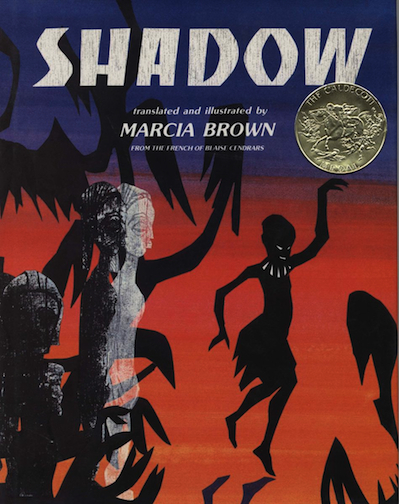
In 1946, Brown published her first book The Little Carousel, which chronicles the adventures of a lonely little boy who hears the sound of a merry-go-round near his home and features Brown’s vivid description of a bustling neighborhood in Greenwich Village, where she lived upon first arriving in New York City. The Little Carousel, which she wrote and illustrated, was followed by over thirty more books during her career. FROMhttps://archives.albany.edu/static/exhibits/marciabrown/bio.htm Brown’s first award was Caldecott Honors for Stone Soup (1948), an old folktale Brown retold and illustrated. She won the Caldecott Medal three times, and received Caldecott Honors a total of six times. She also received the Lewis Carroll Shelf Award, for Once a Mouse… (1961), and her book How, Hippo! (1969), the story of a baby hippo and a crocodile, was an American Library Association Notable Book. Brown illustrated more than thirty books, most of which she either wrote or adapted. She loves folklore and illustrated a number of classic tales from around the world, including Puss in Boots (1952), Anasi, the Spider Man (1954), and The Flying Carpet (1956). Throughout her career, Brown used a wide variety of media, although her most distinctive illustrations are her colored woodblocks. In 1986, Brown published Lotus Seeds: Children, Pictures, and Books, a compilation of her essays and speeches, and her only book for adults. FROMhttp://dla.library.upenn.edu/dla/pacscl/detail.html?id=PACSCL_FLP_clrc00013
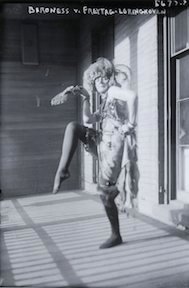
Early last century, when the sight of a woman in trousers could still cause a flap, the spectacle of Baroness Elsa von Freytag-Loringhoven must have aroused hairy panic.
With her five stray dogs trailing behind her on a gilded leash, she would walk regally through Washington Square Park, wearing a short Scottish kilt, a brassiere made from two tomato cans tied together with green string and, hanging from her neck, a wooden birdcage — with a live, chirping canary.
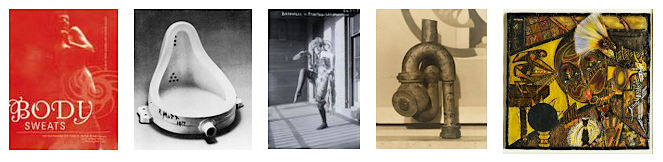
A Dada poet and collagist, artists’ model and troublemaker, she was called by those who knew her simply “the Baroness.” In the late 1910’s and early 1920’s, the Baroness reigned among the intellectual avant-garde who laughed at sexual taboos and made art their revolution. But in the wildly colorful hothouse of Greenwich Village bohemia, the Baroness was the most exotic blossom of them all. “She is not a futurist,” Marcel Duchamp said. “She is the future.” http://www.nytimes.com/2002/08/18/magazine/my-heart-belongs-to-dada.html
James Abbott Whistler was born [on July 11] in 1834 in Lowell, Massachusetts, the third son of West Point graduate and civil engineer Major George Washington Whistler, and his second wife Anna Matilda McNeill. After brief stays in Stonington, Connecticut, and Springfield, Massachusetts, the Whistlers moved to St. Petersburg, Russia, where the Major served as an engineer for the construction of a railroad line to Moscow. Whistler studied drawing there at the Imperial Academy of Science. In 1848 he went to live with his sister and her husband in London, and after his father’s death the following year the family returned to the United States and settled in Pomfret, Connecticut. Whistler enrolled in the United States Military Academy at West Point in 1851, where he excelled in Robert W. Weir’s drawing class. He was dismissed from the academy in 1854, and after brief periods working for the Winans Locomotive Works in Baltimore, and the drawings division of the United States Coast and Geodetic Survey, resolved to become an artist… FROMhttp://www.nga.gov/content/ngaweb/Collection/artist-info.1974.html
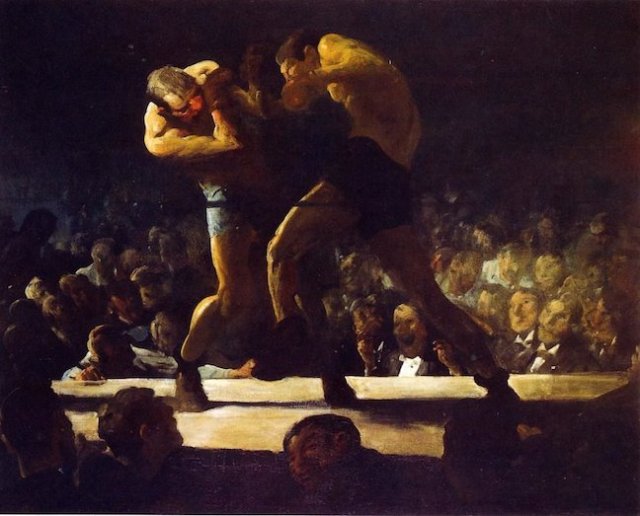 George Wesley Bellows (August 12 or August 19, 1882 – January 8, 1925) was an American realist painter, known for his bold depictions of urban life in New York City, becoming, according to the Columbus Museum of Art, “the most acclaimed American artist of his generation”. Wikipedia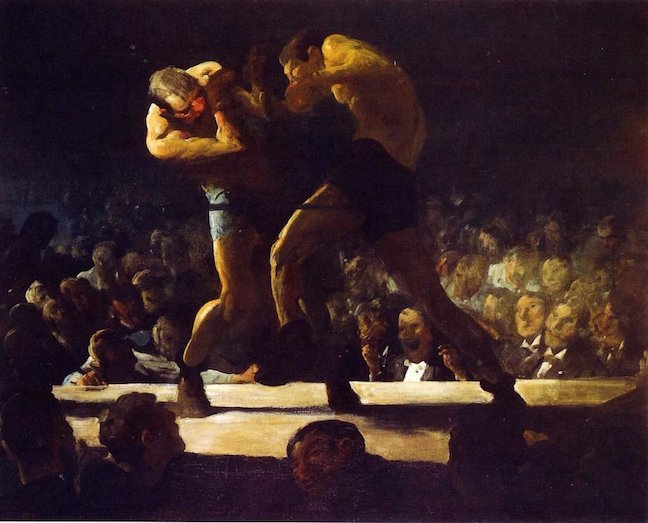
Bellows once commented that “there is nothing I do not want to know that has to do with life or art.” He drew equal inspiration from municipal workers removing snow from the city’s streets, longshoremen loading and unloading cargo from ocean liners and freighters, and the ladies and gentlemen who created a rich visual pageantry as they enjoyed New York’s parks. The variety of Bellows’s urban subjects was matched by the range of palettes and techniques he employed, often on immense canvases. Few would have disputed a critic who observed of Bellows at the time of his death, “He was an adherent of ‘wallop’ in painting.” In an astute bid for broad appeal, Bellows exhibited his works widely, attracting both critics—”There’s been an awful lot written about me,” he admitted—and patrons. His dramatic paintings of familiar subjects were acquired by major museums, important regional art centers, educational institutions, and prominent collectors, from the relatively adventurous to those with more conventional
tastes. Both an active academician and a keen independent, Bellows was at home among diverse factions of the art world. Writing in 1913, the critic Forbes Watson noted his “curious appeal” to “the conservative and radical alike.”