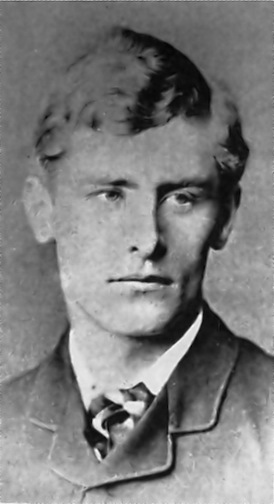
Christo (June 13, 1935-May 31, 2020) & Jeanne-Claude (June 13, 1935–Nov. 18, 2009)

Christo and Jeanne-Claude were a married couple who created environmental works of art. Christo was born on 13 June 1935 in Bulgaria as Christo Vladimirov Javacheff, while Jeanne-Claude was born on the same date in Morocco as Jeanne-Claude Denat de Guillebon. They have been collaborating for over 40 years and were best known for producing enormous packaging projects including parks, buildings, and entire outdoor landscapes.
FROM  http://www.rosenthalfineart.com/christo-and-jeanne-claude/

hthttps://www.christojeanneclaude.net/
https://en.wikipedia.org/wiki/Christo_and_Jeanne-Claude

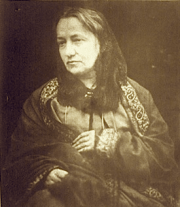
Julia Margaret Cameron~ Born June 11, 1815

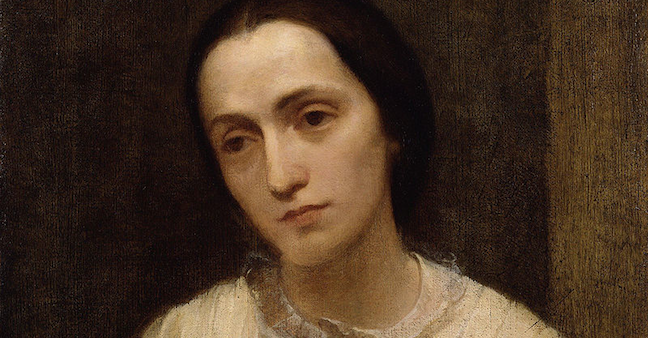
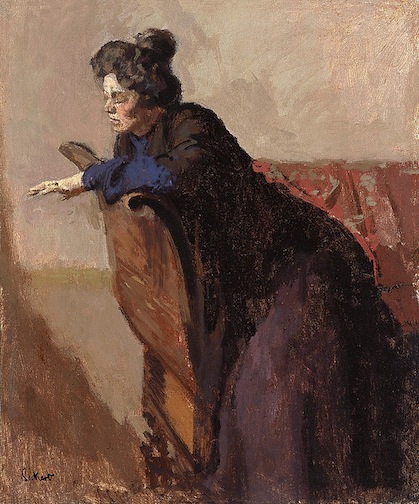
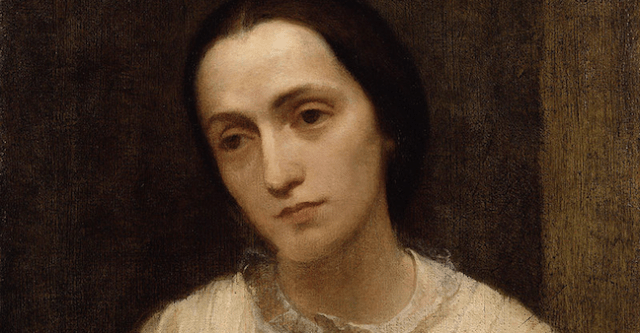
Detail: Painting of Julia Margaret Cameron by George Frederic Watts
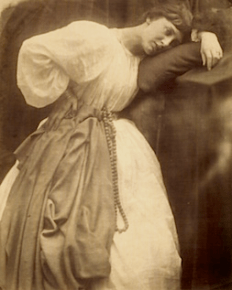
Julia Margaret Pattle was born in British India, on June 11, 1815, the daughter of an official in the Bengal Civil Service and a descendant of the French aristocracy. After her early years she received an education in France and England, returning to India in 1834. Four years later, in 1838, she married Charles Hay Cameron, twenty years her senior. In 1848, after Charles retired, he and Julia returned to England where they raised five children, adding a sixth in 1857 when they adopted Mary Ryan. Through Julia’s sister, Sarah Prinsep, the new arrivals cultivated a wide circle of elite, intellectual friends. It is this company of friends, family, and servants that Cameron used as models for her “tableux vivants”.
FROM http://d.lib.rochester.edu/camelot/creator/julia-margaret-cameron

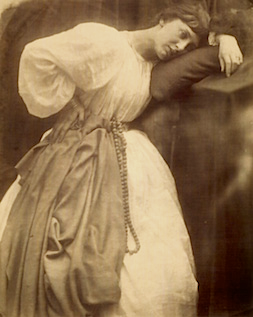
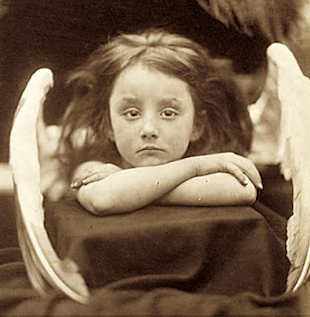
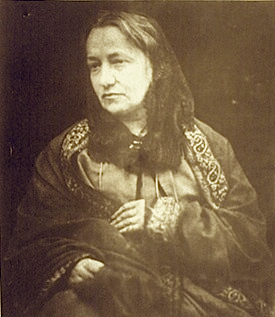
Cameron’s practice of photography began relatively late in her life, at age forty-eight, when her daughter gave her a sliding wooden box camera. Her “very first success in photography” came in January 1864, with a portrait of Annie, daughter of a neighbor.
Cameron used the wet collodion process, making prints with albumen printing-out paper, and worked with large negatives in order to avoid having to enlarge. In 1864 she began to register her work at the British Copyright Office, became a member of the Photographic Society of London and of Scotland, and prepared photographs for exhibition and sale through the London print dealers P. and D. Colnaghi. Most of her work was made between 1864 and 1875, before she left for family coffee plantations in Ceylon.
FROM https://www.icp.org/browse/archive/constituents/julia-margaret-cameron?all/all/all/all/0

From the first moment I handled my lens with a tender ardour,” she wrote, “and it has become to me as a living thing, with voice and memory and creative vigour.” Condemned by some contemporaries for sloppy craftsmanship, she purposely avoided the perfect resolution and minute detail that glass negatives permitted, opting instead for carefully directed light, soft focus, and long exposures that allowed the sitters’ slight movement to register in her pictures, instilling them with an uncommon sense of breath and life.  FROM http://www.metmuseum.org/exhibitions/listings/2013/julia-margaret-cameron
Heilbrunn Timeline of Art History

The Beauty of the Heroine: Julia Margaret Cameron and the Poetic Portrait

Julia Margaret Cameron: soft-focus photographer with an iron will
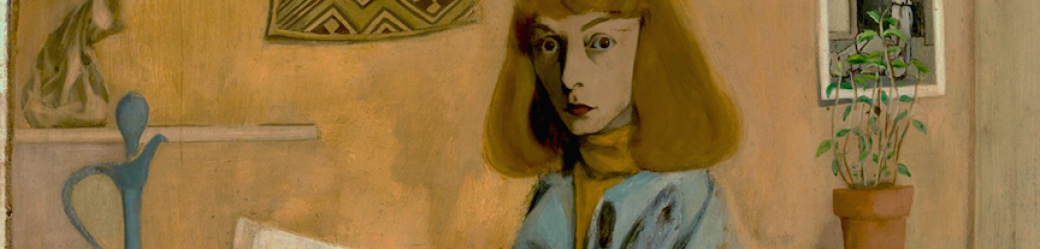
Maurice Sendak: Born June 10, 1928

Dubbed by one critic “the Picasso of children’s literature” and once addressed by former President Bill Clinton as “the King of Dreams,” Maurice Sendak illustrated nearly a hundred picture books throughout a career that spanned more than 60 years. Some of his best known books include Chicken Soup with Rice (1962), Where the Wild Things Are (1963), and In the Night Kitchen (1970). Born in Brooklyn in 1928 to Jewish immigrant parents from northern Poland, Sendak grew up idolizing the storytelling abilities of his father, Philip, and his big brother, Jack. As a child he illustrated his first stories on shirt cardboard provided by his tailor-father. Aside from a few night classes in art after graduating high school, Sendak was a largely self-taught artist.
FROM http://www.rosenbach.org/maurice-sendak-biography-and-timeline

Classical Music Fueled Maurice Sendak’s Creative Muse~
https://www.wqxr.org/story/207545-classical-music-fueled-maurice-sendak-muse/

This slideshow requires JavaScript.

Charles Rennie Mackintosh~ Born June 7, 1868

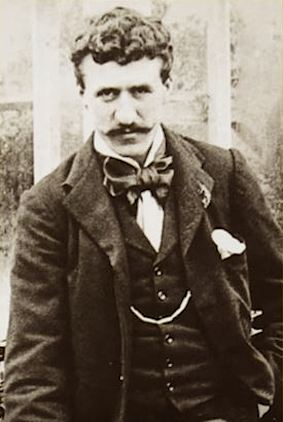
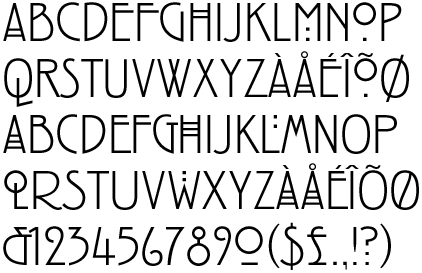
Charles Rennie Mackintosh (7 June 1868-10 December 1928) “was a Scottish architect, designer, water colourist and artist. He was a designer in the Post-Impressionist movement and also the main representative of Art Nouveau in the United Kingdom. He had considerable influence on European design. He was born in Glasgow…”
FROM https://alchetron.com/Charles-Rennie-Mackintosh-1221200-W

“Mackintosh was apprenticed to a local architect John Hutchison, but in 1889 he transferred to the larger, more established city practice of Honeyman and Keppie.

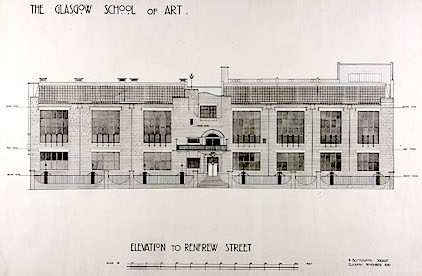
To complement his architectural apprenticeship, Mackintosh enrolled for evening classes at the Glasgow School of Art where he pursued various drawing programmes.”
FROM https://www.crmsociety.com/about-mackintosh/charles-rennie-mackintosh/

“The majority of Mackintosh’s architectural practice was supported by his wife Margaret Macdonald with whom he had studied at the Glasgow School of Art. Her mind was often responsible for the artistic flourish that became so integral to the aforementioned Mackintosh Rose motif. In his time as a professional architect, Mackintosh worked with his wife to design buildings ranging in use from residential, to commercial and religious.”
FROM https://www.archdaily.com/639483/spotlight-charles-rennie-mackintosh

“Despite success in Europe and the support of clients such as Blackie and Cranston, Mackintosh’s work met with considerable indifference at home and his career soon declined. Few private clients were sufficiently sympathetic to want his ‘total design’ of house and interior.

A move to the South of France in 1923 signalled the end of Mackintosh’s three-dimensional career and the last years of his life were spent painting. He died in London on 10 December 1928.”
FROM https://gsaarchives.net/collections/charles-rennie-mackintosh/

Design Museum~ https://designmuseum.org/designers/charles-rennie-mackintosh#toggle-submenu
Charles Rennie Mackintosh Society~ https://www.crmsociety.com/


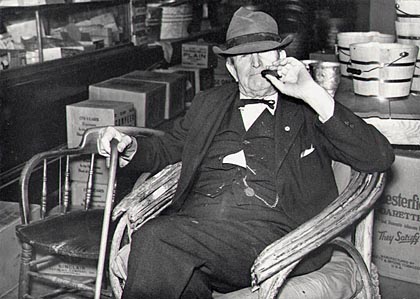
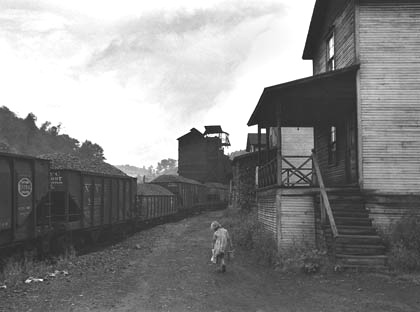
Marion Post Wolcott: Born June 7, 1910

Wolcott

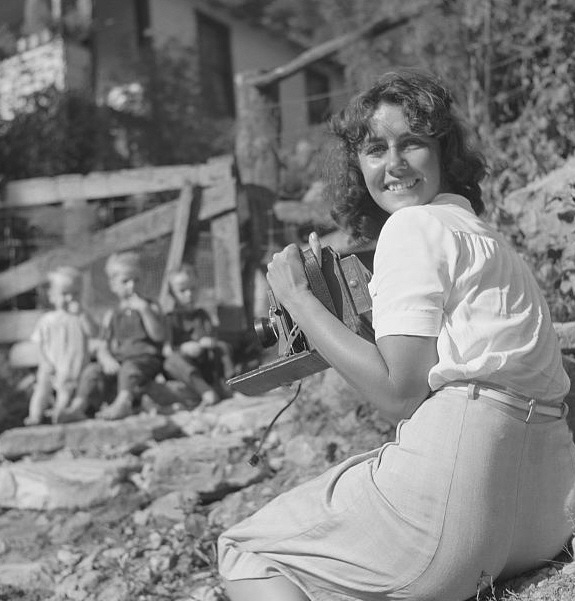
manwithstogieMarion Post Wolcott is best known for the more than 9,000 photographs she produced for the Farm Security Administration (FSA) from 1938 to 1942.1 This work is preserved at the Library of Congress Prints and Photographs Division and also available online. Before Wolcott became a government photographer, she earned her living making photographs for magazines and newspapers. Initially she worked freelance, but, as a staff photojournalist in 1937 and 1938, Wolcott broke gendertrain barriers in the newspaper darkroom. Then she worked for the Farm Security Administration, one of the largest news photography projects in the world.  students Although she worked professionally for only a few years, her artistry and perseverance have inspired many articles, books, and exhibitions and her photographs created a lasting record of American life on the eve of World War II.
FROM http://www.loc.gov/rr/print/coll/womphotoj/wolcottessay.html

The Photography of Marion Post Wolcott~
https://americanart.si.edu/artist/marion-post-wolcott-18332
Oral history interview with Marion Post Wolcott, 1965~
http://www.aaa.si.edu/collections/interviews/oral-history-interview-marion-post-wolcott-12262
Shorpy: M.P. Wolcott~ http://www.shorpy.com/image/tid/142

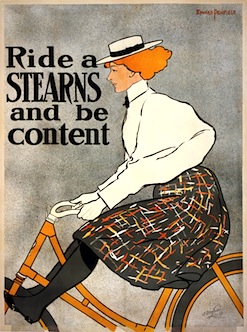
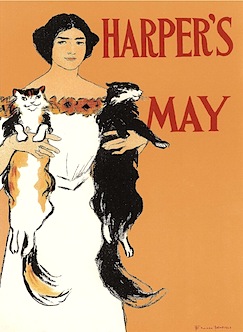
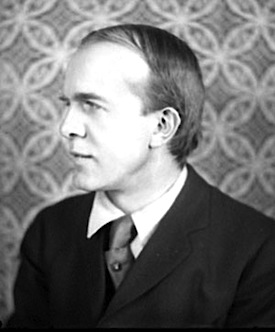
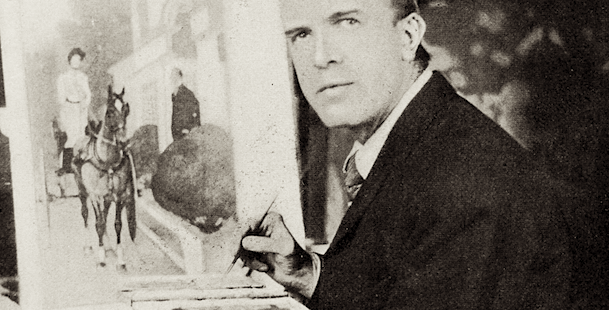
Edward Penfield: Born June 2, 1866

epportraitBicycleCatseptoo

“What many do not realize is that Penfield’s Harpers years account for less than a third of his thirty-four year career. During the decade after his self-retirement from Harper and Brothers, his freelance work was seen by millions of people on hundreds of magazine covers and advertisements.

Not a boisterous self-promoter like some of his contemporaries — he rarely gave personal interviews — Penfield preferred to live a quiet life near his ancestral stomping grounds in New York. But at the same time he was considered “that rare person among artists, an active citizen.” He volunteered for civic duties, spoke at womens’ clubs, taught at the Art Students’s League and served as president of the Society of Illustrators.

More than a poster artist, Edward Penfield was an illustrator, art editor, graphic designer, writer, painter, educator and mentor — an American Master.” FROM https://edwardpenfield.com/introduction/

Google Arts: https://artsandculture.google.com/entity/edward-penfield/m09rt2r_?categoryId=artist&hl=en
Edward Penfield posters~ https://digitalcollections.nypl.org/collections/posters-by-edward-penfield#/?tab=about
eptopper

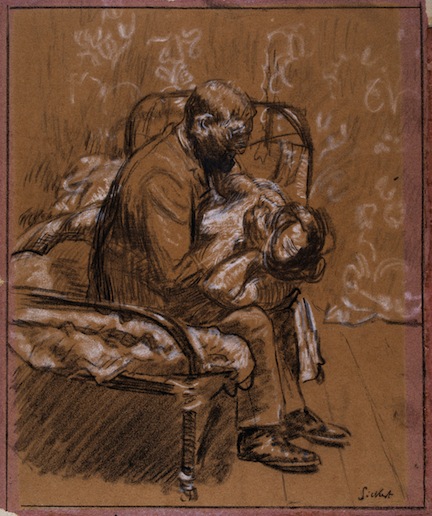
Walter Richard Sickert: Born May 31, 1860

Persuasion

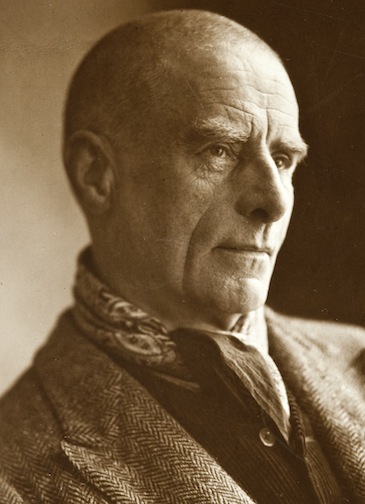
Sickert1Unlike the majority of the Camden Town Group, Walter Richard Sickert was recognised during his own lifetime as an important artist, and in the years since his death has increasingly gained a reputation as one of the most influential figures in twentieth-century British art…His art, like his personality, is multifaceted, complex and compelling.

The twenty-first century has seen a sustained period of Sickert research and exhibitions,TheRing crystallising his reputation as one of the most significant British artists of the early modern period.
FROM http://www.tate.org.uk/art/research-publications/camden-town-group/walter-richard-sickert-r1105345

Sickert2The most popular and famous theory as to the identity of Jack the Ripper…was first posited by author Stephen Knight in the 1970s.

He claimed the Ripper’s victims were really killed to cover up a scandalous secret marriage between the Queen’s son Prince Albert Victor, then second in line to the throne, and a Catholic prostitute named Annie Elizabeth Crook, who bore Albert’s child.

Knight got much of his information from Joseph Gorman-Sickert, who claimed to be the illegitimate son of painter Walter Sickert, himself a Ripper suspect.
FROM http://theunredacted.com/jack-the-ripper-the-royal-conspiracy/

Top 10 Stupidest/Weirdest Jack the Ripper theories~ http://swallowingthecamel.me/2013/11/10/top-10-stupidestweirdest-jack-the-ripper-theories/

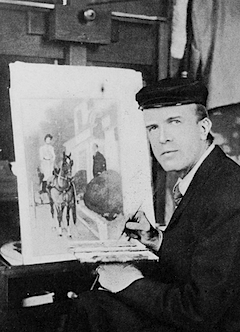
W. Heath Robinson: Born May 31, 1872

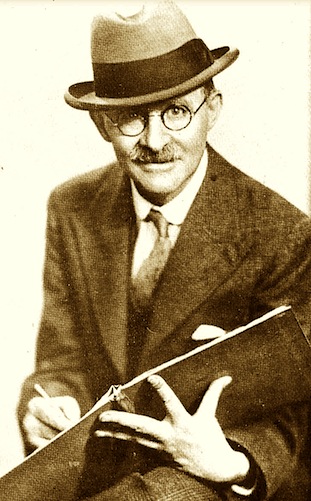
RobinsonRobinson was born into a family of artists in 1872. His father, grandfather and uncle all made their livings through art, via drawing or engraving. Robinson was educated at Islington Art School and the Royal Academy. He illustrated dozens of books, from famous works like Donoutdoors Quixote and A Midsummer Night’s Dream to lesser-known volumes such as The Incredible Adventures of Professor Branestawm and Plantation Barn Dance.
FROM http://www.abebooks.com/books/illustration-art-uncle-lubin-william/w-heath-robinson.shtml

…in World War Two the machine created by British code breakers at Bletchley Park, the golfdriverspredecessor to the world’s first computer Colossus, was nicknamed Heath Robinson. It consisted of reels and spools, which had to be precisely aligned and timed in order for it to work.
FROM http://www.bbc.com/news/magazine-27813927

waterFor his own pleasure, he continued to paint in watercolours, experimenting with effects of light and colour. His importance, as an innovator in the fields of illustration and advertising, and perhaps more importantly as the heir of Rowlandson and Cruikshank in the British humorous tradition, has yet to be fully appreciated, and his work is poorly represented in public collections.
FROM http://heathrobinson.org/robinson/index.htm

Emanuel Gottlieb Leutze: Born May 24, 1816

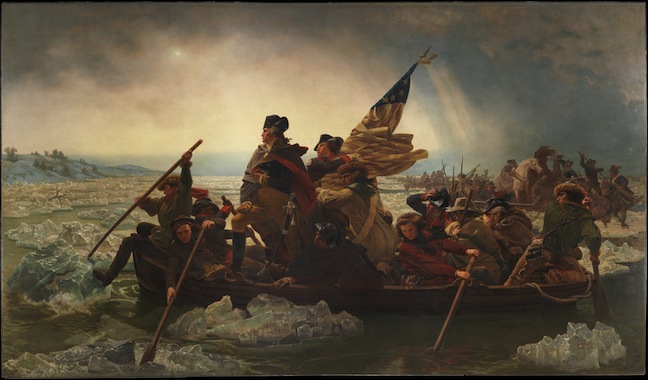
WashingtonWashington Crossing the Delaware, 1851 • Emanuel Gottlieb Leutze
Oil on canvas; 149 x 255 in. (378.5 x 647.7 cm)

Leutze’s depiction of a critical moment during the American revolution has become one of the best known and most extensively published images in American history. He portrays George Washington, accompanied by some 2,500 of his troops, crossing the Delaware River about nine miles above Trenton, New Jersey, in a surprise attack on the Hessians. The strategic crossing took place after midnight on December 25, 1776; ice floes and a heavy snowstorm kept the American soldiers and their allies from reaching shore until daybreak, which Leutze captured with the morning star overhead.
http://www.metmuseum.org/toah/works-of-art/97.34

Crossing of the Delaware: http://www.mountvernon.org/research-collections/digital-encyclopedia/article/crossing-of-the-delaware/
Emanuel Gottlieb Leutze…German-born American historical painter whose picture Washington Crossing the Delaware (1851) numbers among the most popular and widely reproduced images of an American historical event.
http://www.britannica.com/EBchecked/topic/337776/Emanuel-Gottlieb-Leutze

Norma Bassett Hall, American printmaker: Born May 21, 1889

NBHOne

Norma Bassett Hall was an American woodblock printmaker who often depicted landscapes and outdoor scenes. She was born in Halsey, Oregon. In 1910, she become a member of the inaugural class of the Museum Art School in Portland, Oregon. After leaving Portland, she briefly taught in Milwaukee, Wisconsin, before continuing her education at the School of the Art Institute of Chicago from 1915-1918. She also studied privately with the noted British printmaker Mabel Royds, who introduced Norma to the Japanese method of printing woodcuts on rice paper with transparent watercolors. While studying at the SAIC, Norma Bassett met and would later NBHTwomarry Arthur William Hall, a fellow student and artist. Following their marriage, they made their home in Kansas, becoming deeply involved with the state’s flourishing printmaking culture and helping to found the Prairie Print Makers. Hall, the only female among the group’s eleven charter members, designed their distinctive logo, a monogram set within a stylized sunflower. Hall and her husband divided their time and subjects between the rolling hills of Kansas and the dramatic vistas of New Mexico. In 1944 the couple permanently relocated to New Mexico, living first in Santa Fe and eventually purchasing an estate near Alcade from which they operated an art school. Bassett Hall continued to work and teach from their estate until her death in 1957. ~FROM Wikipedia

Jordan Schnitzer Museum of Art~
http://jsma.uoregon.edu/jordan-schnitzer-museum-art-opens-first-solo-exhibition-norma-bassett-hall-1957
Biography~ https://www.annexgalleries.com/artists/biography/927/Hall/Norma
Artnet~ http://www.artnet.com/artists/norma-bassett-hall/past-auction-results