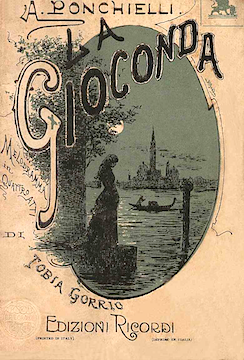
Premiered April 8, 1876: “La Gioconda”

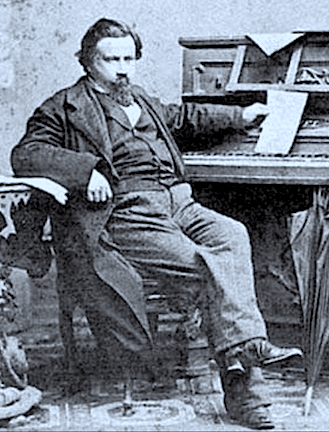
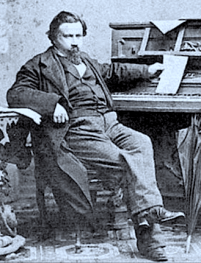
Composer Amilcare Ponchielli was born in Italy in 1834. He started composing operas while still a student at the Milan Conservatory. After graduating in 1854, he held various positions over the years, including professor of composition at the Conservatory; his pupils included Giacomo Puccini and Pietro Mascagni. His most famous opera is “La Gioconda”, written in 1876. It is mainly remembered for its ballet, Dance of the Hours.

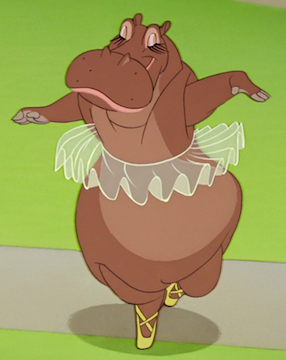
“The Dance of the Hours is probably the only opera ballet that has established a life of its own in both the concert hall as a stand-alone orchestral work…and in pop culture: Walt Disney’s 1940 animated film Fantasia, for example, used the music for a ballet performed by tutu-clad hippos, ostriches, alligators and elephants. And in 1963, parodist Alan Sherman set words to the tune of Ponchielli’s day music with its all-too-familiar four-note theme. Sherman’s “Hello Muddah, Hello Fadduh (A Letter from Camp)” hit No. 2 on the pop charts.”
FROM~ https://nepaphil.org/program-notes-from-an-evening-of-opera-overtures-and-arias/

Ponchielli’s biography~ http://www.allmusic.com/artist/amilcare-ponchielli-mn0000496351/biography

Synopsis of “La Gioconda“~ http://www.opera-arias.com/ponchielli/la-gioconda/synopsis/

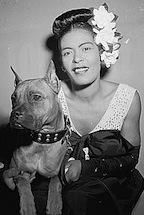
Billie Holiday: April 7, 1915-July 17, 1959

withDog“Billie Holiday was the daughter of Clarence Holiday. Her early life is obscure, as the account given in her autobiography, Lady Sings the Blues, is self-serving and inaccurate.

At some point after 1930, she began singing at a small club in Brooklyn, and in a year or so moved to Pods’ and Jerry’s, a Harlem club well known to jazz enthusiasts. In 1933, she was working in another Harlem club, Monette’s, where she was discovered by the producer and talent scout John Hammond. Hammond immediately arranged three recording sessions for her with Benny Goodman and found engagements for her in New York clubs.
FROM~ http://www.pbs.org/jazz/biography/artist_id_holiday_billie.htm

BHolidayStrange Fruit: the first great protest song~ http://www.theguardian.com/music/2011/feb/16/protest-songs-billie-holiday-strange-fruit

The Guardian~“Billie Holiday’s centenary: a life in pictures”
http://www.theguardian.com/music/gallery/2015/apr/07/billie-holidays-centenary-a-life-in-pictures

SFGate~“Billie Holiday at 100: Artists reflect on jazz singer’s legacy”
http://www.sfgate.com/music/article/Billie-Holiday-at-100-Artists-reflect-on-jazz-6177350.php

Looking For Lady Day’s Resting Place? Detour Ahead~ http://www.npr.org/2012/07/17/156686608/looking-for-lady-days-resting-place-detour-ahead

Herbert Bayer: Born April 5, 1900

HerbertBayerStadelwand1936© M.T. Abraham Center© M.T. Abraham Center – Provided by copyright owner of both photograph and artwork, CC BY 3.0
https://commons.wikimedia.org/w/index.php?curid=24556654

Herbert Bayer (1900-1985) is one of the individuals most closely identified with the famous Bauhaus program in Weimar, Germany. Together with Walter Gropius, Laszlo Moholy-Nagy, and Wassily Kandinsky, Bayer helped shape a philosophy of functional design that extended across disciplines ranging from architecture to typography and graphic design. Endowed with enormous talent and energy, Bayer went on to produce an impressive body of work, including freelance graphics commissions, Modernist exhibition design, corporate identity programs, and architecture and environmental design…Though Bayer came to the Bauhaus as a student, he stayed on to become one of its most prominent faculty members.
FROM https://library.rit.edu/gda/designers/herbert-bayer

Collection at MoMA~ http://www.moma.org/collection/artists/399
New York Times Obituary~
http://www.nytimes.com/1985/10/01/arts/herbert-bayer-85-a-designer-and-artist-of-bauhaus-school.html

This slideshow requires JavaScript.

Clifford Berryman: Born April 2, 1869

Clifford K. Berryman (1869-1949) was a Pulitzer Prize–winning editorial cartoonist, perhaps best known for inspiring the Teddy Bear toy. As a draftsman, illustrator, and cartoonist, Berryman always worked in pen and ink. Berryman satirized both Democrats and Republicans with a light-hearted approach.

Born April 2, 1869 in Clifton, Kentucky, he never attended art school and was entirely self-taught. His first job, in 1886, was as a draftsman at the United States Patent Office in D.C. From 1891 to 1896, he worked as a general illustrator and it was during this time that he learned cartooning by studying contemporary cartoons and copying the artist’ styles.

Berryman’s illustration entitled “And Boys, Remember the Maine!”, which appeared in the Washington Post on April 3, 1898, depicts an angry Uncle Sam addressing sailors as the USS Maine sinks in the background. “Remember the Maine,” became the battle-cry for American sailors during the Spanish-American War.

Berryman originated the “Teddy Bear” in his illustration “Drawing the Line in Mississippi”, published November 16, 1902 in the Post. It showed President Theodore Roosevelt refusing to shoot a captured cub during a bear hunt. This is the cartoon which inspired New York store owner Morris Michtom to create a new toy and call it the Teddy Bear. This little bear appeared in cartoons drawn by Berryman throughout Roosevelt’s career.


Berryman drew thousands of cartoons, first with the Washington Post and then with the Washington Star, where he drew cartoons until his death on December 11, 1949. Berryman’s cartoons can be found at the Library of Congress, the National Archives, and George Washington University.

Biography~ https://alchetron.com/Clifford-K-Berryman-1222344-W

Running for Office: Candidates, Campaigns, and the Cartoons of Clifford Berryman~
https://www.archives.gov/exhibits/running-for-office/
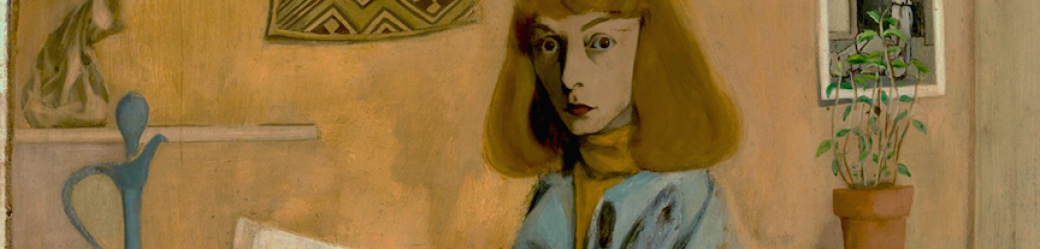
Jan Tschichold: Born April 2, 1902


TSCHICHOLD, JAN 1963 © ERLING MANDELMANNBy 1945, Tschichold had gained fame in the typographic world for the books he designed, as well as those he wrote, altogether an impressive list. His beautiful work and impeccable craftsmanship made him the logical choice when Allen Lane wanted somebody to develop an orderly system of design for his Penguin Books.


Tschichold combined a series of grids with a set of rules of composition and forced their acceptance by a reluctant, sometimes rebellious, printing craft. His perseverance served to inspire tremendous improvement in the quality of all British books, as his techniques were admired and imitated.

FROM https://creativehalloffame.org/inductees/jan-tschichold/

http://www.theguardian.com/artanddesign/2008/dec/05/jan-tschichold-typography
http://www.theguardian.com/culture/gallery/2008/dec/05/design

Raymond Hood: Born March 29, 1881


American architect Raymond Mathewson Hood was born March 29, 1881 in Pawtucket, Rhode Island. He attended Brown University, transferring to and graduating from the MIT School of Architecture. He later continued his education at the École des Beaux-Arts, earning a degree in 1911. Hood has been associated with the architectural styles of Neo-Gothic, Art Deco, Streamlined Moderne, and International.

Hood made his name in 1922 when he and John Mead Howells (whom he had met while in Paris) won a competition to design the Chicago Tribune Tower (completed 1925).

Projects which Hood worked on include:
American Radiator Building, NYC ( completed 1924)
Masonic Temple (Scranton Cultural Center) Scranton, PA (completed 1930)
Daily News Building, NYC (completed 1930)
McGraw-Hill Building, NYC (completed 1934)

Raymond Hood is perhaps best known for his work on Rockefeller Center (completed 1930-40) in Midtown Manhattan. Covering 22 acres, Rockefeller Center encompasses 19 buildings, including the Art Deco Radio City Music Hall.

Hood promoted visionary proposals for Manhattan, including his “City under a Single Roof” (1931) and “Manhattan 1950” (1931) Hood championed the tower as the ideal form for the skyscraper; he imagined slender shafts soaring above expansive open spaces.

Raymond Hood died on August 14, 1934 in Stamford, Connecticut.


⬇️ Youtube Playlist: BUILDING RADIO CITY MUSIC HALL
⬇️

Carl Barks (March 27, 1901-August 25, 2000)

Carl Barks (March 27, 1901 – August 25, 2000) was a famous Disney Studio illustrator and comic book creator, who invented Duckburg and many of its inhabitants, such as Scrooge McDuck (1947), Gladstone Gander (1948), the Beagle Boys (1951), Gyro Gearloose (1952), Flintheart Glomgold (1956), John D. Rockerduck (1961) and Magica De Spell (1961). The quality of his scripts and drawings earned him the nicknames The Duck Man and The Good Duck Artist. Fellow comic writer Will Eisner called him “the Hans Christian Andersen of comic books.”
FROM http://disney.wikia.com/wiki/Carl_Barks