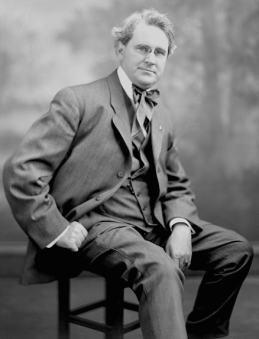
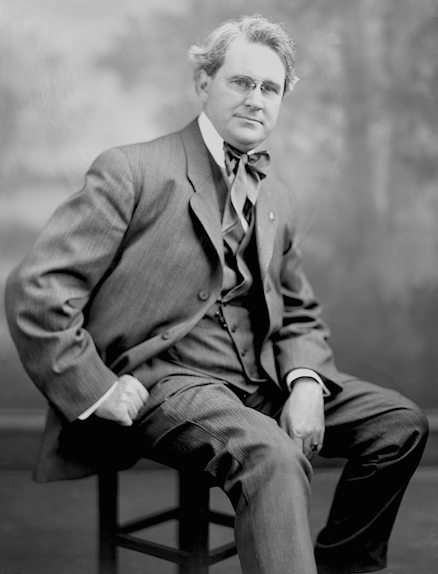
 Clifford K. Berryman (1869-1949) was a Pulitzer Prize–winning editorial cartoonist, perhaps best known for inspiring the Teddy Bear toy. As a draftsman, illustrator, and cartoonist, Berryman always worked in pen and ink. Berryman satirized both Democrats and Republicans with a light-hearted approach.
Born April 2, 1869 in Clifton, Kentucky, he never attended art school and was entirely self-taught. His first job, in 1886, was as a draftsman at the United States Patent Office in D.C. From 1891 to 1896, he worked as a general illustrator and it was during this time that he learned cartooning by studying contemporary cartoons and copying the artist’ styles.
Berryman’s illustration entitled “And Boys, Remember the Maine!”, which appeared in the  Washington Post on April 3, 1898, depicts an angry Uncle Sam addressing sailors as the USS Maine sinks in the background. “Remember the Maine,” became the battle-cry for American sailors during the Spanish-American War.
 Berryman originated the “Teddy Bear” in his illustration “Drawing the Line in Mississippi”, published November 16, 1902 in the Post. It showed President Theodore Roosevelt refusing to shoot a captured cub during a bear hunt. This is the cartoon which inspired New York store owner Morris Michtom to create a new toy and call it the Teddy Bear. This little bear appeared in cartoons drawn by Berryman throughout Roosevelt’s career.

Berryman drew thousands of cartoons, first with the Washington Post and then with the Washington Star, where he drew cartoons until his death on December 11, 1949. Berryman’s cartoons can be found at the Library of Congress, the National Archives, and George Washington University.

Biography~ https://alchetron.com/Clifford-K-Berryman-1222344-W
Running for Office: Candidates, Campaigns, and the Cartoons of Clifford Berryman~
https://www.archives.gov/exhibits/running-for-office/


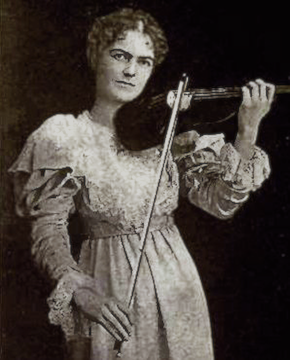
 Leonora Clench in what is now Ontario, Canada. Nora made her debut as a violinist at the age of 8. When she was fifteen she entered the Leipzig Conservatory in Germany, and after graduating in 1889 she became first violinist and leader of an orchestra in Buffalo, New York. She later toured Europe and eventually moved to London.
  up playing the violin in order to go to Paris to paint. When she returned to music she founded the all-female “Nora Clench Quartet”, which played a prominent role in the music of fin de siecle London.
  Australian landscape painter Arthur Streeton. The Nora Clench Quartet continued without her. In 1923, the Streeton family moved to Australia. In 1937 Streeton was given a knighthood for his services to fine art, and Clench became Lady


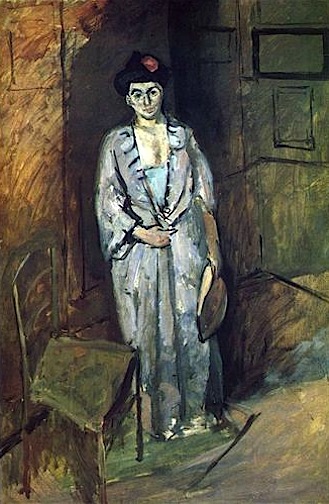





 The Misty Miss Christy