April 29, 1945: U.S. Seventh Army’s 45th Infantry Division liberates Dachau

music

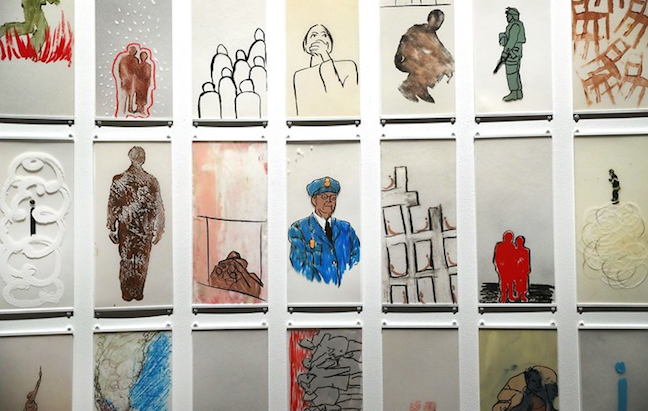
“In 1944 Zoran Music was arrested by the Gestapo in Venice and deported to the concentration campo in Dachau, an experience that marked his life and his art thereafter. In 1945 he made a series of drawings depicting scenes related to the Holocaust: cremation ovens, hanged men and piles of corpses. These drawings would be the inspiration, in the 1970s, for the series Nous ne sommes pas les derniers (We Are Not the Last)…”
FROM http://www.museoreinasofia.es/en/collection/artwork/nous-ne-sommes-pas-derniers-we-are-not-last

When we were in the camp, people would often declare that this sort of thing could never happen again. When the war is over, they said, a better world will come into being and such horrors will never recur. . . But then, as time went by, I saw the same sort of thing starting to happen again all over the world—in Vietnam, in the Gulag, in Latin America—everywhere. And I realized that what we had said in those days—that we would be the last people to experience such things—was not true: the truth is that we were not the last. – Zoran Music
FROM http://thejewishmuseum.org/exhibitions/an-artists-response-to-evil-we-are-not-the-last-by-zoran-music#about
Zoran Mušič on Wikipedia: https://en.wikipedia.org/wiki/Zoran_Mušič

Artist Birthday Quiz for 4/4~

This painter returned to the subject “Peaceable Kingdom” again and again throughout his lifetime; by current estimates he represented it some sixty times.

This artist exhibited eight paintings in the 1905 Salon d’Automne, the exhibition when he and other artists were derisively labelled “Fauves” (“wild beasts”).

Answers here~ https://schristywolfe.com/2015/04/04/april-4/

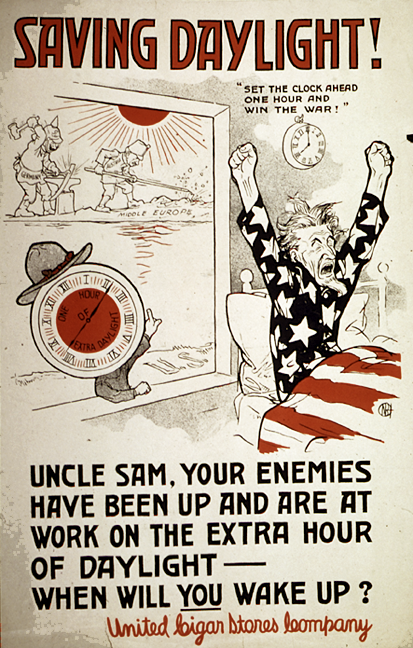
Daylight Saving Time

DST5Origins of Daylight Saving Time~ http://blog.nyhistory.org/daylight-saving-time-wwi-beginnings/

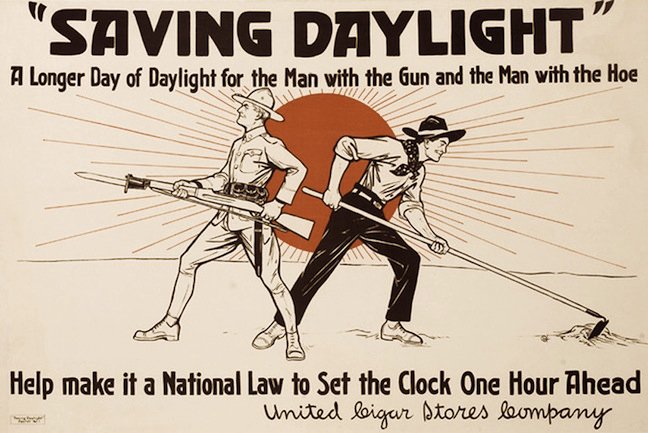
DST2DST1DST4Virtually every article on the internet regarding Daylight Saving Time is illustrated by one or more posters from WWI encouraging Congress to make DST a law, and subsequently reminding people to Spring Forward and Fall Back. I thought it would be interesting to look into the United Cigar Stores Company to learn why they were such enthusiastic proponents of Daylight Saving Time, but after some rigorous research on the internet I am going to have to declare defeat. Everyone reproduces these posters but nobody sheds any light on their origin or design or publication. My guess is that they were approached by the government to sponsor this campaign, as opposed to dreaming it up themselves, but it’s pure speculation on my part. Oh Google, how can you fail me so?

Frank Sinatra: Born December 12, 1915

Francis Albert Sinatra [was born] in Hoboken, New Jersey. Although his mother had hoped that he would be the first person in the family to attend college and was disappointed that he did not finish high school, she encouraged his ambition to be a singer. His father, on the other hand, was opposed and insisted that he should find a job. The young Sinatra worked briefly as a truck driver for a newspaper, a riveter in a Hoboken shipyard, and a fruit hauler. By 1932, he had decided that he wanted to be a professional singer.
FROM http://www.anb.org/view/10.1093/anb/9780198606697.001.0001/anb-9780198606697-e-1803570
His break came in 1937, when he and three instrumentalists, billed as the Hoboken Four, won on the Major Bowes Original Amateur Hour. After some touring, the group disbanded. Harry James signed Sinatra to sing with his orchestra, and on July 13, 1939, two weeks after his debut as a big-band vocalist at the Hippodrome Theatre in Baltimore, Sinatra cut his first disc, “From the Bottom of My Heart,” with the orchestra.
FROM https://www.rollingstone.com/music/music-news/an-appreciation-of-frank-sinatra-1915-1998-59176/
James graciously freed Sinatra from his contract when the singer received a more lucrative offer from bandleader Tommy Dorsey in December 1939. By 1942 Sinatra’s fame had eclipsed that of Dorsey, and the singer yearned for a solo career.
FROM https://www.britannica.com/biography/Frank-Sinatra
Between 1943 and 1946, Sinatra’s solo career blossomed as the singer charted a slew of hit singles. Sinatra made his movie acting debut in 1943. In 1945, he won a special Academy Award for The House I Live In, a 10-minute short made to promote racial and religious tolerance on the home front. Sinatra’s popularity began to slide in the postwar years (but) in 1953, he made a triumphant comeback, winning a supporting actor Oscar for From Here to Eternity.
FROM https://www.biography.com/people/frank-sinatra-9484810
In the mid-’70s Sinatra’s career slowed down, but in mid-1980, after a five-year recording hiatus, he released Trilogy which included a version of “Theme From New York, New York” that the city fervently adopted. In 1985, he was accorded the Presidential Medal of Freedom, the nation’s highest civilian award. Frank Sinatra died of a heart attack on May 14, 1998, in L.A.
FROM https://www.rollingstone.com/music/music-news/an-appreciation-of-frank-sinatra-1915-1998-59176/

Louis-Jacques-Mandé Daguerre: Born November 18, 1787

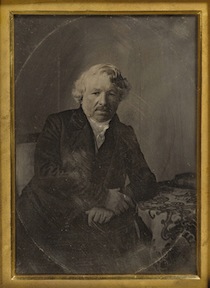
LJDLouis Jacques Mande Daguerre was born near Paris, France in 1787. The illusionistic painter Pierre Prevost asked him to join his team of panorama-painting artists when he was just twenty years old. Daguerre soon after became an assistant stage designer for a theater. He was a gifted illusionist in terms of his ability to design sets that dazzled his audiences. An artist who wanted his work to be as real as possible, Daguerre created amazingly life-like scenes right in the theater. These designs, which were able to simulate the passage of day into night, changes in weather, and even give viewers the feel of motion, Daguerre later coined as “dioramas,” or “dramas of light.” By 1825, Daguerre was a successful creator, proprietor, and promoter of a successful illusionistic theater in Paris that specialized in these dioramas.  https://www.fi.edu/history-daguerreotype

Daguerre had been searching since the mid-1820s for a means to capture the fleeting images he saw in his camera obscura, a draftsman’s aid consisting of a wood box with a lens at one end that threw an image onto a frosted sheet of glass at the other. In 1829, he had formed a partnership with Nicéphore Niépce, who had been working on the same problem—how to make a permanent image using light and chemistry—and who had achieved primitive but real results as early as 1826. By the time Niépce died in 1833, the partners had yet to come up with a practical, reliable process.
http://www.metmuseum.org/toah/hd/dagu/hd_dagu.htm

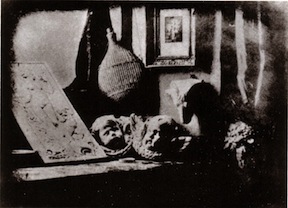
Niépce died in 1833 before practical success was achieved. But Daguerre had learned important things StillLifethrough the partnership, and by 1837 had worked out a solution to the puzzle. In brief, his method consisted of treating silver-plated copper sheets with iodine to make them sensitive to light, then exposing them in a camera and “developing” the images with warm mercury vapor. On the basis of its novelty, and difference from the pewter-and-resin based systems developed by Niépce, Daguerre claimed the invention as his own by naming it “The Daguerreotype.”
https://www.daguerreiansociety.org/

Daguerreotype

The Diorama: 19th century entertainment~

Daguerre’s Sole Extant Diorama, Recently Restored~

Peter Max: Born October 19, 1937

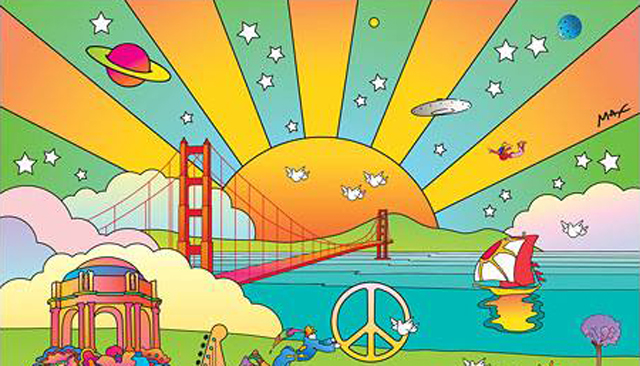
When Go-Go Met Day-Glo
Biography~ https://www.parkwestgallery.com/artist/peter-max

FROM Highbrowmagazine: Born in Berlin in 1937, Max and his family fled Nazi-Germany to Shanghai where he would spend the first 10 years of his life. It was here where Max’s father, a reputable businessman, and mother first began to notice his artistic talents. The pair hired the daughter of a street vendor to conduct art lessons and serve as a nanny. Max began his formal art training at the Art Students League of New York in Manhattan…

[There are five embedded links above]

Winsor McCay: Born September 26, 1867?

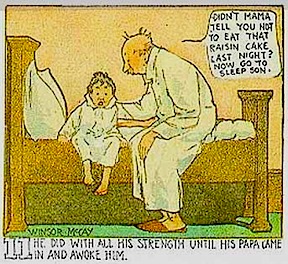
WinsorMcCayBiography~ https://en.wikipedia.org/wiki/Winsor_McCayLittleNemo
Winsor McCay: His Life and Art: San Francisco Silent Film Festival~ http://www.silentfilm.org/archive/winsor-mccay-his-life-and-art
Dream of the Rarebit Fiend~ http://www.atlasobscura.com/articles/the-century-old-comic-strip-devoted-to-cheese-fueled-nightmares
Little Nemo in Slumberland~ http://www.gocomics.com/little-nemoTime


9 Films of Winsor McCay~
http://mentalfloss.com/article/54989/beyond-gertie-9-films-winsor-mccay