Born January 4~ Frances H. Gearhart

Frances H. Gearhart (January 4, 1869-April 4, 1959) was an American printmaker and watercolorist.
Biography on Wikipedia: https://en.wikipedia.org/wiki/Frances_Gearhart

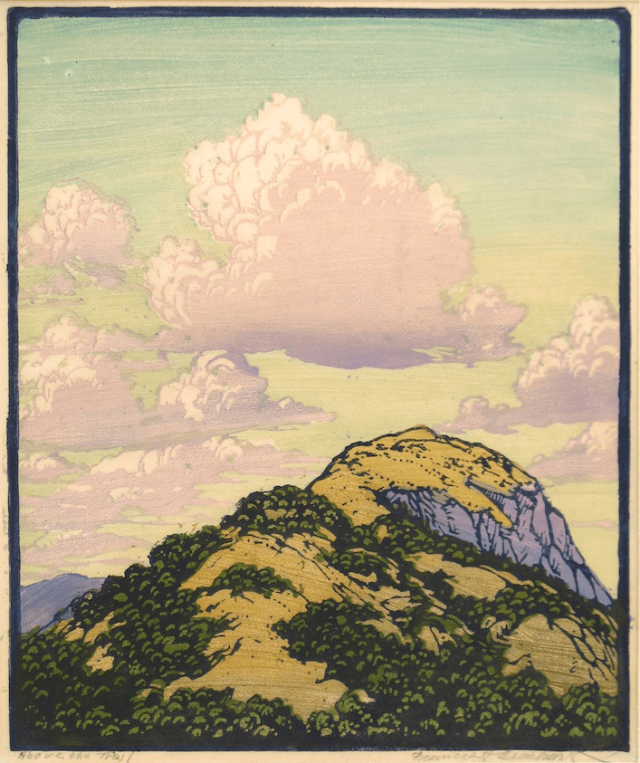
Above the Trail / c.1925 / Image: 12″x10 1/16″
Various collections, including The Whitney Museum of American Art, NY, NY

Frances Hammell Gearhart on Artnet: http://www.artnet.com/artists/frances-hammell-gearhart/

“The Gearhart sisters, California artists and educators”: https://americanhistory.si.edu/blog/gearhart-sisters

Further reading:
http://www.francesgearhart.com/
https://www.annexgalleries.com/artists/biography/781/Gearhart/Frances
http://womenoutwest.blogspot.com/2015/11/frances-hammell-gearhart-printmaker-and.html

Born January 3~ Harriet von Rathlef

Harriet Ellen Siderowna von Rathlef-Keilmann (January 3, 1887-May 1, 1933) was a German sculptor.
Biography on Wikipedia: https://en.wikipedia.org/wiki/Harriet_von_Rathlef

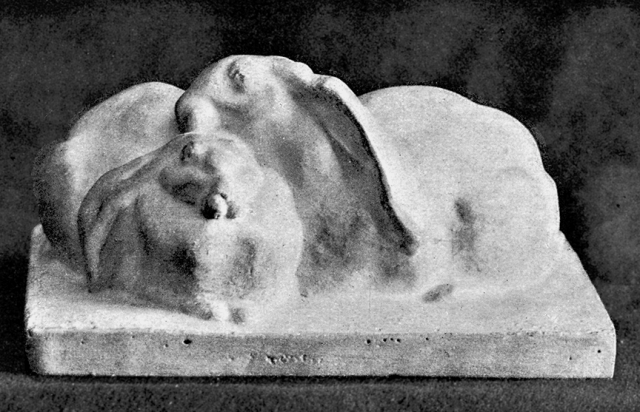
Pair of rabbits modeled in stucco / 1909

Below Left: Pieta wood relief / 1924

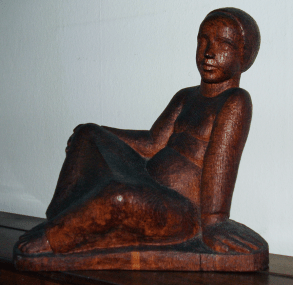
Below Right: Wooden sculpture / N.D


Lost Art Database:
http://www.lostart.de/Webs/EN/Datenbank/ObjektgruppeVerlust.html?cms_param=OBJGRP_ID%3D8998%26page%3D0%26sort%3D%24sort
Further reading:
https://www.meaus.com/harriet-siderowna-keilmann.htm

Born January 2~ Slava Raškaj

Slava Raškaj (January 2, 1877-March 29, 1906) was a Croatian watercolorist.
Biography on Wikipedia: https://en.wikipedia.org/wiki/Slava_Ra%C5%A1kaj

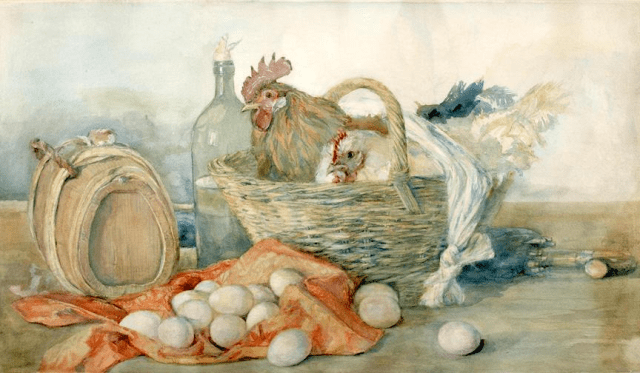
Yellow Cock and White Hen / 1899 / Watercolor
Moderna Galerija, Zagreb, Croatia

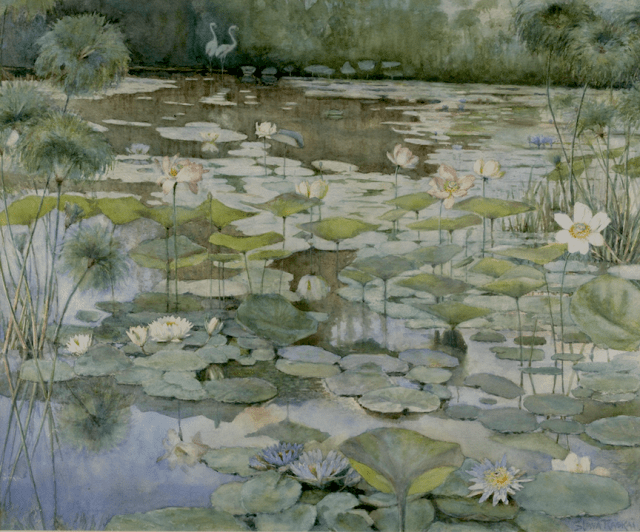
Water Lilies I / 1899 / Watercolor
Moderna Galerija, Zagreb, Croatia

Partage Plus online visual database: http://partage.muo.hr/?object=list&find=Slava+Ra%C5%A1kaj
Further reading:
http://hirc.botanic.hr/vrt/english/new/Slava_raskaj.htm
https://www.pragmaprojects.com/deafhistory/index.php/component/zoo/item/slava-raskaj
https://awarewomenartists.com/en/artiste/slava-raskaj/

Born January 1~ Rita Kernn-Larsen

Rita Kernn-Larsen as a young woman. From her daughter Danielle Grünberg‘s collection.

Danish painter Rita Kernn-Larsen was born on January 1, 1904. She attended the State School of Crafts and Art Industry in Oslo, Norway, in her early twenties, returning to Copenhagen in 1926. Kernn-Larsen began training at the Royal Danish Academy of Fine Arts in 1927, but after two years traveled to Paris where she was admitted to Fernand Léger’s l’Académie Moderne. She studied with Léger until 1933, during which time she met her future husband Isaac Grünberg (they married in 1940 and had a daughter, Danielle Rose, in 1944).
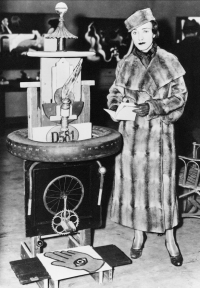
Rita Kernn-Larsen, Copenhagen, 1935. From her daughter Danielle Grünberg’s collection.

In 1934, Kernn-Larsen again returned to Denmark where she opened her own studio, had her first solo exhibition in a gallery, and met the Danish Surrealist group. Her work evolved from post-cubism to surrealism and by the time she settled in Paris and met Peggy Guggenheim she had exhibited with the Surrealists several times. In 1938, Guggenheim gave Kernn-Larsen a solo exhibition at Guggenheim’s Guggenheim Jeune in London. World War II began while Kernn-Larsen was in London and she remained there for the duration of the war, after which she moved to southern France moved with her husband and daughter. Her paintings began to portray a stylized naturalism reflecting her surroundings in France.
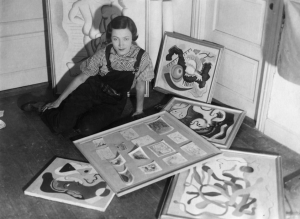
Rita Kernn-Larsen in Copenhagen, 1934. From her daughter Danielle Grünberg’s collection.

During her long career, Kernn-Larsen also illustrated for magazines, experimented with pottery, ceramics and collage, and published a children’s book. Kernn-Larsen died on April 10, 1998, in Copenhagen, Denmark.

Unless otherwise noted, paintings are from the collection of SMK – Statens Museum for Kunst in Copenhagen, Danmark


This slideshow requires JavaScript.
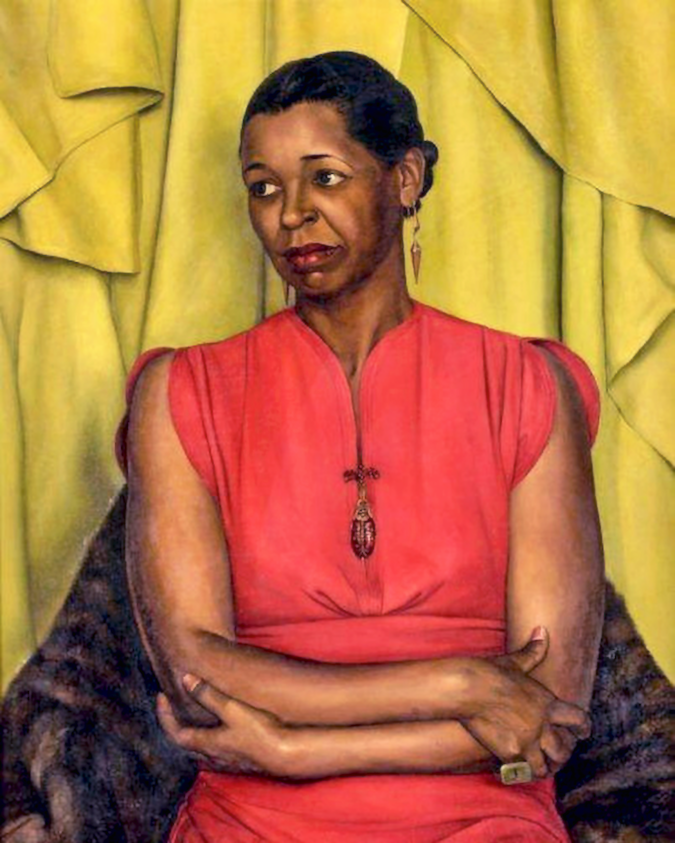
October 31, 1896~ American singer and actress Ethel Waters born

Portrait of Ethel Waters by Luigi Lucioni

1939 / Oil on canvas / 32”x25” / Huntsville Museum of Art, Alabama

[There are three embedded links above]

Luigi Lucioni and his painting of Ethel Waters

Previous October 31 posts:

Autumn~ October 31

Katsushika Hokusai: Born October 31(?), 1760

Artist Birthday Quiz for 10/31~

February 12, 1809: Abraham Lincoln Is Born in Hodgenville, KY

railsplitter“Lincoln the Railsplitter” by Norman Rockwell (1894-1978) 84.5” by 44.5” Oil on canvas
Norman Rockwell Museum Digital Collections. ©NR Family Agency.

In 1962, Lincoln First Federal Savings & Loan Assn in WA commissioned this painting for the lobby of their headquarters in Spokane. Rockwell completed it in 1965 and it was unveiled on November 4th of that year. After the bank merged with Washington Mutual Savings Bank, the painting was moved to Seattle, no longer on public display; in the early 1990s it was sold to Texas businessman H. Ross Perot. In 2006, the Butler Institute of American Art in Youngstown, Ohio, purchased it in a sale at Christie’s Auction House, and “Lincoln the Railsplitter” was once again available to the public.

“Artworks of Lincoln were produced for many reasons—for news, politics, sale, and commemoration—and in a variety of media, such as prints, paintings, sculptures, and photographs.”
http://www.civilwarinart.org/exhibits/show/lincoln/introduction/picturing-lincoln

“Scholars estimate that Lincoln sat for 33 photographers and 127 portraits in his lifetime…”
http://content.time.com/time/photogallery/0,29307,1876750_1840177,00.html

“The statue of President Abraham Lincoln [in the Rotunda of the U.S. Capitol] depicts him with a serious, contemplative expression. Sculpted by the first female artist commissioned to create a work of art for the United States government.”
https://www.aoc.gov/art/other-statues/abraham-lincoln-statue

“Iconic Abraham Lincoln portraits”
http://www.cbsnews.com/pictures/iconic-abraham-lincoln-portraits/

Previous February 12 posts:

February 12~ African-American visual artists

Artist Birthday Quiz for 2/12~

William Henry Jackson: Born on April 4, 1843

jackson2

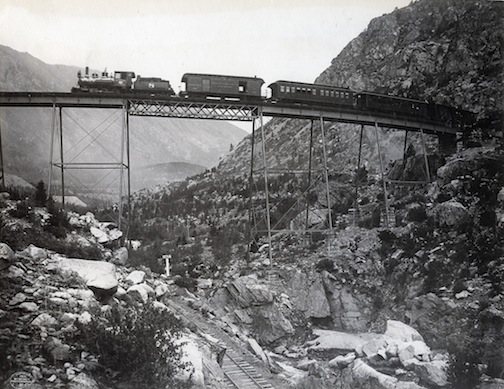
From age twelve until age ninety-nine, William Henry Jackson was involved on some level with photography. After a tour of duty in the Civil War, he headed West and eventually settled in Omaha, Nebraska, where he opened a portrait photography studio with his brother Edward. As Jackson explained, however, “Portrait photography never had any charms for me, so I sought my subjects from the house-tops, and finally from the hill-tops and about the surrounding country; the taste strengthening as my successes became greater in proportion to the failures.” In 1870 he accompanied geologist Ferdinand Vandiveer Hayden on an expedition across Wyoming, along the Green River, and eventually into the Yellowstone Lake area. Jackson’s images were the first published photographs of Yellowstone. Partly on the strength of these photographs, the area became America’s first national park in March 1872.

On one of several independent expeditions that he headed, Jackson also became the first to photograph the prehistoric Native American dwellings in Mesa Verde, Colorado. He finally settled in Denver, Colorado, where he worked as a commercial landscape photographer and continued to publish his photographs as postcards. 
FROM http://www.getty.edu/art/collection/artists/1853/william-henry-jackson-american-1843-1942/

http://www.iphf.org/hall-of-fame/william-henry-jackson/Jackson1

Anna Sewell: Born March 30, 1820

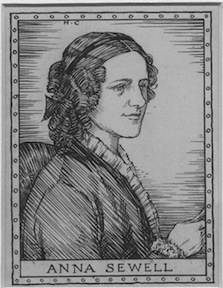
sewellWhile in her fifties Sewell first devised the idea to write her own book about horses. Initially intended, as she wrote in her diary, to be an instructional work to induce kindness, sympathy, and an understanding treatment of horses little did she know it would become a best-seller. Bustling Victorian London’s society, transportation and industry was dependent on horse power, but there were also emerging vegetarian and animal anti-cruelty groups. Through the trials and tribulations of Black Beauty we see a cross-section of the working conditions and quality of life for horses.
FROM http://www.online-literature.com/anna-sewell/
Black Beauty is widely credited with helping to change the way horses were cared for. There is little doubt that the book helped hasten the abolishment of the “bearing rein” — a strap used to pull a horse’s head in toward its chest to force the appearance of a noticeable arch of the neck. Black Beauty also placed a harsh spotlight on the practice of “docking” or cutting short a horses tail, largely for the sake of appearances — a practice that is still widely debated.
FROM  How ‘Black Beauty’ Changed The Way We See Horses
http://www.npr.org/2012/11/02/163971063/how-black-beauty-changed-the-way-we-see-horses
silentmovie
Read Black Beauty online or download the free ebook:
http://www.gutenberg.org/ebooks/271
Free downloads of Black Beauty in Mp3 (audiobook) format.
http://etc.usf.edu/lit2go/125/black-beauty/