Category Archives: Birthdays
Charles Eames: Born June 17, 1907
DESIGN MUSEUM: https://designmuseum.org/designers/charles-and-ray-eames
Official site of Charles and Ray Eames~ http://www.eamesoffice.com/eames-office/charles-and-ray/
https://en.wikipedia.org/wiki/Charles_and_Ray_Eames
Irving Penn: Born June 16, 1917
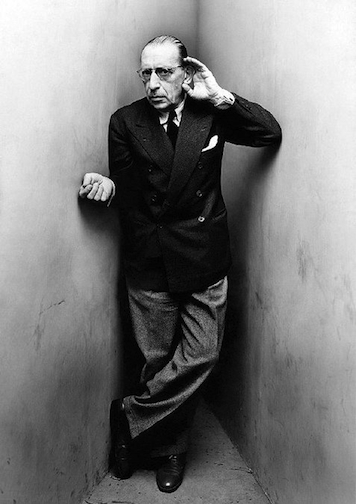
The photographer Irving Penn put Marcel Duchamp in a corner, exposed Colette’s forehead and swaddled Rudolf Nureyev’s lithe body in layers of winter clothing. His subjects, who included many of the greatest creative talents of the 20th century, emerged from their portrait sessions with their carefully shaped personas profoundly shaken. Mr. Penn died on Oct. 7, 2009; he was 92.
As one of the 20th century’s most prolific and influential photographers of fashion and the famous, Mr. Penn’s signature blend of classical elegance and cool minimalism was recognizable to magazine readers and museumgoers worldwide.
FROM https://www.nytimes.com/topic/person/irving-penn
Irving Penn Foundation~ https://irvingpenn.org/
Art Institute of Chicago: Irving Penn Archives~ https://archive.artic.edu/irvingpennarchives/overview/
Time Magazine: Appreciation –The Photos of Irving Penn~ http://content.time.com/time/photogallery/0,29307,1929105_1964784,00.html
Margaret Bourke-White: Born June 14, 1904
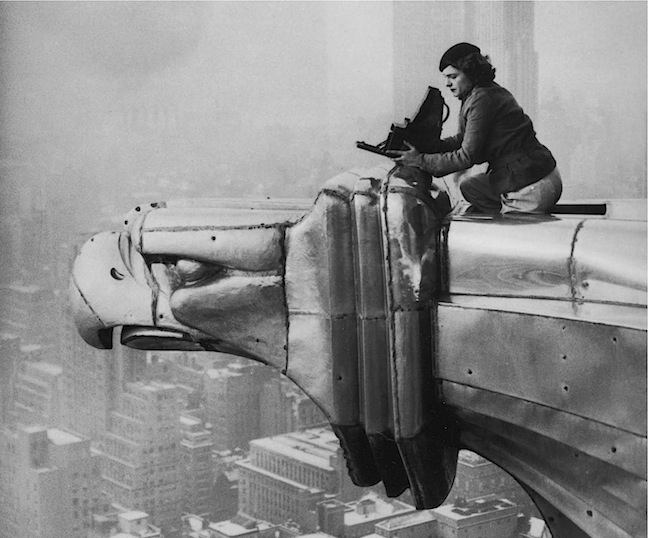
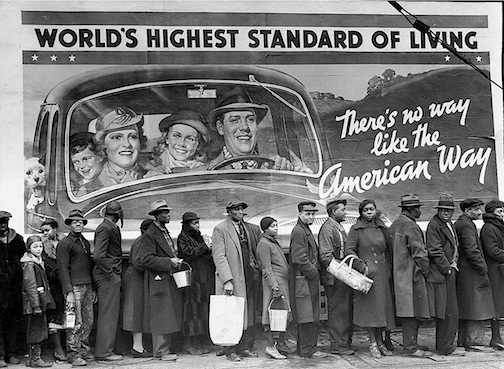
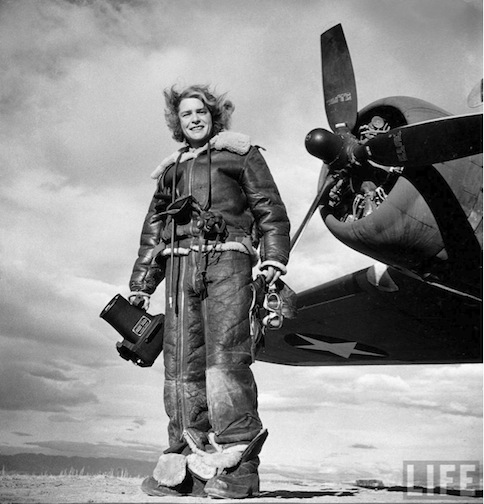
Margaret Bourke-White was a pioneering photojournalist whose insightful pictures of 1930s Russia, German industry, and the impact of the Depression and drought in the American midwest established her reputation…In 1927 she graduated from Cornell University with a degree in biology, but she spent most of her time establishing herself as a professional photographer. Bourke-White opened her first studio in her apartment in Cleveland, Ohio.
FROM http://www.moma.org/interactives/objectphoto/artists/712.html
As an artist, Bourke-White continued to use photography as an instrument to examine social issues from a humanitarian perspective. She witnessed and documented some of the 20th century’s most notable moments, including the liberation of German concentration camps by General Patton in 1945, the release of Mahatma Gandhi from prison in 1946, and the effects of South African labor exploitation in the 1950s. Her career was cut short in 1966 due to Parkinson’s disease, and she died in 1971.
FROM https://www.howardgreenberg.com/artists/margaret-bourke-white
International Photography Hall of Fame and Museum~ https://iphf.org/inductees/margaret-bourke/
LIFE’s First-Ever Cover Story~ http://time.com/3764198/lifes-first-ever-cover-story-building-the-fort-peck-dam-1936/
Shorpy Archives~ http://www.shorpy.com/image/tid/208
Christo (June 13, 1935-May 31, 2020) & Jeanne-Claude (June 13, 1935–Nov. 18, 2009)
Christo and Jeanne-Claude were a married couple who created environmental works of art. Christo was born on 13 June 1935 in Bulgaria as Christo Vladimirov Javacheff, while Jeanne-Claude was born on the same date in Morocco as Jeanne-Claude Denat de Guillebon. They have been collaborating for over 40 years and were best known for producing enormous packaging projects including parks, buildings, and entire outdoor landscapes.
FROM http://www.rosenthalfineart.com/christo-and-jeanne-claude/
hthttps://www.christojeanneclaude.net/
https://en.wikipedia.org/wiki/Christo_and_Jeanne-Claude
Anne Frank: Born June 12, 1929
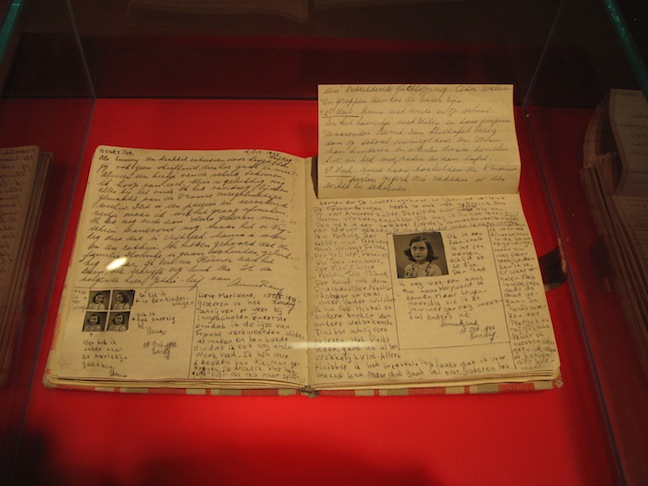
Photograph: Anne_Frank_Diary_at_Anne_Frank_Museum_in_Berlin-pages-92-93.jpg
Source: http://www.heatheronhertravels.com/inspired-by-the-anne-frank-museum-in-berlin/
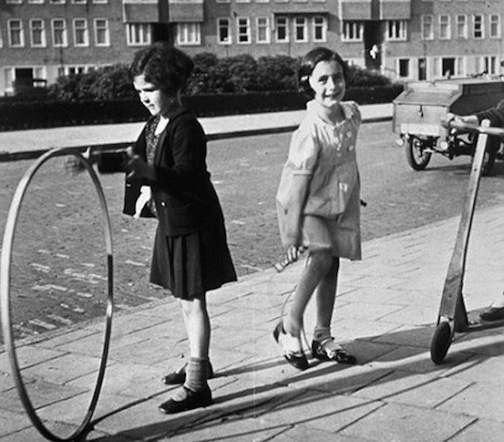
Since it was first published in 1947, Anne Frank’s diary has become one of the most powerful memoirs of the Holocaust. Its message of courage and hope in the face of adversity has reached millions. The diary has been translated into 67 languages with over 30 million copies sold. Anne Frank’s story is especially meaningful to young people today. For many she is their first, if not their only exposure to the history of the Holocaust. https://annefrank.com/about-afc/about-anne-frank/
Anne Frank and Her Family~ http://www.holocaustresearchproject.org/nazioccupation/annefrank.html
The Secret Annex Online~ http://www.annefrank.org/en/Subsites/Home/Enter-the-3D-house/#/house/20/help/
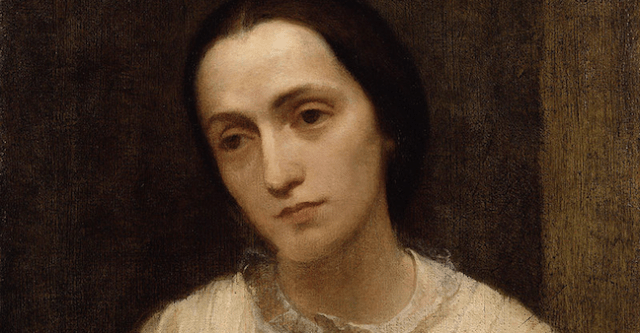
Julia Margaret Cameron~ Born June 11, 1815
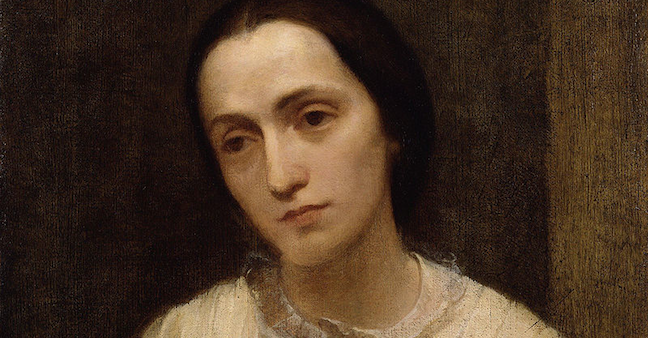
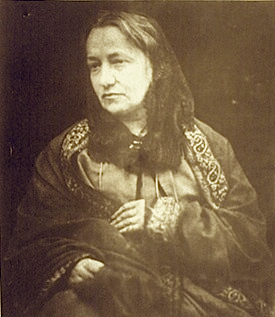
Detail: Painting of Julia Margaret Cameron by George Frederic Watts
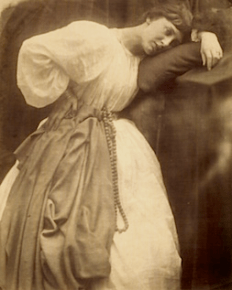
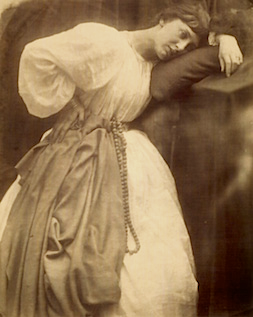
Julia Margaret Pattle was born in British India, on June 11, 1815, the daughter of an official in the Bengal Civil Service and a descendant of the French aristocracy. After her early years she received an education in France and England, returning to India in 1834. Four years later, in 1838, she married Charles Hay Cameron, twenty years her senior. In 1848, after Charles retired, he and Julia returned to England where they raised five children, adding a sixth in 1857 when they adopted Mary Ryan. Through Julia’s sister, Sarah Prinsep, the new arrivals cultivated a wide circle of elite, intellectual friends. It is this company of friends, family, and servants that Cameron used as models for her “tableux vivants”.
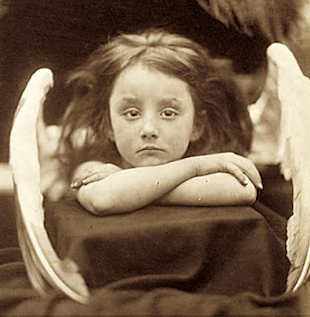
FROM http://d.lib.rochester.edu/camelot/creator/julia-margaret-cameronCameron’s practice of photography began relatively late in her life, at age forty-eight, when her daughter gave her a sliding wooden box camera. Her “very first success in photography” came in January 1864, with a portrait of Annie,
daughter of a neighbor.
Cameron used the wet collodion process, making prints with albumen printing-out paper, and worked with large negatives in order to avoid having to enlarge. In 1864 she began to register her work at the British Copyright Office, became a member of the Photographic Society of London and of Scotland, and prepared photographs for exhibition and sale through the London print dealers P. and D. Colnaghi. Most of her work was made between 1864 and 1875, before she left for family coffee plantations in Ceylon.
FROM https://www.icp.org/browse/archive/constituents/julia-margaret-cameron?all/all/all/all/0From the first moment I handled my lens with a tender ardour,” she wrote, “and it has become to me as a living thing, with voice and memory and creative vigour.” Condemned by some contemporaries for sloppy craftsmanship, she
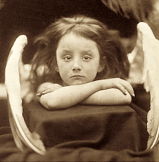
purposely avoided the perfect resolution and minute detail that glass negatives permitted, opting instead for carefully directed light, soft focus, and long exposures that allowed the sitters’ slight movement to register in her pictures, instilling them with an uncommon sense of breath and life. FROM http://www.metmuseum.org/exhibitions/listings/2013/julia-margaret-cameron
Heilbrunn Timeline of Art History
The Beauty of the Heroine: Julia Margaret Cameron and the Poetic Portrait
Julia Margaret Cameron: soft-focus photographer with an iron will
Maurice Sendak: Born June 10, 1928
Dubbed by one critic “the Picasso of children’s literature” and once addressed by former President Bill Clinton as “the King of Dreams,” Maurice Sendak illustrated nearly a hundred picture books throughout a career that spanned more than 60 years. Some of his best known books include Chicken Soup with Rice (1962), Where the Wild Things Are (1963), and In the Night Kitchen (1970). Born in Brooklyn in 1928 to Jewish immigrant parents from northern Poland, Sendak grew up idolizing the storytelling abilities of his father, Philip, and his big brother, Jack. As a child he illustrated his first stories on shirt cardboard provided by his tailor-father. Aside from a few night classes in art after graduating high school, Sendak was a largely self-taught artist.
FROM http://www.rosenbach.org/maurice-sendak-biography-and-timeline
Classical Music Fueled Maurice Sendak’s Creative Muse~
https://www.wqxr.org/story/207545-classical-music-fueled-maurice-sendak-muse/
Charles Rennie Mackintosh~ Born June 7, 1868
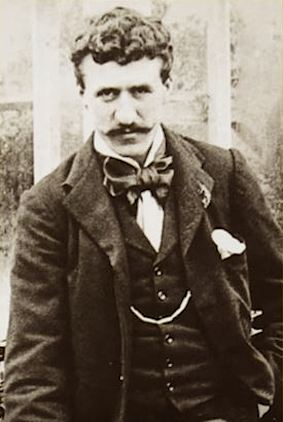
Charles Rennie Mackintosh (7 June 1868-10 December 1928) “was a Scottish architect, designer, water colourist and artist. He was a designer in the Post-Impressionist movement and also the main representative of Art Nouveau in the United Kingdom. He had considerable influence on European design. He
was born in Glasgow…”
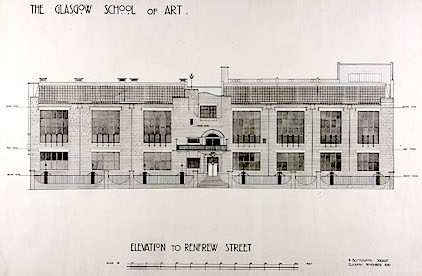
FROM https://alchetron.com/Charles-Rennie-Mackintosh-1221200-W“Mackintosh was apprenticed to a local architect John Hutchison, but in 1889 he transferred to the larger, more established city practice of Honeyman and Keppie.
To complement his architectural apprenticeship, Mackintosh enrolled for evening classes at the Glasgow School of Art where he pursued various drawing programmes.”
FROM https://www.crmsociety.com/about-mackintosh/charles-rennie-mackintosh/“The majority of Mackintosh’s architectural practice was supported by his wife Margaret Macdonald with whom he had studied at the Glasgow School of Art. Her mind was often responsible for the artistic flourish that became so integral to the aforementioned Mackintosh Rose motif.
In his time as a professional architect, Mackintosh worked with his wife to design buildings ranging in use from residential, to commercial and religious.”
FROM https://www.archdaily.com/639483/spotlight-charles-rennie-mackintosh“Despite success in Europe and the support of clients such as Blackie and Cranston, Mackintosh’s work met with considerable indifference at home and his career soon declined.
Few private clients were sufficiently sympathetic to want his ‘total design’ of house and interior.
…
A move to the South of Francein 1923 signalled the end of Mackintosh’s three-dimensional career and the last years of his life were spent painting. He died in London on 10 December 1928.”
FROM https://gsaarchives.net/collections/charles-rennie-mackintosh/
Design Museum~ https://designmuseum.org/designers/charles-rennie-mackintosh#toggle-submenu
Charles Rennie Mackintosh Society~ https://www.crmsociety.com/
George Szell: Born June 7, 1897
1978 SPECIAL CITATION for distinguished service to the arts (Posthumous)~
http://clevelandartsprize.org/awardees/george_szell.html
NAXOS: George Szell~ http://www.naxos.com/person/George_Szell_38224/38224.htm
Born: June 7, 1897 – Budapest, Hungary
Died: July 30, 1970 – Cleveland, Ohio, USA
Part of the wave of great Hungarian conductors who took over American musical life just before and after World War II — the others included Fritz Reiner, Antal Dorati, and Eugene Ormandy — George Szell quickly transformed a middling Midwestern orchestra into one of the nation’s Big Five. His cultivation of the Cleveland Orchestra set an example of discipline and hard work that gradually helped raise the standards of orchestras across America.
FROM https://www.allmusic.com/artist/george-szell-mn0000366341/biography