Premiered April 8, 1876: “La Gioconda”

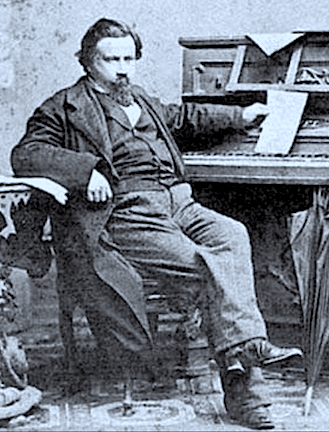
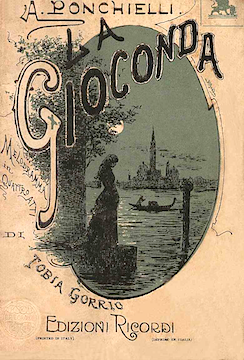
Composer Amilcare Ponchielli was born in Italy in 1834. He started composing operas while still a student at the Milan Conservatory. After graduating in 1854, he held various positions over the years, including professor of composition at the Conservatory; his pupils included Giacomo Puccini and Pietro Mascagni. His most famous opera is “La Gioconda”, written in 1876. It is mainly remembered for its ballet, Dance of the Hours.

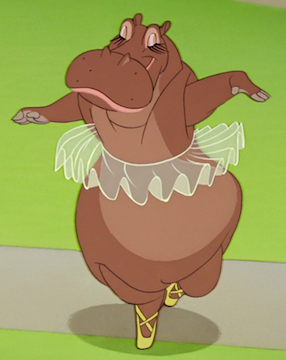
“The Dance of the Hours is probably the only opera ballet that has established a life of its own in both the concert hall as a stand-alone orchestral work…and in pop culture: Walt Disney’s 1940 animated film Fantasia, for example, used the music for a ballet performed by tutu-clad hippos, ostriches, alligators and elephants. And in 1963, parodist Alan Sherman set words to the tune of Ponchielli’s day music with its all-too-familiar four-note theme. Sherman’s “Hello Muddah, Hello Fadduh (A Letter from Camp)” hit No. 2 on the pop charts.”
FROM~ https://nepaphil.org/program-notes-from-an-evening-of-opera-overtures-and-arias/

Ponchielli’s biography~ http://www.allmusic.com/artist/amilcare-ponchielli-mn0000496351/biography

Synopsis of “La Gioconda“~ http://www.opera-arias.com/ponchielli/la-gioconda/synopsis/

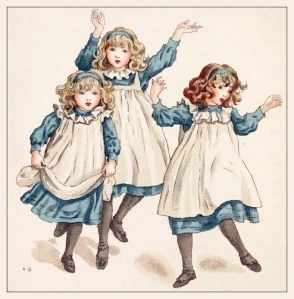
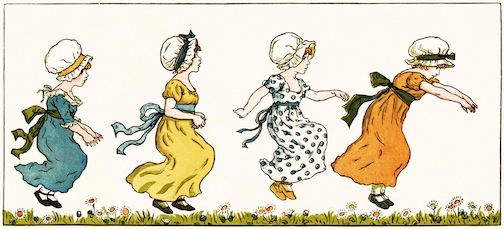
Kate Greenaway: Born on March 17, 1846

Greenaway2

K is for Kate…Kate Greenaway

English artist and writer, known for her children’s book illustrations. She studied graphic design and art at the South Kensington School of Art; the Royal Female School of Art and the Slade School of Fine Art. She began her career designing for the burgeoning holiday card market, producing Christmas and Valentine’s cards. In 1879 wood-block engraver and printer, Edmund Evans, printed Under the Window, an instant best-seller, which established her reputation. Her collaboration with Evans continued throughout the 1880s and 1890s.
https://www.royalacademy.org.uk/art-artists/name/kate-greenaway

Still more about Kate Greenaway here: http://www.victorianweb.org/victorian/art/illustration/greenaway/index.html and here: https://www.illustrationhistory.org/artists/kate-greenaway

March 17: National Gallery of Art in Washington, D.C.

The National Gallery of Art was created by a joint resolution of
Congress on March 17, 1937, and dedicated on March 17, 1941

Leonardo da Vinci_Ginevra deBenciThe National Gallery of Art was conceived and given to the people of the United States by Andrew W. Mellon (1855–1937). Mellon was a financier and art collector from Pittsburgh who came to Washington in 1921 to serve as secretary of the treasury. During his years of public service he came to believe that the United StatesJames McNeill Whistler_Symphony in White No1 should have a national art museum equal to those of other great nations.
In 1936 Mellon wrote to President Franklin D. Roosevelt offering to donate his superb art collection for a new museum and to use his own funds to construct a building for its Duccio di Buoninsegna_The Nativity with the Prophets Isaiah and Ezekieluse. With the president’s support, Congress accepted Mellon’s gift, which included a sizable endowment, and established the National Gallery of Art in March 1937. Construction began that year at a site on the National Mall along Constitution Avenue between Fourth and Seventh Street NW, near the foot of Capitol Hill.Arshile Gorky_The Artist and His Mother


Construction was completed by December 1940, and works of art were installed in the new galleries over the following months. The National Gallery of Art was dedicated on March 17, 1941, with Paul Mellon presenting the museum on behalf of his father, and President Franklin D. Roosevelt accepting the gift for the nation.
FROM http://www.nga.gov/content/ngaweb/about.html

dedicationFDR’s Speech on the Dedication of the National Gallery of Art~
http://www.nga.gov/content/ngaweb/audio-video/audio/west-building-dedication-president-fdr.html

Highlights from the collection~
http://www.nga.gov/content/ngaweb/Collection/highlights.html
75th anniversary programs~
http://www.nga.gov/content/ngaweb/about/seventy-fifth-anniversary.html

Pattie Boyd: Born on March 17, 1944

Boyd

Patricia Anne “Pattie” Boyd (born March 17, 1944) is a model, photographer and author, born in Somerset, England. She was the first wife of both George Harrison and Eric Clapton…Pattie began her modeling career in 1962 in London, and appeared on the cover of Vogue and in several advertising campaigns. She was cast in the Beatles’ first feature film A Hard Days Night in 1964, where she first met George Harrison…She married George Harrison in January, 1966 and when being a ‘Beatle wife’ made it too difficult to work, she began taking a strong interest in photography.

https://sfae.com/Artists/Pattie-Boyd

Pattie Boyd is sick of being called a muse: ‘What have I done to inspire George Harrison?’
https://english.elpais.com/culture/2022-10-14/pattie-boyd-is-sick-of-being-called-a-muse-what-have-i-done-to-inspire-george-harrison.html

Pattie Boyd Talks Art, Fashion, and Beatlemania
https://lithub.com/pattie-boyd-talks-art-fashion-and-beatlemania/

Pattie Boyd, often in the shadow of her famous husbands, has put a trove of mementos up for auction
https://www.pbs.org/newshour/amp/arts/pattie-boyd-often-in-the-shadow-of-her-famous-husbands-has-put-a-trove-of-mementos-up-for-auction
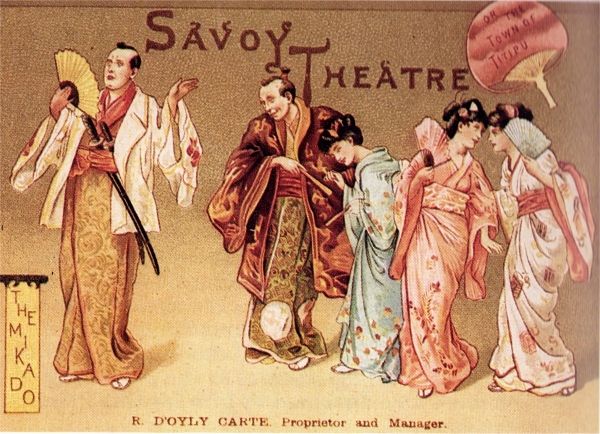
Premiered March 14, 1885: “The Mikado”

Mikado-Savoy-1885“Yes, as we said to begin with, “The Mikado” is a frank success. It is great nonsense, no doubt; but then it is the very funniest fooling to be seen. And so pretty, too!”  ~unsigned review from “The Academy”, March 28 1885  http://www.savoyoperas.org.uk/mikado/mik3.html

“Mr. Gilbert has once more exhibited his facility for seizing upon a subject occupying a considerable share of public attention, and turning it to humorous account. Japanese art is extremely fashionable just at present, and the manners and customs of this strange race may be studied with advantage at Knightsbridge. But it is our home political and social life that is principally caricatured in ‘The Mikado,’ and amid much that is incisive and telling we find obvious reminiscences of earlier productions by the same hand.”
~unsigned review from “The Athenæum”, March 21 1885
http://www.savoyoperas.org.uk/mikado/mik2.html