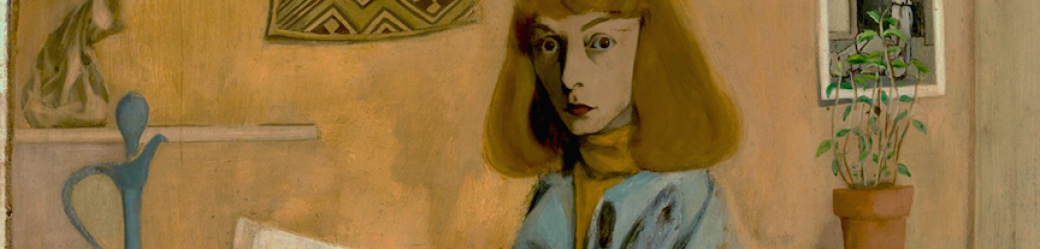
Gertrude Käsebier: Born May 18, 1852

GertrudeKasebier

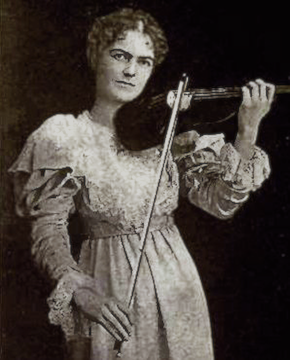
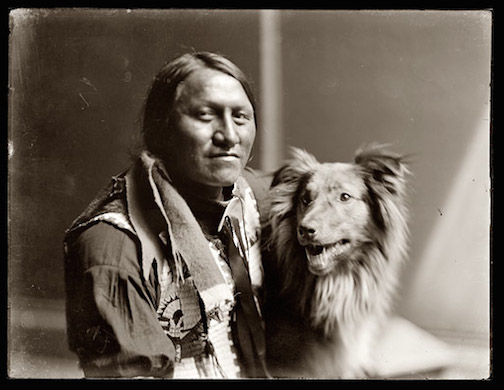
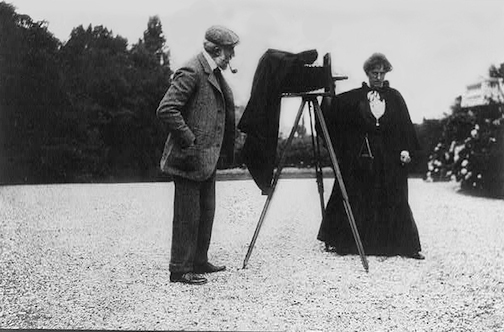
Gertrude Käsebier was a leading member of the pioneering photographic known as Pictorialism, which emphasized a subjective, painterly approach to photography rather than a documentary one.  

Kasebier1Though she had long been interested in art, Käsebier only began her formal training at the Pratt Institute after her children entered high school. She planned to be a painter, but eventually switched to photography. Following classes in Paris and apprenticeships with a German photographic chemist, and a Brooklyn portrait photographer, Käsebier opened her own portrait studio in 1897.
FROM https://nmwa.org/art/artists/gertrude-kasebier/

Stieglitz included Käsebier as a founding member of the Photo-Secession, a group that argued for a more natural, less manipulated photograph. In 1899, he published five of her photos, declaring her “beyond dispute, the leading artistic portrait photographer of the day.”
GKFROM http://www.imaging-resource.com/news/2012/05/12/nearly-forgotten-mother-of-modern-american-photography-gertrude-kaeseb
Library of Congress Biographical Essay: http://www.loc.gov/rr/print/coll/womphotoj/kasebieressay.html
Library of Congress Online Catalog: http://www.loc.gov/pictures/related/?fi=name&q=K%C3%A4sebier%2C%20Gertrude%2C%201852-1934
Shorpy Photo Gallery: http://www.shorpy.com/gertrude-kasebier-photographs
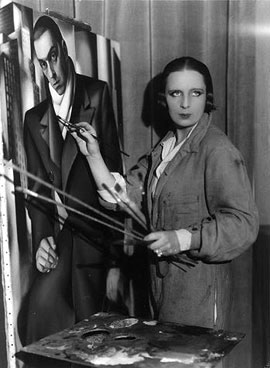
Tamara de Lempicka~ Born May 16, 1898(?)


Who was she? De Lempicka shuffled the facts of her biography much as she  meddled with her birth date.


Her time was the 1920s: a period of transition, an era in which functionalism merged with fantasy and formal social structures lurched into the frenetic. In essence, De Lempicka was a classicist, having admired Renaissance painting since her adolescent travels in Italy. But she astutely combined traditional portraiture with advertising techniques, photographic lighting, vistas of the tower architecture of great cities.

In 1939, urged by Tamara, who was partly Jewish, Kuffner sold his estates in Hungary and they moved to the US. In New York, she tried abstract expressionism unsuccessfully, and was reduced to the role of a chic curiosity, “the painting baroness”.
FROM https://www.theguardian.com/artanddesign/2004/may/15/art

http://www.nytimes.com/books/99/10/24/reviews/991024.24vincent.html
http://culture.pl/en/artist/tamara-lempicka-tamara-de-lempicka

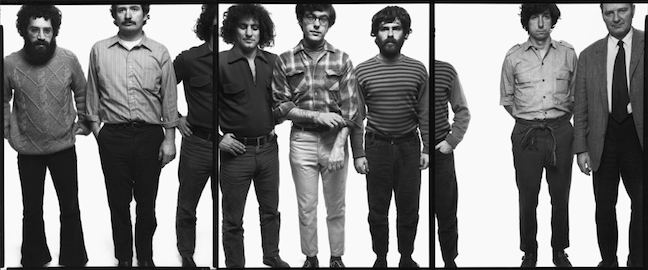
Richard Avedon: May 15, 1923-Oct 1, 2004

Mr. Avedon revolutionized the 20th-century art of fashion photography, imbuing it with touches of both gritty realism and outrageous fantasy and instilling it with a relentlessly experimental drive. So great a hold did Mr. Avedon’s fashion photography come to have on the public imagination that when he was in his 30’s he was the inspiration for Dick Avery, the fashion photographer played by Fred Astaire in the 1957 film “Funny Face.” In 1978 he appeared on the cover of Newsweek while a retrospective exhibition of his work was on display at the Metropolitan Museum of Art.
https://www.nytimes.com/2004/10/02/obituaries/richard-avedon-the-eye-of-fashion-dies-at-81.html

MoMA Collection~ http://www.moma.org/collection/artists/248?=undefined&page=1
International Photography Hall of Fame and Museum~ http://www.iphf.org/hall-of-fame/richard-avedon/

American Masters~ http://www.pbs.org/wnet/americanmasters/richard-avedon-about-the-photographer/467/
The Richard Avedon Foundation~ http://www.theavedonfoundation.net/

This slideshow requires JavaScript.

chicago7

Nora Clench~ May 6, 1867-May 17, 1938

World renowned violinist Nora Clench was a child prodigy, born Esther Leonora Clench in what is now Ontario, Canada. Nora made her debut as a violinist at the age of 8. When she was fifteen she entered the Leipzig Conservatory in Germany, and after graduating in 1889 she became first violinist and leader of an orchestra in Buffalo, New York. She later toured Europe and eventually moved to London. In 1900 Clench temporarily gave up playing the violin in order to go to Paris to paint. When she returned to music she founded the all-female “Nora Clench Quartet”, which played a prominent role in the music of fin de siecle London.  Clench again retired from the violin in 1908, at the age of 41, when she married the Australian landscape painter Arthur Streeton. The Nora Clench Quartet continued without her. In 1923, the Streeton family moved to Australia. In 1937 Streeton was given a knighthood for his services to fine art, and Clench became Lady Streeton.  Nora Clench died in Australia in 1938; her husband died in September 1943 after a long illness. The couple’s property with its house, studio and cottage, in 5 acres of garden, remains in the ownership of the Streeton family today.

Biography & Photos~
http://www.riversidestmarys.biz/story-of-nora-clench/
Program of her farewell appearance~ https://archive.org/details/cihm_36309


Nude Study (1903) attributed to Nora Clench

Rudolph Valentino: Born May 6, 1895

While in New York during the spring of 1923, Rudolph Valentino paid a visit to the Brunswick studios and recorded two songs. El Relicario in Spanish and The Kashmiri Song in English. According to legend, Valentino recorded these songs for his new bride, Natacha Rambova since they had recently wed after a few very tense years of legal difficulties concerning Valentino’s divorce from Jean Acker.
It was reported that after he heard his voice, he quipped “There goes my opera career!
https://www.popsike.com/19231926-Rudolph-Valentino-SingsKashmiri-Love-SongEl-Relicario-78rpm-Record/200783413331.html

May 4, 1970~ Tragedy at Kent State

NYT

This link is to a “collection…of photographs and contact sheets produced by University News Service (now University Communications and Marketing) before, during, and after the May 4, 1970 shootings at Kent State University. The first photographs were taken on April 30 to May 3, 1970. This group consists of a small number of photos. The bulk of the photographs were taken on May 4, 1970. Other photographs include events immediately after the shootings and some annual commemorations.” http://www.library.kent.edu/university-news-service-photographs-may-1-4-1970

Documenting the May 1970 Kent State Shootings
https://www.library.kent.edu/special-collections-and-archives/kent-state-shootings-may-4-collection

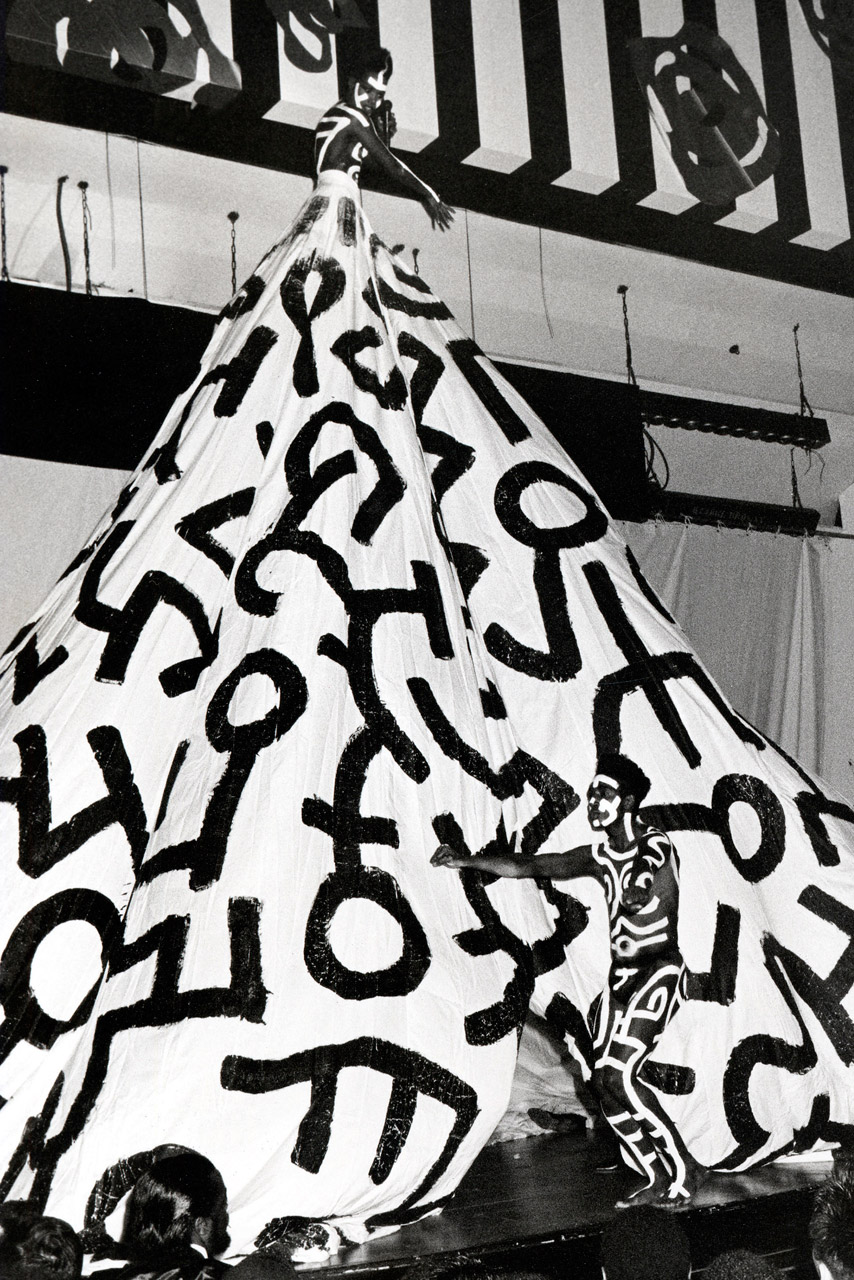
Keith Haring: May 4, 1958 – February 16, 1990

ArtnetNews

Renowned street artist Keith Haring…was born on May 4, 1958, in Pennsylvania, and died in New York in 1990. His eponymous foundation was established a year before his death, and provides grants to those affected by AIDS.
FROM 2016 https://news.artnet.com/people/keith-haring-birthday-2016-485381

After graduating high school, he enrolled in the Ivy School of Professional Art, Pittsburgh but quickly discovered he had no desire to become a commercial graphic artist. He dropped out and in 1978 moved to New York where he joined the School of Visual Arts as a scholarship student.
FROM https://www.pbs.org/wnet/americanmasters/keith-haring-biography/16012/

DrawingWhen not torn or cut from their locations by admirers, they would eventually be covered with new ads. The routine disappearance of these works, in fact, became an incentive for their replenishment and a catalyst for constant reinvention. While many were documented by photographer Tseng Kwong Chi…most of the drawings went unrecorded, thus creating one of the most epic and ephemeral projects in the history of the city.
FROM http://publicdelivery.org/keith-harings-subway-drawings/

By the mid-1980’s, Mr. Haring was also doing oil and acrylic paintings, asgracejones well as wall sculptures and free-standing constructions. He had 42 one-man exhibitions, and was represented in group shows like the 1983 Sao Paulo Bienal, the 1984 Venice Biennale and exhibitions at the Hirshhorn Museum in Washington and the San Francisco Museum of Modern Art. His works are also in the permanent collections of museums like the Stedelijk in Amsterdam, the Whitney in New York and the Beaubourg at the Pompidou Center in Paris.
FROM http://www.nytimes.com/1990/02/17/obituaries/keith-haring-artist-dies-at-31-career-began-in-subway-graffiti.html

Haring Kids~ http://www.haringkids.com/
The Keith Haring Foundation~ http://www.haring.com/

This slideshow requires JavaScript.

“Breathtakingly Detailed Large-Format Photographs of Opera Houses Around the World”

operahouse

Photographer David Leventi captures opera houses all over the world in breathtaking detail in his series Opera. Leventi uses large-format photography to ensure the detail of rich texture and light in his work.
http://laughingsquid.com/breathtakingly-detailed-large-format-photographs-of-opera-houses-around-the-world/

http://www.davidleventi.com/portfolio/opera/1/thumbs

Andrew John Henry Way: Born April 27, 1826

In 1860, Way came to the attention of visiting history painter Emanuel Leutze who encouraged him to pursue still life subject matter in the Düsseldorf style. Taking this advice to heart, Way began to paint fruit, primarily grapes, executed with great detail to form, a particular brilliance of light and typically staged against a dark background.…Despite the market demand and critical preference for vast panoramic landscapes and historic scenes, Way prospered, becoming the most important still life painter in the mid-Atlantic area during the late nineteenth century.

FROM http://thejohnsoncollection.org/andrew-way/

http://americanart.si.edu/collections/search/artist/?id=5261
https://art.thewalters.org/detail/18788//