Irving Berlin~ Born May 11, 1888

“Irving Berlin has no place in American music – he is American music.”  ~Jerome Kern

Irving Berlin was born Israel Beilin on May 11, 1888. In 1907 he published his first song, “Marie from Sunny Italy,” and by 1911 he had his first major international hit — “Alexander’s Ragtime Band.” Over the next five decades, Irving Berlin produced an outpouring of ballads, dance numbers, novelty tunes and love songs that defined American popular song for much of the century. He wrote seventeen complete scores for Broadway musicals and revues, and contributed material to six more. His songs have provided memorable moments in dozens of…films. An intuitive business man, Irving Berlin was a co-founder of ASCAP (American Society of Composers, Authors and Publishers), founder of his own music publishing company, and with producer Sam Harris, builder of his own Broadway theatre, The Music Box.
https://www.songhall.org/profile/Irving_Berlin

Biography of Irving Berlin

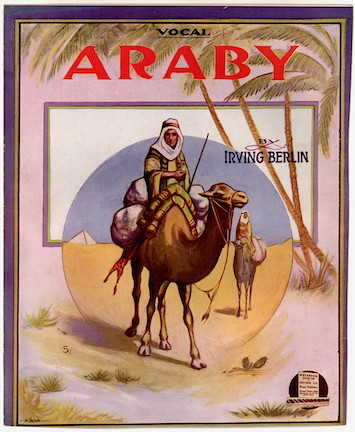
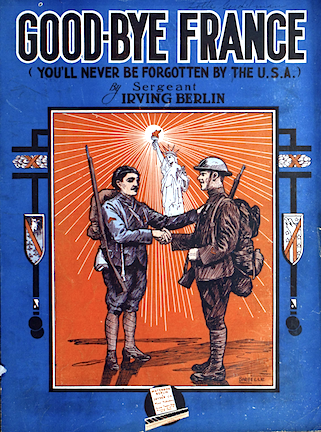
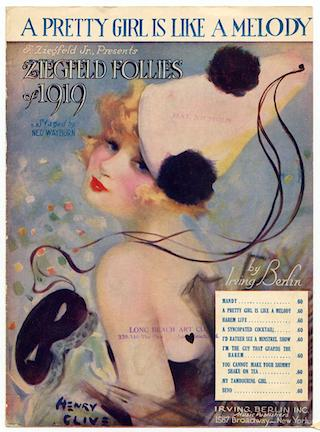
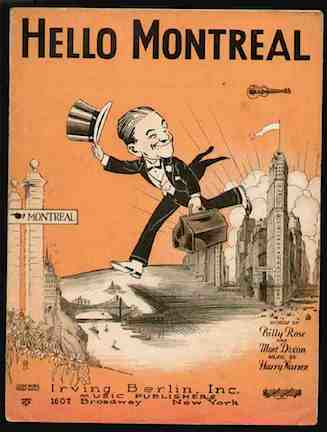
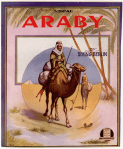
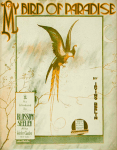
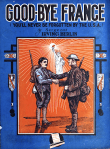
In the late 19th century the sheet music business dominated the music industry in the United States. Parlor music took over the scene as the piano became a part of the middle class home.  This led to a demand for sheet music for home consumption.  The genre that grew out of this demand was called Tin Pan Alley, from the area of New York City where most of the song publishers were located. Success was measured by the sale of sheet music.  To attract business, sheet music publishers hired artists to make beautiful covers…In the early 20th century the phonograph and recorded music grew in popularity and began to replace sheet music.  In the 1920s, radio became the rage and eventually the record industry replaced the sheet music publishers as the prevailing music medium.

http://researchguides.gonzaga.edu/c.php?g=67703&p=436739
Irving Berlin Sheet Music Covers            Sheet Music Illustrators

Ella Fitzgerald: Born April 25, 1917~

Ella Fitzgerald by Al Hirschfeld, 1993. Ink on board. Melvin R. Seiden Collection
of Drawings by Al Hirschfeld, Harvard Theatre Collection, Houghton Library, Harvard University

In mid 1936, Ella made her first recording. “Love and Kisses” was released under the Decca label, with moderate success. By this time she was performing with Chick’s band at the prestigious Harlem’s Savoy Ballroom, often referred to as “The World’s Most Famous Ballroom.”

Shortly afterward, Ella began singing a rendition of the song, “(If You Can’t Sing It) You Have to Swing It.” During this time, the era of big swing bands was shifting, and the focus was turning more toward bebop. Ella played with the new style, often using her voice to take on the role of another horn in the band. “You Have to Swing It” was one of the first times she began experimenting with scat singing, and her improvisation and vocalization thrilled fans. Throughout her career, Ella would master scat singing, turning it into a form of art.
FROM Ella Fitzgerald | Official Site~ http://www.ellafitzgerald.com/about/biography


Ella Fitzgerald at 100 (npr)~

http://www.npr.org/2017/04/25/524726767/early-hardship-couldnt-muffle-ella-fitzgeralds-joy

American Masters~
http://www.pbs.org/wnet/americanmasters/ella-fitzgerald-something-to-live-for/590/

21 Dazzling Photos Of Jazz Legend Ella Fitzgerald Over The Years

RARE PHOTO of Ella Fitzgerald Goes On Display at Smithsonian

Frank Sinatra: Born December 12, 1915

Francis Albert Sinatra [was born] in Hoboken, New Jersey. Although his mother had hoped that he would be the first person in the family to attend college and was disappointed that he did not finish high school, she encouraged his ambition to be a singer. His father, on the other hand, was opposed and insisted that he should find a job. The young Sinatra worked briefly as a truck driver for a newspaper, a riveter in a Hoboken shipyard, and a fruit hauler. By 1932, he had decided that he wanted to be a professional singer.
FROM http://www.anb.org/view/10.1093/anb/9780198606697.001.0001/anb-9780198606697-e-1803570
His break came in 1937, when he and three instrumentalists, billed as the Hoboken Four, won on the Major Bowes Original Amateur Hour. After some touring, the group disbanded. Harry James signed Sinatra to sing with his orchestra, and on July 13, 1939, two weeks after his debut as a big-band vocalist at the Hippodrome Theatre in Baltimore, Sinatra cut his first disc, “From the Bottom of My Heart,” with the orchestra.
FROM https://www.rollingstone.com/music/music-news/an-appreciation-of-frank-sinatra-1915-1998-59176/
James graciously freed Sinatra from his contract when the singer received a more lucrative offer from bandleader Tommy Dorsey in December 1939. By 1942 Sinatra’s fame had eclipsed that of Dorsey, and the singer yearned for a solo career.
FROM https://www.britannica.com/biography/Frank-Sinatra
Between 1943 and 1946, Sinatra’s solo career blossomed as the singer charted a slew of hit singles. Sinatra made his movie acting debut in 1943. In 1945, he won a special Academy Award for The House I Live In, a 10-minute short made to promote racial and religious tolerance on the home front. Sinatra’s popularity began to slide in the postwar years (but) in 1953, he made a triumphant comeback, winning a supporting actor Oscar for From Here to Eternity.
FROM https://www.biography.com/people/frank-sinatra-9484810
In the mid-’70s Sinatra’s career slowed down, but in mid-1980, after a five-year recording hiatus, he released Trilogy which included a version of “Theme From New York, New York” that the city fervently adopted. In 1985, he was accorded the Presidential Medal of Freedom, the nation’s highest civilian award. Frank Sinatra died of a heart attack on May 14, 1998, in L.A.
FROM https://www.rollingstone.com/music/music-news/an-appreciation-of-frank-sinatra-1915-1998-59176/

Oscar Hammerstein II: Born July 12, 1895

Oscar Clendenning Hammerstein II (1895-1960) was perhaps the most influential lyricist and librettist of the American theater. Major musicals for which he wrote the lyrics include “Show Boat,” “South Pacific,” “The King and I,” and “The Sound of Music.”
Oscar Hammerstein II~
http://www.pbs.org/wnet/broadway/stars/oscar-hammerstein-ii/

https://www.ibdb.com/broadway-cast-staff/oscar-hammerstein-ii-7965

Ringo Starr: Born on July 7, 1940

youngRingo

While some accused Ringo Starr of being a clumsy drummer, many more agreed with George Harrison’s assessment: “Ringo’s the best backbeat in the business.” And while many in the wake of the youngerRingoBeatles’ breakup predicted that Starr would be the one without a solo career, he proved them wrong. Not only has he released several LPs (the first came out before the Beatles disbanded) and hit singles, but he’s also the only Beatle to establish a film-acting career for himself outside of the band’s mid-’60s movies.
http://www.rollingstone.com/music/artists/ringo-starr

Anybody who knows the Beatles’ music intimately knows the tympanic accents and fills as clearly today as when they were recorded: the famous drum roll that launches into “She Loves You”; the shimmering incandescence of his cymbal work on so many of those early hits; the impressionistic free-form of “Rain”; the loping cadence and crispy snare of “Sexy Sadie”; the haunting, almost cinematic drama and rich texture behind “Long, Long”; the building, tour-de-force crescendo that leads up to the “The End” on “Abbey Road.”

“Here’s what I discovered in the very first session that I did with him,” recalls Walsh. “He came in and I oldRingosaid, ‘You want to see a chart on the song?’ And he said, ‘No, give me the lyrics.’ He responds to the singer. A great example of that is when he plays on the Beatles’ ‘Something’ and he does that fill that’s such a musical response it’s almost like a guitar player; there’s notes to it.”
http://variety.com/2014/music/news/ringo-starr-paul-mccartney-beatles-1201073353/

olderRingo

Peter Blake: Born June 25, 1932

Peter graduated from the RCA in 1956 having also completed his National Service. He received the Leverhulme Research Award to study popular art whilst travelling Europe and went on to teach for several years at various London Art Schools, all the while working and exhibiting. His first solo show was held in the Portal Gallery in 1962 and since the early 70s his work has regularly been exhibited in one-man shows and retrospectives around the world. In 1981 he was elected a member of the Royal Academy and in 1994 was made the Third Associate Artist of the National Gallery. He was Knighted in 2002.
Sir Peter Blake | Illustrators | Central Illustration Agency

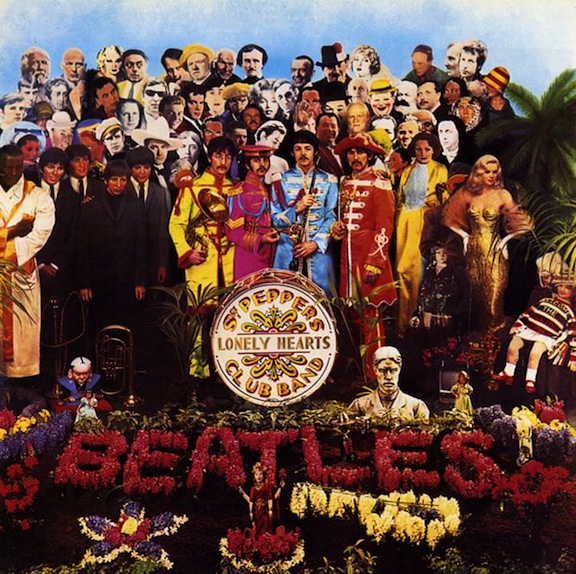
SPLHCB

The Beatles’ Sgt. Pepper’s Lonely Hearts Club Band, released by EMI Records in 1967, is arguably the most famous album sleeve of all time. The image on the album cover is composed of a collage of celebrities. There are 88 figures, including the band members themselves. Pop artist Peter Blake and his wife Jann Haworth conceived and constructed the set, including all the life-sized cut-outs of historical figures. The set was photographed, with the Beatles standing in the centre, by Michael Cooper. Copyright was a problem as Brian Epstein, the Beatles’ manager, had to locate each person in order to get permission to use their image in this context.

Bob Dylan: Born May 24, 1941

Bob Dylan Through The Years~
http://www.rollingstone.com/music/pictures/photos-70-photos-of-bob-dylan-on-his-70th-birthday-20110524

 Bob Dylan: Official Site~ http://www.bobdylan.com/us/home

Bob Dylan: Halcyon Gallery~ https://www.halcyongallery.com/bob-dylan/

Bob Dylan: Castle Fine Art~ https://www.castlefineart.com/artists/bob-dylan

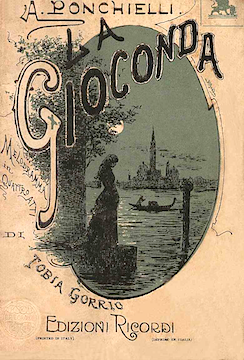
Premiered April 8, 1876: “La Gioconda”

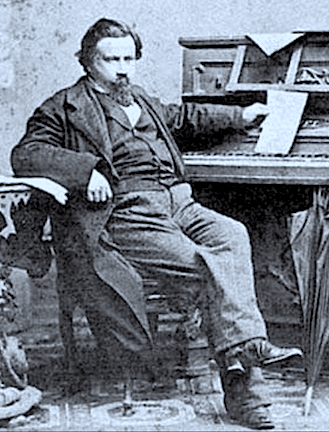
Composer Amilcare Ponchielli was born in Italy in 1834. He started composing operas while still a student at the Milan Conservatory. After graduating in 1854, he held various positions over the years, including professor of composition at the Conservatory; his pupils included Giacomo Puccini and Pietro Mascagni. His most famous opera is “La Gioconda”, written in 1876. It is mainly remembered for its ballet, Dance of the Hours.

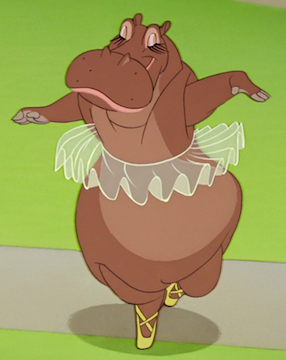
“The Dance of the Hours is probably the only opera ballet that has established a life of its own in both the concert hall as a stand-alone orchestral work…and in pop culture: Walt Disney’s 1940 animated film Fantasia, for example, used the music for a ballet performed by tutu-clad hippos, ostriches, alligators and elephants. And in 1963, parodist Alan Sherman set words to the tune of Ponchielli’s day music with its all-too-familiar four-note theme. Sherman’s “Hello Muddah, Hello Fadduh (A Letter from Camp)” hit No. 2 on the pop charts.”
FROM~ https://nepaphil.org/program-notes-from-an-evening-of-opera-overtures-and-arias/

Ponchielli’s biography~ http://www.allmusic.com/artist/amilcare-ponchielli-mn0000496351/biography

Synopsis of “La Gioconda“~ http://www.opera-arias.com/ponchielli/la-gioconda/synopsis/