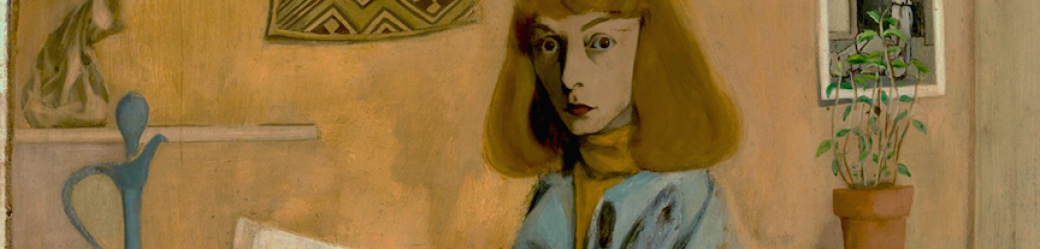
Artist Birthday Quiz for 7/17~
This artist designed the cover for the Bauhaus 1919 manifesto written by Walter Gropius: an expressionist woodcut called “Cathedral”.
During 1929-38, this artist photographed New York’s buildings, documenting the old before it was torn down and recording new construction.
Answers here~ https://schristywolfe.com/2015/07/17/july-17/
“Redes” released on July 16, 1936 (Mexico City)
http://www.film-foundation.org/world-cinema
Directed by Emilio Gómez Muriel, Fred Zinnemann
Music by Silvestre Revueltas
Cinematography by Paul Strand
Produced under trying circumstances and for very little money, Redes nevertheless became a classic Mexican film, launched several cinematic careers, and spearheaded a new transnational film movement in the process.
When shooting ended in November 1934, both Strand and Zinnemann returned to the States, leaving Gomez Muriel and Gunther von Fritsch, a boyhood friend of Zinnemann’s who had done some editing in Hollywood, to edit Redes. They faced problems at this stage too. Because Strand’s Akeley was a silent, hand-cranking camera, all the sound had to be added in postproduction, complicating the syncing and delaying the editing. Finally, Redes was released theatrically in 1936, accompanied by an impressive score by Silvestre Revueltas. Though David Alfaro Siqueiros would later call it “a work of dynamic realism, emotional intensity, and social outlook . . . a masterpiece,” it was a box-office disappointment in Mexico.
Its collectivist, pro-union story about the consciousness- raising of exploited fishermen resonated with the left-leaning politics in international artistic circles in the 1930s. As such, it is a fascinating document from an era when artists championed the rights of workers everywhere. For Strand, in particular, it was the realization of the kind of socially aware art he was searching for. (He would go on to be one of the cinematographers on Pare Lorentz’s 1936 Dust Bowl documentary The Plow That Broke the Plains and was director of photography on Native Land, a valiant, semidocumentary defense of unionism that he codirected, cowrote, and coedited in 1942.)
But Redes is cinematically noteworthy as well. As I’ve said, both Strand’s and
Zinnemann’s styles were compellingly employed. Strand’s primary goal was to honor the fishermen and villagers, and his careful compositions centering them in the frame convey that. The funeral of Miro’s daughter, near the beginning of the film, is a good example of his deferential style perfectly capturing downbeat emotional content. That scene’s matching bookend— the fishermen’s impromptu procession carrying Miro’s body to the boat—is another. It culminates in one of Strand’s most memorable compositions: an impressive deep-focus shot that stretches from a cactus plant in the foreground to the dramatically placed low horizon line in the far distance.
https://www.criterion.com/current/posts/2989-redes-el-cine-mexicano

Artist Birthday Quiz for 7/16~
This 18th century painter believed that portraiture could rise above its traditional status as mere ‘face-painting’ by making reference to the great art of the past.
Until he began to get official recognition in his mid-forties, this French artist lived on a small allowance from his parents, who fondly regarded him as a talentless amateur.
Answers here~ https://schristywolfe.com/2015/07/16/july-16/
Artist Birthday Quiz for 7/15~
What artist, a famous painter and draftsman in his own time and considered the most important in Dutch history, was also the most innovative printmaker of the seventeenth century?
What artist — a sculptor in wood who began to build furniture — believed that handcraft was secondary to design, saying he put into his work “a little of the hand, but the main thing is the heart and the head”?
Answers here~ https://schristywolfe.com/2015/07/15/july-15/
July 14, 1916~ The Dada Manifesto
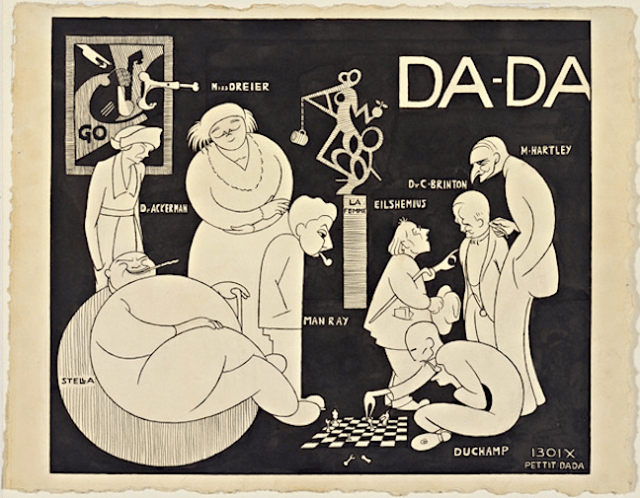 Richard Boix. Da-da (New York Dada Group). 1921. Ink on paper. 11 1/4″ x 14 1/2″ (28.6 x 36.8 cm)
Museum of Modern Art / Katherine S. Dreier Bequest
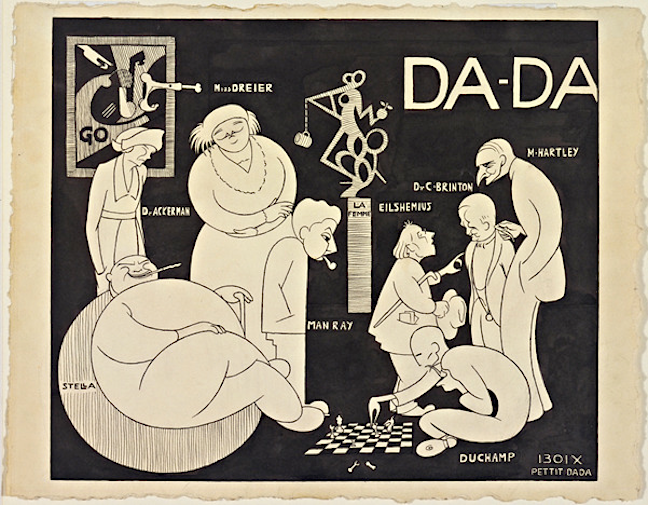
On July 14, 1916, the poet Hugo Ball proclaimed the manifesto for a new movement. Its name: Dada. Its aim: to “get rid of everything that smacks of journalism, worms, everything nice and right, blinkered, moralistic, europeanised, enervated.” This aim could be achieved simply by saying: “Dada.”
https://www.nytimes.com/2016/07/10/arts/dada-100-years-later.html
Dada~ Born February 5, 1916 100th anniversary of DADA~
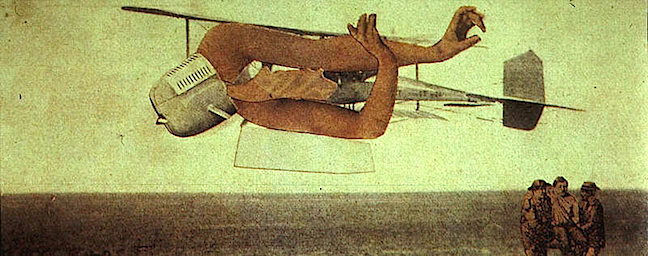
 Max Ernst. Murdering Airplane. 1920. Collage. 2 1/2” x 5 1/2” (6.35 cm × 13.97 cm). Private collection.
Artist Birthday Quiz for 7/14~
In 1897, this painter led a group of 19 avant-garde artists that broke away from Vienna’s conservative Künstlerhaus (the main exhibition venue for contemporary art) to form a new movement: the Vienna Secession.
This sculptor’s later works included a monumental figure commemorating the bombing of Rotterdam and a monument to van Gogh at Auvers-sur-Oise.
Answers here~ https://schristywolfe.com/2015/07/14/july-12-2/
Artist Birthday Quiz for 7/13~
What 17th century etcher and draftsman was one of the best and most prolific artists of his time, creating over 2.500 prints and some 400 drawings?
What Polish-born Israeli painter created the “Ardon Windows”, a set of large stained-glass windows in the National Library of Israel in Jerusalem?
Answers here~ https://schristywolfe.com/2015/07/13/july-13/
Artist Birthday Quiz for 7/12~
What painter and sculptor settled in Paris in 1906 and rapidly established his own idiosyncratic style, with its easily recognizable elongated figures and heads, almond-shaped eyes, and simple, linear contours?
What realist artist, one of the most popular and also most lambasted in the history of American painting, created work which sparked endless debates about the nature of modern art?
Answers here~ https://schristywolfe.com/2015/07/12/july-12/
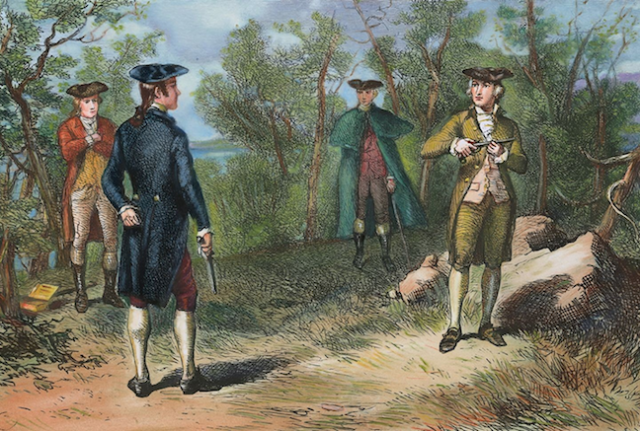
July 11, 1804: Alexander Hamilton shot in duel by Aaron Burr
What Did Burr Do After Shooting Hamilton?

The Burr and Hamilton duel, July 11, 1804, at Weehawken, N.J.