Baroness Elsa von Freytag-Loringhoven: Born July 12, 1874

evfl

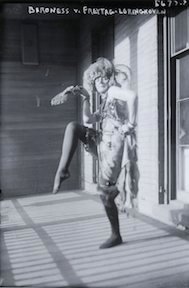
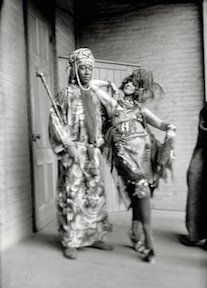
BEvFLEarly last century, when the sight of a woman in trousers could still cause a flap, the spectacle of Baroness Elsa von Freytag-Loringhoven must have aroused hairy panic.

With her five stray dogs trailing behind her on a gilded leash, she would walk regally through Washington Square Park, wearing a Duoshort Scottish kilt, a brassiere made from two tomato cans tied together with green string and, hanging from her neck, a wooden birdcage — with a live, chirping canary.

A Dada poet and collagist, artists’ model and troublemaker, she was called by those who knew Danceher simply “the Baroness.” In the late 1910’s and early 1920’s, the Baroness reigned among the intellectual avant-garde who laughed at sexual taboos and made art their revolution. But in the wildly colorful hothouse of Greenwich Village bohemia, the Baroness was the most exotic blossom of them all. “She is not a futurist,” Marcel Duchamp said. “She is the future.”
http://www.nytimes.com/2002/08/18/magazine/my-heart-belongs-to-dada.html

The Dada Baroness~
http://www.artnet.com/magazine/features/oisteanu/oisteanu5-20-02.asp
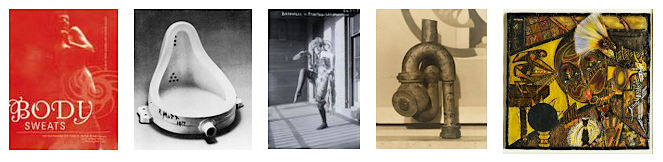
Did Marcel Duchamp steal Elsa’s urinal?~
http://ec2-79-125-124-178.eu-west-1.compute.amazonaws.com/articles/Did-Marcel-Duchamp-steal-Elsas-urinal/36155
Screen Shot 2016-07-12 at 4.56.11 PM

Van Cliburn: Born July 12, 1934

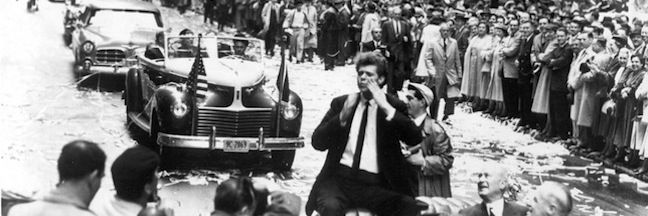
But if the Tchaikovsky competition represented Mr. Cliburn’s breakthrough, it also turned out to be his undoing. Relying inordinately on his keen musical instincts, he was not an especially probing artist, and his growth was stalled by his early success. Audiences everywhere wanted to hear him in his prizewinning pieces, the Tchaikovsky First Concerto and the Rachmaninoff Third. Every American town with a community concert series wanted him to come play a recital.
“When I won the Tchaikovsky I was only 23, and everyone talked about that,” Mr. Cliburn said in 2008. “But I felt like I had been at this thing for 20 years already. It was thrilling to be wanted. But it was pressure, too.”
http://www.nytimes.com/2013/02/28/arts/music/van-cliburn-pianist-dies-at-78.html

TickerTape


James McNeill Whistler (1834–1903)

WMother

James Abbott Whistler was born [on July 11] in 1834 in Lowell, Massachusetts, the third son of West Point graduate and civil engineer Major George Washington Whistler, and his second wife Anna Matilda McNeill. After brief stays in Stonington, Connecticut, and Springfield, Massachusetts, the Whistlers moved to St. Petersburg, Russia, where the Major served as an engineer for the construction of a railroad line to Moscow. Whistler studied drawing there at the Imperial Academy of Science. In 1848 he went to live with his sister and her husband in London, and after his father’s death the following year the family returned to the United States and settled in Pomfret, Connecticut. Whistler enrolled in the United States Military Academy at West Point in 1851, where he excelled in Robert W. Weir’s drawing class. He was dismissed from the academy in 1854, and after brief periods working for the Winans Locomotive Works in Baltimore, and the drawings division of the United States Coast and Geodetic Survey, resolved to become an artist…
FROM http://www.nga.gov/content/ngaweb/Collection/artist-info.1974.html

Victoria Thorne: Whistler’s Bridges and Those Boys on the Bank~
http://design.victoriathorne.com/2012/08/whistlers-bridges-and-those-boys-on-bank.html
Portrait of the Artist’s Mother~
http://www.musee-orsay.fr/en/collections/works-in-focus/search/commentaire/commentaire_id/portrait-of-the-artists-mother-2976.html
The Extraordinary Life of Whistler’s Mother~
http://theconversation.com/the-extraordinary-life-of-whistlers-mother-42027

This slideshow requires JavaScript.

Camille Pissarro: Born July 10, 1830

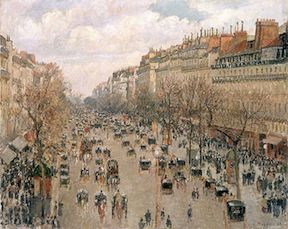
ONEPissarro in fact was the only artist who participated in all eight Impressionist exhibitions and he was a much-respected father figure to his colleagues…His talents as a teacher made him influential TWOeven among artists of greater stature than himself—Cézanne and Gauguin, for example…During the Franco-Prussian War of 1870–1, when his home at Louveciennes was overrun by the German invaders and many of his paintings were destroyed, Pissarro joined Monet in England. In 1872 he settled at Pontoise, where he THREEintroduced Cézanne to painting out of doors…In 1885 he met Seurat and for several years afterwards he experimented with Neo-Impressionism; in about 1890, however, he reverted to his Impressionist style, though with freer brushwork than in his early work…From FOURabout 1895 deterioration of his eyesight caused him to give up painting out of doors and many of his late works are urban scenes painted from windows (usually of hotels) in Paris and elsewhere…In addition to a large output of paintings and drawings, he was the most prolific printmaker among the Impressionists, working in a variety of techniques and sometimes mixing them.
FROM  http://artuk.org/discover/artists/pissarro-camille-18301903

http://www.degas-painting.info/impresionists/camille_pissarro_biography.htm

Ringo Starr: Born on July 7, 1940

youngRingo

While some accused Ringo Starr of being a clumsy drummer, many more agreed with George Harrison’s assessment: “Ringo’s the best backbeat in the business.” And while many in the wake of the youngerRingoBeatles’ breakup predicted that Starr would be the one without a solo career, he proved them wrong. Not only has he released several LPs (the first came out before the Beatles disbanded) and hit singles, but he’s also the only Beatle to establish a film-acting career for himself outside of the band’s mid-’60s movies.
http://www.rollingstone.com/music/artists/ringo-starr

Anybody who knows the Beatles’ music intimately knows the tympanic accents and fills as clearly today as when they were recorded: the famous drum roll that launches into “She Loves You”; the shimmering incandescence of his cymbal work on so many of those early hits; the impressionistic free-form of “Rain”; the loping cadence and crispy snare of “Sexy Sadie”; the haunting, almost cinematic drama and rich texture behind “Long, Long”; the building, tour-de-force crescendo that leads up to the “The End” on “Abbey Road.”

“Here’s what I discovered in the very first session that I did with him,” recalls Walsh. “He came in and I oldRingosaid, ‘You want to see a chart on the song?’ And he said, ‘No, give me the lyrics.’ He responds to the singer. A great example of that is when he plays on the Beatles’ ‘Something’ and he does that fill that’s such a musical response it’s almost like a guitar player; there’s notes to it.”
http://variety.com/2014/music/news/ringo-starr-paul-mccartney-beatles-1201073353/

olderRingo

Marc Chagall: Born July 7, 1887


https://www.artic.edu/exhibitions/3172/chagall-s-america-windows

https://www.guggenheim.org/artwork/artist/marc-chagall

http://www.jewishvirtuallibrary.org/marc-chagall

Chagall himself said he was a dreamer who never woke up. “Some art historians have sought to decrypt his symbols,” says Jean-Michel Foray, director of the Marc Chagall Biblical Message Museum in Nice, “but there’s no consensus on what they mean. We cannot interpret them because they are simply part of his world, like figures from a dream.” ~The Elusive Marc Chagall, Smithsonian, December 2003

Rube Goldberg: Born July 4, 1883


Learn more~ http://www.rube-goldberg.com/
https://www.rubegoldberg.org/all-about-rube/a-cultural-icon/

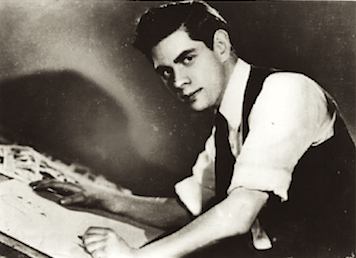
[Rube Goldberg’s] father…convinced Rube to study Engineering at the School of Mining Engineering at UC Berkeley. He went on to graduate from UC Berkeley with a degree in Engineering in 1904.

After graduation, Rube Goldberg took on a position designing sewer pipes for the San Francisco Water and Sewers Department…he lasted six months. Rube Goldberg followed his passion and began to shift gears to pursue his previous dreams and pursue a career as a cartoonist.

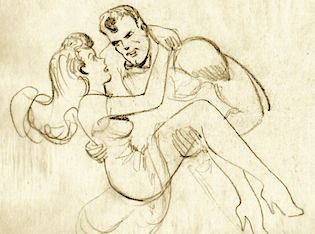
Rube Goldberg made an important observation. In his eyes, many people seemed to be solving simple problems with overly complex contraptions. This…was his main inspiration for the “Inventions!” series. The most famous of which has come to be known as the Rube Goldberg Machine.

Rube Goldberg is the only cartoonist to be listed in the Merriam-Webster dictionary as an actual adjective. The phrase “Rube Goldberg” has been adopted into common use to mean “doing something simple in a very complicated way that is not necessary”.
http://interestingengineering.com/rube-goldberg-the-man-behind-the-worlds-craziest-machines/

The United States of America: Born July 4, 1776

painting

This painting depicts the moment on June 28, 1776, when the first draft of the Declaration of Independence was presented to the Second Continental Congress.

This is the first completed painting of four Revolutionary-era scenes that the U.S. Congress commissioned from John Trumbull (1756–1843) in 1817. It is an enlarged version of a smaller painting (approximately 21 inches by 31 inches) that the artist had created as part of a series to document the events of the American revolution.

When Trumbull was planning the smaller painting in 1786, he decided not to attempt a wholly accurate rendering of the scene; rather, he made his goal the preservation of the images of the Nation’s founders. He excluded those for whom no authoritative image could be found or created, and he included delegates who were not in attendance at the time of the event. In all, 47 individuals (42 of the 56 signers and 5 other patriots) are depicted, all painted from life or life portraits. Some of the room’s architectural features (e.g., the number and placement of doors and windows) differ from historical fact, having been based on an inaccurate sketch that Thomas Jefferson produced from memory in Paris. Trumbull also painted more elegant furniture, covered the windows with heavy draperies rather than venetian blinds, and decorated the room’s rear wall with captured British military flags, believing that such trophies were probably displayed there.
http://www.aoc.gov/capitol-hill/historic-rotunda-paintings/declaration-independence