Tag Archives: Illustrator
Artist Birthday Quiz for 1/21~
What artist progressed from a freelance illustrator of ornithological books to establishing wildlife art as a genre?
What artist created a tall topiary sculpture of a West Highland White Terrier puppy comprised of soil and living flowers?
Answers here~ https://schristywolfe.com/2015/01/21/january-21/
Artist Birthday Quiz for 1/10~
This prominent late 19th/early 20th century illustrator’s most famous poster was a young woman dressed in a Navy uniform with the caption, “If I were a man, I would join the Navy”.
This American artist’s images depicted the flapper era in a way that both satirized and influenced the styles of the time, and have continued to define the jazz age for subsequent generations.
Answers here~ https://schristywolfe.com/2016/01/10/january-10/
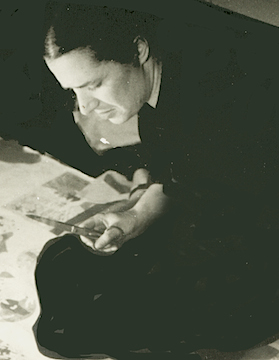
Esphyr Slobodkina: Born September 22, 1908
Esphyr Slobodkina~ artist, author, and illustrator
Esphyr Slobodkina was born in Chelyabinsk, Russia in 1908. The youngest of five children, Slobidkina’s family left there home in 1919 and moved to Vladisvastok to avoid the Russian
Revolution.
…
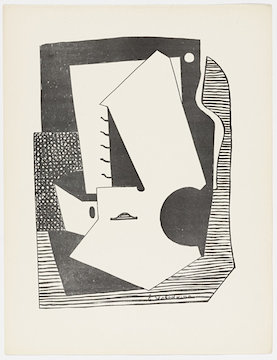
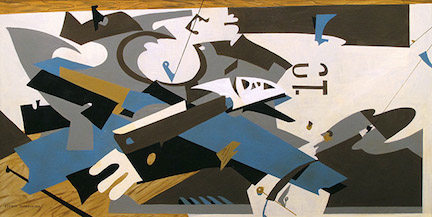
Slobodkina immigrated to New York in 1928 using a student visa and began attending the National Academy of Design…Over time, she grew to enjoy acomposition class taught by muralist Arthur Sinclair Covey (1877-1960). Through his teachings, she met painter and fellow student Ilya Bolotowsky (1907-1981), whom she married in 1933…Bolotowsky
encouraged Slobodkina to evolve her Impressionist style toward abstraction, which would become her primary genre…Slobodkina and her husband amicably divorced in 1938.
…
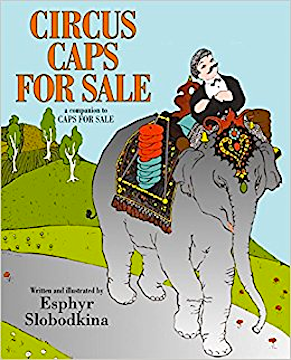
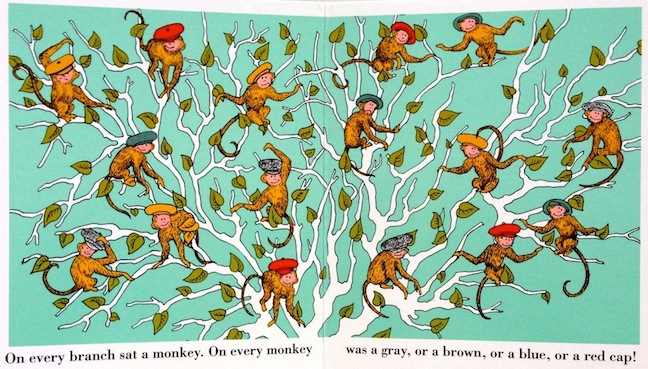
She had a significant career change after meeting children’s author Margaret Wise Brown. The two women became fast friends, and Slobodkina began illustrating Brown’s books, beginning with her Big and Little series and continuing until Brown’s death in 1952. In 1940, Slobodkina published her most famous children’s book, Caps for Sale, which “pioneered the use of contemporary abstract forms in children’s books”…Slobodkina [also]
maintained an active painting and sculptural career.
…
The Slobodkina Foundation, an organization designed to promote free programs, scholarships, readings and performances of Slobodkina’s children’s books was created in 2000…Slobodkina died in 2002 in Glen Head, New York at the age of 93.


ALL QUOTES FROM
http://origin.www.sullivangoss.com/artists/esphyr-slobodkina-1908-2002
Slobodkina Foundation: Honoring the Life and Work of Esphyr Slobodkina
Esphyr Slobodkina’s books
Arthur Rackham: Born September 19, 1867
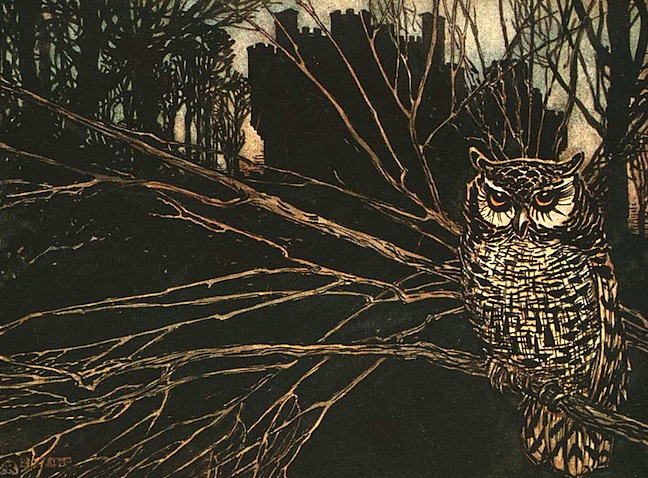
Arthur Rackham was born September 19, 1867, in London, England. He studied at the Lambeth School of Art, was elected to membership in The Royal Watercolour Society and the Société Nationale des Beaux Arts, and became Master of the Art Workers’ Guild. Books he illustrated include Rip Van Winkle (1905), Peter Pan in Kensington Gardens (1906), Alice in Wonderland (1907), and many other children’s books and classics throughout the years until his death in 1939. His last work, The Wind in the Willows, was published posthumously. He won gold medals at Milan (1906) and Barcelona (1911), and his books and original art are now collected worldwide.
FROM The Arthur Rackham Society~ http://arthur-rackham-society.org/

Biography~ https://en.wikipedia.org/wiki/Arthur_Rackham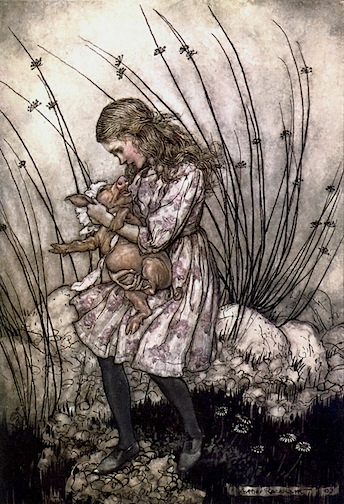
The Golden Age of Illustration: Arthur Rackham~ http://www.peterharrington.co.uk/blog/the-golden-age-of-illustration-arthur-rackham/
Arthur Rackham Illustrated Books Art Gallery~ https://www.nocloo.com/arthur-rackham-illustrations-archive/
George Luks: Born August 13, 1867
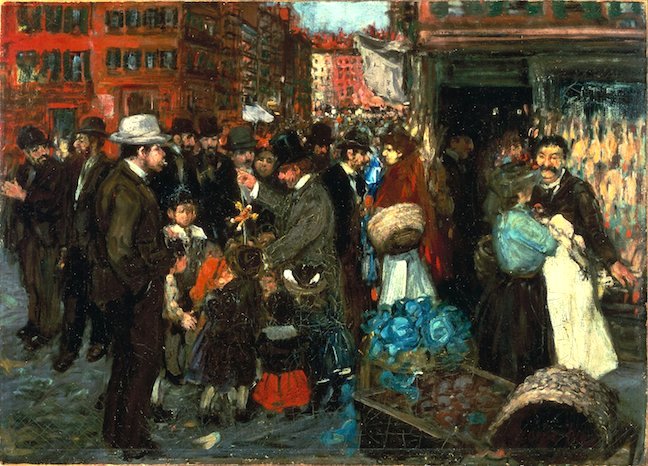
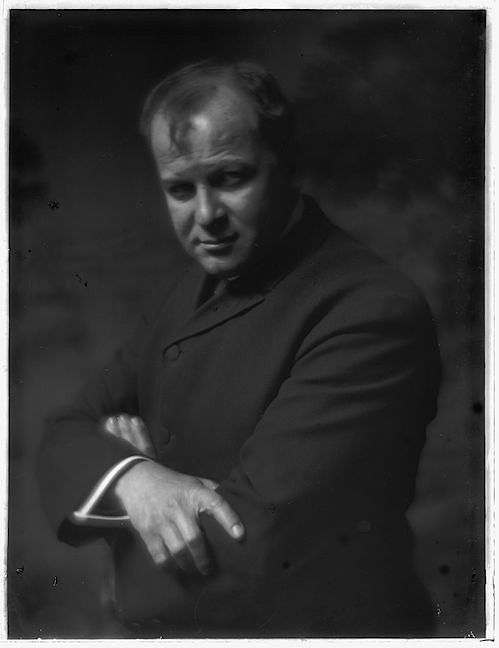
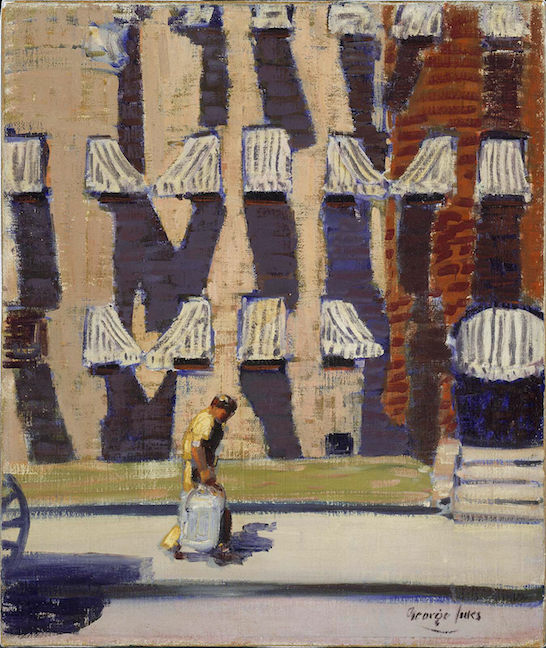
George Luks was an American realist painter and comic illustrator, best known for his images of New York and its inhabitants. Born in Williamsport, Pennsylvania, Luks worked as a vaudeville performer before moving to Philadelphia to study art at the Pennsylvania Academy of the Fine Arts…Luks was publishing comic illustrations in Puck and Truth, and upon his return in 1893 he accepted a job as a newspaper illustrator at the Philadelphia Press.
FROM http://www.illustrationhistory.org/artists/george-luksHis career took a small detour in 1895 when he
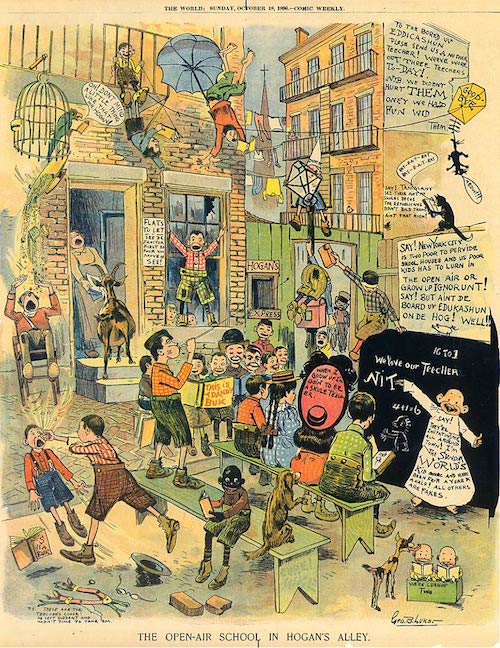
traveled to Cuba as an artist-correspondent for the Philadelphia Evening Bulletin…When he returned to America in 1896, he joined the staff of Pulitzer’s World as an illustrator and cartoonist…One of his many famous colleagues at the World was Richard F. Outcault, who had joined the staff in 1894…Outcault’s Yellow Kid became so popular with the public and showed that it increased the newspaper’s sales as well as the sales of merchandise his likeness appeared on, from candy to whiskey. This awareness was occurring at the same time that William Randolph Hearst had come to town, purchased the Journal and was having an intense battle with Pulitzer’s World for dominance in New York City. Hearst knew a good thing when he saw it and lured Outcault away from Pulitzer…Pulitzer was not to be outdone, however, and assigned Luks to continue drawing the Yellow
Kid in Hogan’s Alley for the World…Luks [continued to work] at his painting and was finally able to make a living at it. He left the newspaper in 1898.
FROM https://www.hoganmag.com/blog/george-luks-the-other-yellow-kid-artistGeorge Luks prided himself in being the “bad boy” of American art and would be pleased that this notion has survived as his reputation as a significant painter of the twentieth century continues to grow. A heavy drinker and engaged story-teller, Luks manufactured details of his own life to make himself more colorful. Most ingrained in his biography was his tall tale of
having fought in the Mid-West as “Chicago Whitey,” a middle-weight boxing champion. No one ever checked his details. However, the mythology Luks created around himself masked an insecurity that reveals itself in the diversity of styles he sometimes employed as a painter. His mainstay was realism, but he experimented with impressionism and post-impressionism and was known to alter a canvas if it was criticized, sometimes ruining it entirely. The critic, James Huneker, noted literally hundreds of unfinished canvases in Luks upper Manhattan studio which he would either re-work or paint over. But when Luks was “on” he was a forceful painter of huge talent and confidence, noted for his sure, brilliant handling of a brush.
FROM http://www.tfaoi.com/aa/2aa/2aa563.htm

Ephemeral New York: Posts Tagged ‘George Luks’~
https://ephemeralnewyork.wordpress.com/tag/george-luks/
Beatrix Potter: Born on July 28, 1866
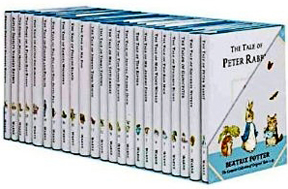
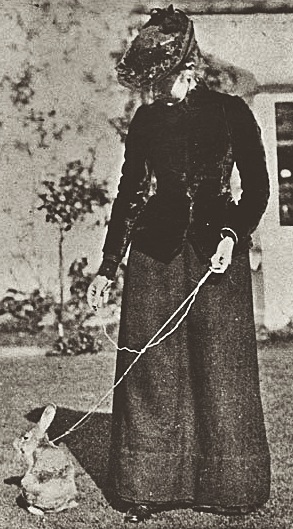
Helen Beatrix Potter was born on 28th July 1866 at 2 Bolton Gardens, in Kensington, London to a wealthy family. Both Beatrix’s parents lived on inheritances from the cotton trade and, though qualified as a barrister, her father, Rupert, focused much of his time on his passion for art and photography. He and his wife, Helen, enjoyed an active social life
among a group of writers, artists and politicians and the family included many connoisseurs and practitioners of art. Helen herself was a fine embroiderer and watercolourist and Edmund Potter,
Beatrix’s paternal grandfather, was co-founder and president of the Manchester School of Design.
FROM http://www.vam.ac.uk/content/articles/b/biography-beatrix-potter/Art lessons were provided but Beatrix found them barely tolerable. She politely rebelled,
secretly worried that copying another artist would compromise her own originality, and hoped that she “wouldn’t catch it.” More to her liking were outings with her father, an
sometime amateur photographer, to the great art galleries of London which constituted her real artistic apprenticeship. Her education was limited only by her capacity to
observe. Although she experimented with a variety of media, by 19 she had chosen watercolour and was rapidly perfecting her dry-brush technique.
FROM http://www.bpotter.com/Beatrix.aspx



The Beatrix Potter Society~ http://beatrixpottersociety.org.uk/
Beatrix Potter, Mycologist: The Beloved Children’s Book Author’s Little-Known Scientific Studies and Illustrations of Mushrooms~ http://www.brainpickings.org/2015/07/28/beatrix-potter-a-life-in-nature-botany-mycology-fungi/
“Beatrix Potter Artist and Illustrator” exhibition 2005~ http://www.theguardian.com/artanddesign/2005/oct/08/art.booksforchildrenandteenagers

Rube Goldberg: Born July 4, 1883
Learn more~ http://www.rube-goldberg.com/
https://www.rubegoldberg.org/all-about-rube/a-cultural-icon/
[Rube Goldberg’s] father…convinced Rube to study Engineering at the School of Mining Engineering at UC Berkeley. He went on to graduate from UC Berkeley with a degree in Engineering in 1904.
After graduation, Rube Goldberg took on a position designing sewer pipes for the San Francisco Water and Sewers Department…he lasted six months. Rube Goldberg followed his passion and began to shift gears to pursue his previous dreams and pursue a career as a cartoonist.
Rube Goldberg made an important observation. In his eyes, many people seemed to be solving simple problems with overly complex contraptions. This…was his main inspiration for the “Inventions!” series. The most famous of which has come to be known as the Rube Goldberg Machine.
Rube Goldberg is the only cartoonist to be listed in the Merriam-Webster dictionary as an actual adjective. The phrase “Rube Goldberg” has been adopted into common use to mean “doing something simple in a very complicated way that is not necessary”.
http://interestingengineering.com/rube-goldberg-the-man-behind-the-worlds-craziest-machines/

Peter Blake: Born June 25, 1932
Peter graduated from the RCA in 1956 having also completed his National Service. He received the Leverhulme Research Award to study popular art whilst travelling Europe and went on to teach for several years at various London Art Schools, all the while working and exhibiting. His first solo show was held in the Portal Gallery in 1962 and since the early 70s his work has regularly been exhibited in one-man shows and retrospectives around the world. In 1981 he was elected a member of the Royal Academy and in 1994 was made the Third Associate Artist of the National Gallery. He was Knighted in 2002.
Sir Peter Blake | Illustrators | Central Illustration Agency
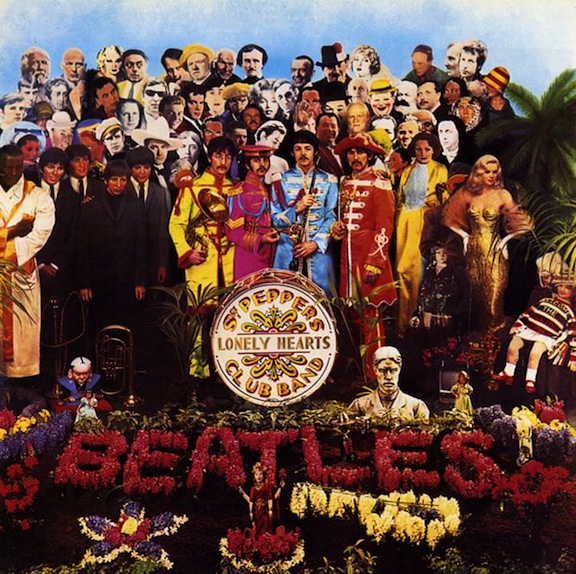
The Beatles’ Sgt. Pepper’s Lonely Hearts Club Band, released by EMI Records in 1967, is arguably the most famous album sleeve of all time. The image on the album cover is composed of a collage of celebrities. There are 88 figures, including the band members themselves. Pop artist Peter Blake and his wife Jann Haworth conceived and constructed the set, including all the life-sized cut-outs of historical figures. The set was photographed, with the Beatles standing in the centre, by Michael Cooper. Copyright was a problem as Brian Epstein, the Beatles’ manager, had to locate each person in order to get permission to use their image in this context.
Maurice Sendak: Born June 10, 1928
Dubbed by one critic “the Picasso of children’s literature” and once addressed by former President Bill Clinton as “the King of Dreams,” Maurice Sendak illustrated nearly a hundred picture books throughout a career that spanned more than 60 years. Some of his best known books include Chicken Soup with Rice (1962), Where the Wild Things Are (1963), and In the Night Kitchen (1970). Born in Brooklyn in 1928 to Jewish immigrant parents from northern Poland, Sendak grew up idolizing the storytelling abilities of his father, Philip, and his big brother, Jack. As a child he illustrated his first stories on shirt cardboard provided by his tailor-father. Aside from a few night classes in art after graduating high school, Sendak was a largely self-taught artist.
FROM http://www.rosenbach.org/maurice-sendak-biography-and-timeline
Classical Music Fueled Maurice Sendak’s Creative Muse~
https://www.wqxr.org/story/207545-classical-music-fueled-maurice-sendak-muse/
 The Misty Miss Christy