The Resurrection in Art

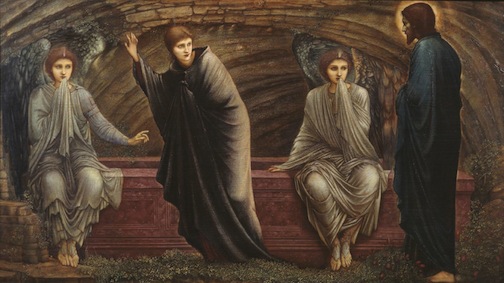
Christians celebrate the resurrection of Jesus on Easter Sunday, two days after Good Friday, the day of his crucifixion. It is the central tenet of Christian theology. The Resurrection of Christ has been portrayed by artists for 2,000 years; I thought it would be appropriate at Easter to take an (obviously lightning fast) overview of how some painters have depicted it. (Click image to enlarge).

GreekAnonymous
The Resurrection
11th century
Mosaic
Monastery of Hosios Loukas, Greece

Psalter

Anonymous
Manuscript Leaf with the Resurrection, from a Psalter
13th century
Tempera, ink, gold, and silver on parchment
Metropolitan Museum of Art, New York
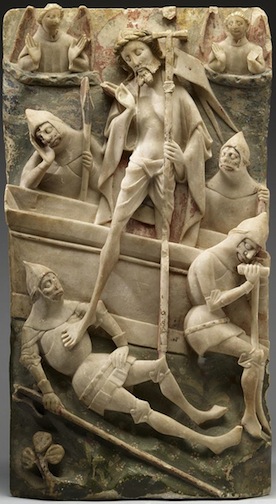
AlabasterAnonymous
Paneled altarpiece section with Resurrection of Christ
15th century
English Nottingham alabaster with remains of colour
Walters Art Museum, Baltimore, MD

Andrea della Robbia (1435–1525)OLYMPUS DIGITAL CAMERA
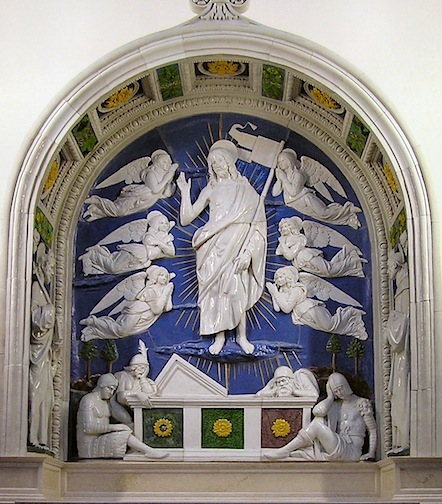
Resurrection
15th century
Enamelled Terracotta
Bode-Museum, Berlin, Germany

FrancescaPiero della Francesca (1420-1492)
The Resurrection of Jesus Christ
1463
Mural in fresco and tempera
Museo Civico, Sansepolcro, Italy

Raphael (1483-1520)Raphael
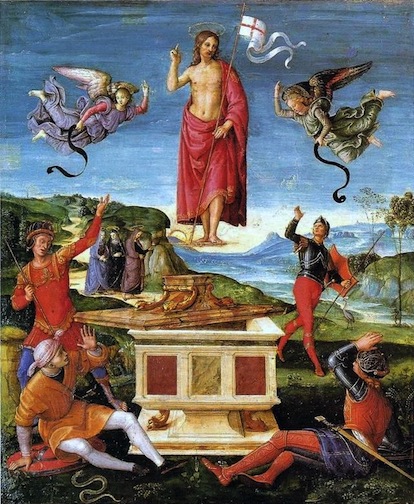
The Resurrection of Jesus Christ
1499-1502
Oil on panel
São Paulo Museum of Art, Brazil
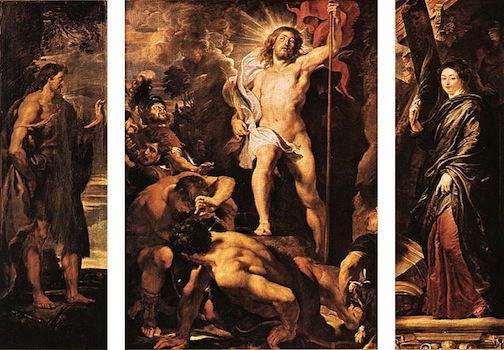
RubensPeter Paul Rubens (1577-1640)
The Resurrection of Christ
1611-1612
Oil on panel
Antwerp Cathedral, Belgium
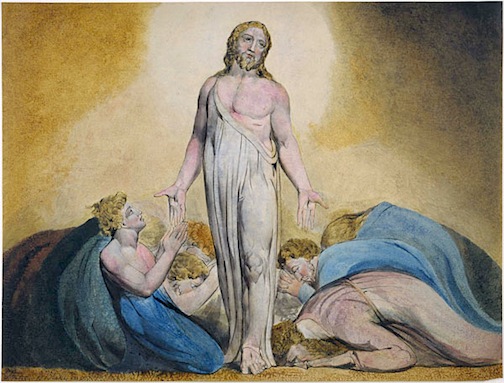
Blake

William Blake (1757-1827)
Christ Appearing to His Disciples After the Resurrection
1795
Monotype hand-colored with watercolor and tempera
National Gallery of Art, Washington DC

ManetÉdouard Manet (1832–1883)
The Dead Christ with Angels
1864
Oil on canvasMetropolitan Museum of Art, New York City

Sir Edward Coley Burne-Jones (1833–1898)
The Morning of the Resurrection
1886
Oil paint on wood
Tate Gallery, London, UKThe Morning of the Resurrection 1886 by Sir Edward Coley Burne-Jones, Bt 1833-1898
Leonardo da Vinci: Born April 15, 1452

LastSupperThe Last Supper ~ 1494–1498 ~ Oil/tempera on dry plaster ~ Convent of Santa Maria delle Grazie, Milan

The illegitimate son of a 25-year-old notary, Ser Piero, and a peasant girl, Caterina, Leonardo was born on April 15, 1452, in Vinci, Italy, just outside Florence…Growing up in his father’s Vinci home, Leonardo had access to scholarly texts owned by family and friends. He was also exposed to Vinci’s longstanding painting tradition, and when he was about 15 his father apprenticed him to the renowned workshop of Andrea del Verrochio in Florence. Even as an apprentice, Leonardo demonstrated his colossal talent.
>>>>>>   https://legacy.mos.org/leonardo/ (Museum of Science: Leonardo da Vinci, Renaissance Man)

“On Leonardo da Vinci’s Birthday MFA Boston Shows the Most Beautiful Drawing in the World”~ https://news.artnet.com/in-brief/leonardo-da-vinci-birthday-288061 (artnet news)

Slideshow~ http://www.metmuseum.org/toah/hd/leon/hd_leon.htm#slideshow1 (Metropolitan Museum of Art, Heilbrunn Timeline of Art History)

Leonardo Da Vinci timeline~ http://worldhistoryproject.org/topics/leonardo-da-vinci (World History Project)


The Story of Leonardo’s Horse~ https://www.davincisciencecenter.org/about/leonardo-and-the-horse/the-full-story-of-leonardos-horse/ (Da Vinci Science Center)


Ralph Steadman Illustrates the Life of Leonardo da Vinci~ http://www.brainpickings.org/2014/07/11/ralph-steadman-i-leonardo/ (Brain Pickings)

List of works by Leonardo da Vinci~ http://en.wikipedia.org/wiki/List_of_works_by_Leonardo_da_Vinci (Wikipedia)

Portrait of Cecilia Gallerani (Lady with the Ermine), about 1488Lady with an Ermine
1489–1490
Oil on wood panel
Wawel Castle, Kraków

Mona LisaMonaLisa
1503–1506 (perhaps 1517)
Oil on wood panel
Musée du Louvre, Paris

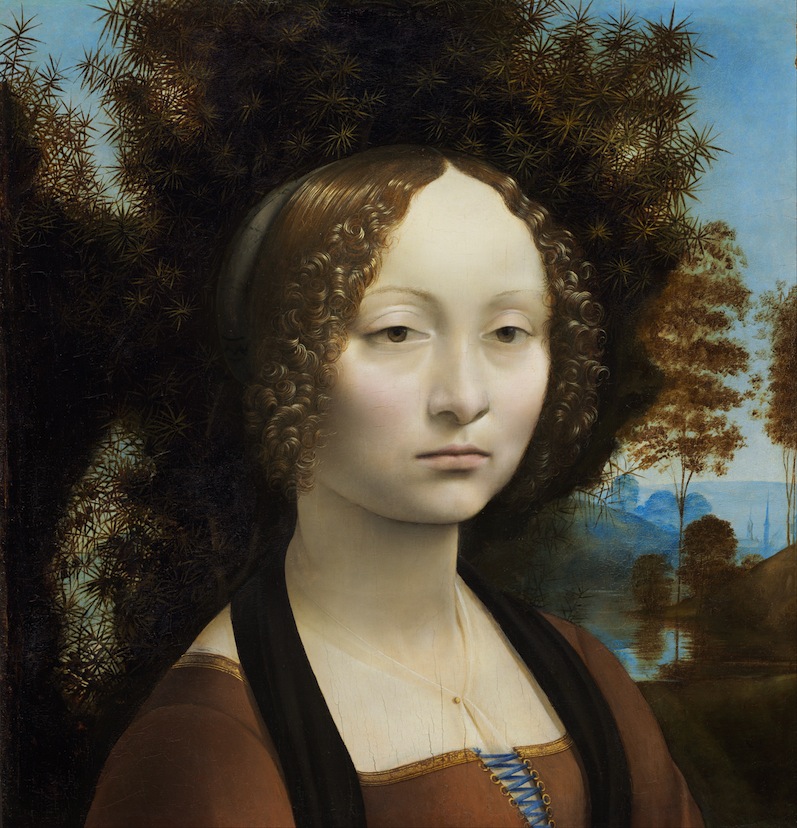
Ginevra
Ginevra de’Benci
1474–1478
Oil on wood panel
National Gallery of Art, Washington, D.C.

St. John the BaptistJohnTheBaptist
1513–1516

Oil on wood panel
Musée du Louvre, Paris

>> Click on images to enlarge <<<

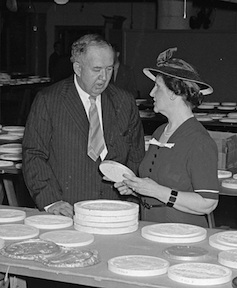
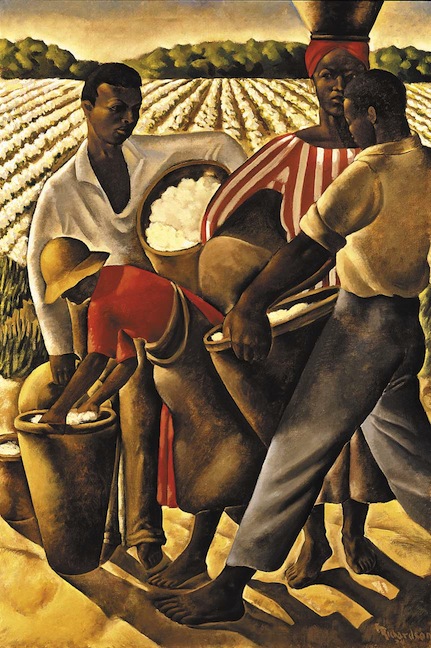
Edward Bruce: Born April 13, 1879

Bruce1Edward Bruce was born in 1879 in Dover Plains, New York. Though he enjoyed painting at a young age, he pursued a career in law and graduated from Columbia Law School in 1904. He practiced law in New York and in Manila, Philippines and was actively involved in international issues.SH143
In 1923 Bruce gave up his career in law and business and began to paint, particularly landscapes. He and his wife Peggy spent the next six years in Anticoli Carrado, Italy where he studied painting from his friend and fellow artist Maurice Sterne. Bruce returned to the United States in 1929 and settled in California, exhibiting his artwork to much public and critical praise. In addition, Bruce was an avid collector of Chinese art.
In 1933 Bruce was appointed Chief of the newly established Public Works of Art Project, a federal government New Deal program within the U.S. Treasury Department, that employed artists to decorate numerous public buildings and parks…In 1940 he was appointed to the Commission of Fine Arts by President Franklin Delano Roosevelt.
Bruce2Bruce received many honors and awards during his lifetime both for his work as an artist and for his capable and dedicated administration of federal arts programs. Despite poor health, he continued his work for the Section of Fine Arts until shortly before his death in 1943.
http://www.aaa.si.edu/collections/edward-bruce-papers-7264/more

On December 8, 1933, the Advisory Committee to the Treasury on Fine Arts met to decide the newdealartdetails of the Public Works of Art Project (PWAP), the first of the New Deal art programs. The PWAP came at a crucial moment for federal support of the arts during the Great Depression. As artist Olin Dows (1904–1981) recalled, “If the first crash [i.e. Depression] art program had not been so carefully newdealarttoothought out and expertly organized, I doubt that other programs would have been undertaken. The man mainly responsible was Edward Bruce.” Bruce, an advisor to the Treasury Department, hosted the meeting at his home. First Lady Eleanor Roosevelt was present as were such arts leaders as Juliana Force and Forbes Watson, who worked with Bruce to organize the Public Works of Art Project.
https://www.incollect.com/articles/1934-a-new-deal-for-artists

History of the New Deal Art Projects~ http://wpamurals.org/history.html
The New Deal Art Registry~ http://www.newdealartregistry.org/Home.html

Hardie Gramatky: Born on April 12, 1907

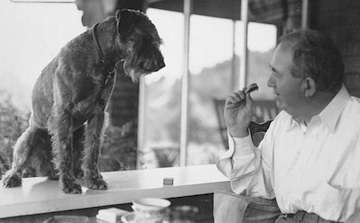
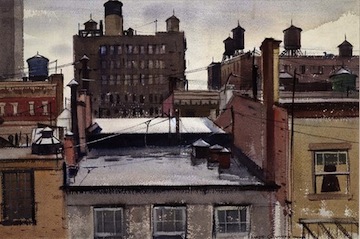
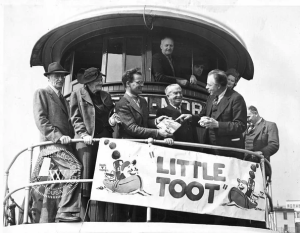
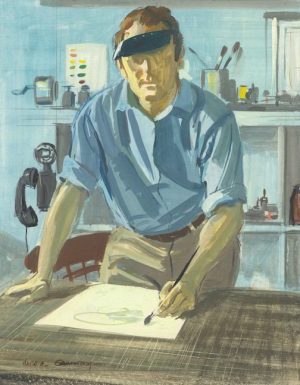
Bernhard August “Hardie” Gramatky, Jr. (April 12, 1907-April 29, 1979) was an American painter, writer, animator, and illustrator. In a 2006 article in Watercolor Magazine, Andrew Wyeth named him as one of America’s 20 greatest watercolorists. He wrote and illustrated several children’s books, most notably Little Toot.
FROM https://en.wikipedia.org/wiki/Hardie_Gramatky

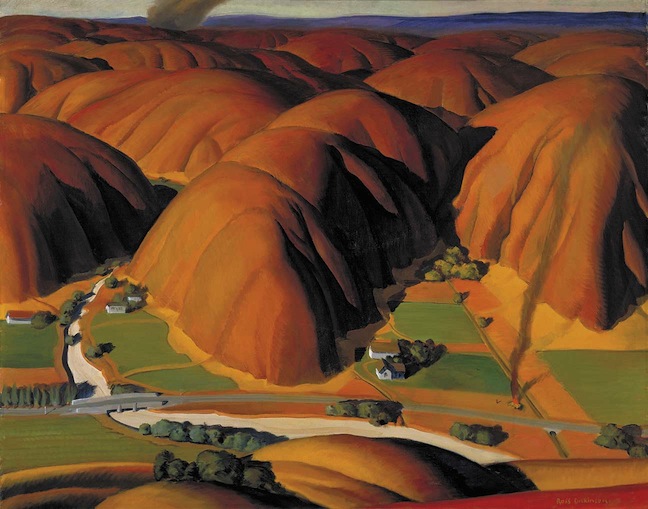
ROOF

http://www.californiawatercolor.com/pages/hardie-gramatky-biography

https://www.mazzamuseum.org/project/miles-gallery/

https://www.lambiek.net/artists/g/gramatky_hardie.htm

Adam Elsheimer: Born March 18, 1578

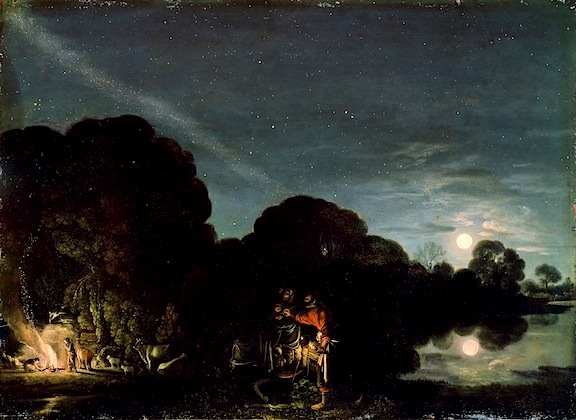
DGA505268Adam Elsheimer (1578-1610)~ https://www.nationalgallery.org.uk/artists/adam-elsheimer

The tiny stars were painted almost 400 years ago by Adam Elsheimer, a tailor’s son from Frankfurt, who made it as an artist in Rome. He is a painter long known by experts as a key influence on Rubens and Rembrandt, but his name is unfamiliar to the general public.

Now, she tells me, scientist have confirmed that the constellations in Elsheimer’s miniature painting, The Flight Into Egypt, are clearly recognisable, his shimmering depiction of the milky way the very first of its type, and the position of the moon so accurate that it can be dated to a particular night: June 16, 1609, a year before Galileo published his groundbreaking research. To make his painting, Elsheimer must have observed the night sky through a telescope. His reputation may have become buried in the past, but in his own time he was a man of the future.
FROM http://www.heraldscotland.com/sport/spl/aberdeen/twinkle-twinkle-little-stars-you-ll-need-a-magnifying-glass-to-appreciate-adam-elsheimer-s-groundbreaking-miniature-milky-way-by-moira-jeffrey-1.18082

In this picture, considered the first true moonlit night scene in European painting, Elsheimer reproduced the starry night sky with the Milky Way. Unresolved remains the question whether the artist was aware of Galileo’s research published in 1610 and whether he recorded an actual Roman night sky.
FROM https://hnanews.org/hnar/reviews/six-publications-adam-elsheimer/