
https://www.google.com/doodles/international-womens-day-2017

International Women’s Day 2016
International Women’s Day 2015
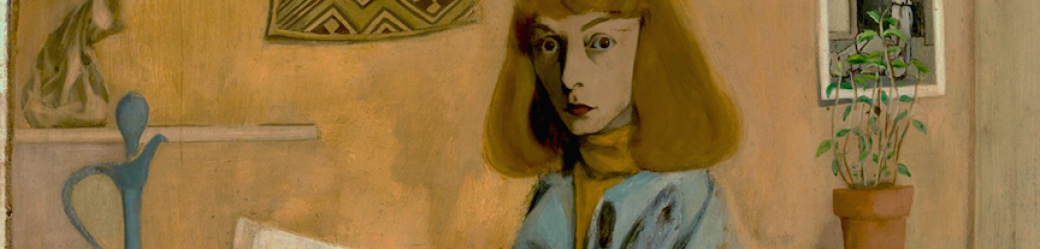
Her vibrant colors and stylized designs pervade Disney animated films from 1943 to 1953 (such as THE THREE CABALLEROS, CINDERELLA, ALICE IN WONDERLAND AND PETER PAN). A prolific artist, during the 1950’s and 60’s she brought eye-appealing flair to children’s books (I CAN FLY), advertisements, theatrical set designs, and large-scale theme park murals and attractions (such as Disneyland’s IT’S A SMALL WORLD).
…
Though much of her art veers away from naturalism toward abstraction, she was one of Walt Disney’s favorite artists; he personally responded to her use of color, naïve graphics, and the storytelling aspect in her pictures…
FROM About Mary~ http://magicofmaryblair.com/about-mary/

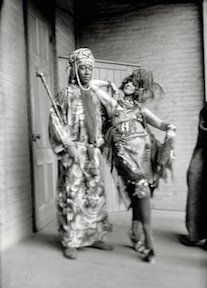
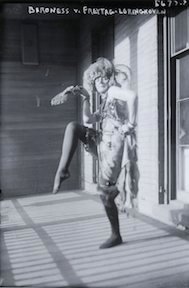
Early last century, when the sight of a woman in trousers could still cause a flap, the spectacle of Baroness Elsa von Freytag-Loringhoven must have aroused hairy panic.
With her five stray dogs trailing behind her on a gilded leash, she would walk regally through Washington Square Park, wearing a
short Scottish kilt, a brassiere made from two tomato cans tied together with green string and, hanging from her neck, a wooden birdcage — with a live, chirping canary.
A Dada poet and collagist, artists’ model and troublemaker, she was called by those who knew
her simply “the Baroness.” In the late 1910’s and early 1920’s, the Baroness reigned among the intellectual avant-garde who laughed at sexual taboos and made art their revolution. But in the wildly colorful hothouse of Greenwich Village bohemia, the Baroness was the most exotic blossom of them all. “She is not a futurist,” Marcel Duchamp said. “She is the future.”
http://www.nytimes.com/2002/08/18/magazine/my-heart-belongs-to-dada.html
The Dada Baroness~
http://www.artnet.com/magazine/features/oisteanu/oisteanu5-20-02.asp
Did Marcel Duchamp steal Elsa’s urinal?~
http://ec2-79-125-124-178.eu-west-1.compute.amazonaws.com/articles/Did-Marcel-Duchamp-steal-Elsas-urinal/36155
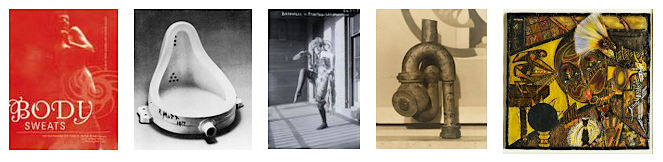
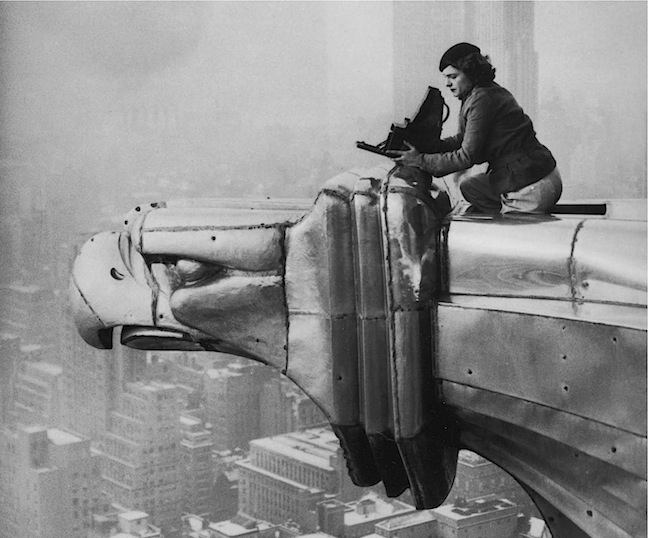
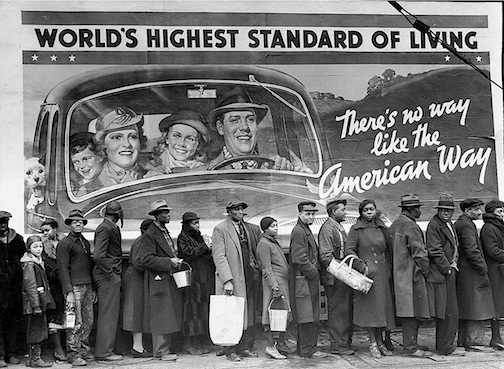
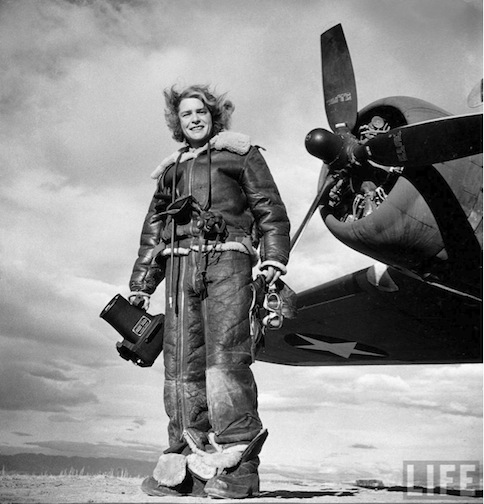
Margaret Bourke-White was a pioneering photojournalist whose insightful pictures of 1930s Russia, German industry, and the impact of the Depression and drought in the American midwest established her reputation…In 1927 she graduated from Cornell University with a degree in biology, but she spent most of her time establishing herself as a professional photographer. Bourke-White opened her first studio in her apartment in Cleveland, Ohio.
FROM http://www.moma.org/interactives/objectphoto/artists/712.html
As an artist, Bourke-White continued to use photography as an instrument to examine social issues from a humanitarian perspective. She witnessed and documented some of the 20th century’s most notable moments, including the liberation of German concentration camps by General Patton in 1945, the release of Mahatma Gandhi from prison in 1946, and the effects of South African labor exploitation in the 1950s. Her career was cut short in 1966 due to Parkinson’s disease, and she died in 1971.
FROM https://www.howardgreenberg.com/artists/margaret-bourke-white
International Photography Hall of Fame and Museum~ https://iphf.org/inductees/margaret-bourke/
 LIFE’s First-Ever Cover Story~ http://time.com/3764198/lifes-first-ever-cover-story-building-the-fort-peck-dam-1936/
Shorpy Archives~ http://www.shorpy.com/image/tid/208

Norma Bassett Hall was an American woodblock printmaker who often depicted landscapes and outdoor scenes. She was born in Halsey, Oregon. In 1910, she become a member of the inaugural class of the Museum Art School in Portland, Oregon. After leaving Portland, she briefly taught in Milwaukee, Wisconsin, before continuing her education at the School of the Art Institute of Chicago from 1915-1918. She also studied privately with the noted British printmaker Mabel Royds, who introduced Norma to the Japanese method of printing woodcuts on rice paper with transparent watercolors. While studying at the SAIC, Norma Bassett met and would later  marry Arthur William Hall, a fellow student and artist. Following their marriage, they made their home in Kansas, becoming deeply involved with the state’s flourishing printmaking culture and helping to found the Prairie Print Makers. Hall, the only female among the group’s eleven charter members, designed their distinctive logo, a monogram set within a stylized sunflower. Hall and her husband divided their time and subjects between the rolling hills of Kansas and the dramatic vistas of New Mexico. In 1944 the couple permanently relocated to New Mexico, living first in Santa Fe and eventually purchasing an estate near Alcade from which they operated an art school. Bassett Hall continued to work and teach from their estate until her death in 1957. ~FROM Wikipedia
Jordan Schnitzer Museum of Art~
http://jsma.uoregon.edu/jordan-schnitzer-museum-art-opens-first-solo-exhibition-norma-bassett-hall-1957
Biography~ https://www.annexgalleries.com/artists/biography/927/Hall/Norma
Artnet~ http://www.artnet.com/artists/norma-bassett-hall/past-auction-results

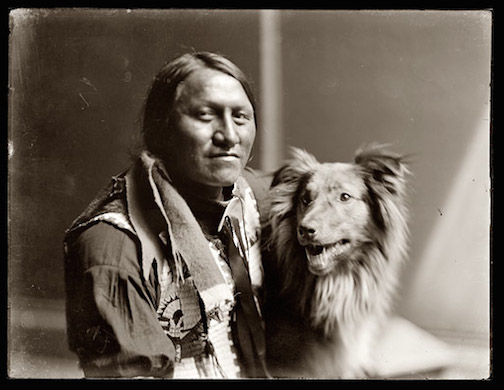
Gertrude Käsebier was a leading member of the pioneering photographic known as Pictorialism, which emphasized a subjective, painterly approach to photography rather than a documentary one.
Though she had long been interested in art, Käsebier only began her formal training at the Pratt Institute after her children entered high school. She planned to be a painter, but eventually switched to photography. Following classes in Paris and apprenticeships with a German photographic chemist, and a Brooklyn portrait photographer, Käsebier opened her own portrait studio in 1897.
FROM https://nmwa.org/art/artists/gertrude-kasebier/Stieglitz included Käsebier as a founding member of the Photo-Secession, a group that argued for a more natural, less manipulated photograph. In 1899, he published five of her photos, declaring her “beyond dispute, the leading artistic portrait photographer of the day.”
FROM http://www.imaging-resource.com/news/2012/05/12/nearly-forgotten-mother-of-modern-american-photography-gertrude-kaeseb
Library of Congress Biographical Essay: http://www.loc.gov/rr/print/coll/womphotoj/kasebieressay.html
Library of Congress Online Catalog: http://www.loc.gov/pictures/related/?fi=name&q=K%C3%A4sebier%2C%20Gertrude%2C%201852-1934
Shorpy Photo Gallery: http://www.shorpy.com/gertrude-kasebier-photographs
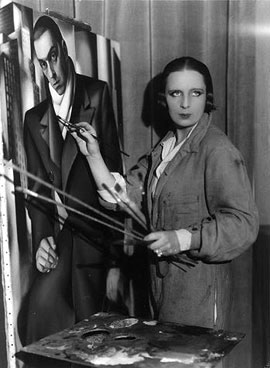
Who was she? De Lempicka shuffled the facts of her biography much as she meddled with her birth date.
…
Her time was the 1920s: a period of transition, an era in which functionalism merged with fantasy and formal social structures lurched into the frenetic. In essence, De Lempicka was a classicist, having admired Renaissance painting since her adolescent travels in Italy. But she astutelycombined traditional portraiture with advertising techniques, photographic lighting, vistas of the tower architecture of great cities.
…
In 1939, urged by Tamara, who was partly Jewish, Kuffner sold his estates in Hungary and they moved to the US. In New York, she tried abstract expressionism unsuccessfully, and was reduced to the role of a chic curiosity, “the painting baroness”.
FROM https://www.theguardian.com/artanddesign/2004/may/15/art
http://www.nytimes.com/books/99/10/24/reviews/991024.24vincent.html
http://culture.pl/en/artist/tamara-lempicka-tamara-de-lempicka

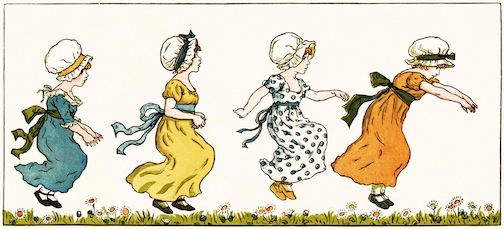
K is for Kate…Kate Greenaway
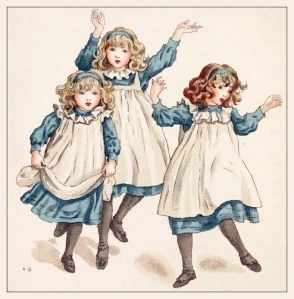
English artist and writer, known for her children’s book illustrations. She studied graphic design and art at the South Kensington School of Art; the Royal Female School of Art and the Slade School of Fine Art. She began her career designing for the burgeoning holiday card market, producing Christmas and Valentine’s cards. In 1879 wood-block engraver and printer, Edmund Evans, printed Under the Window, an instant best-seller, which established her reputation. Her collaboration with Evans continued throughout the 1880s and 1890s.
https://www.royalacademy.org.uk/art-artists/name/kate-greenaway
Still more about Kate Greenaway here: http://www.victorianweb.org/victorian/art/illustration/greenaway/index.html and here: https://www.illustrationhistory.org/artists/kate-greenaway

Patricia Anne “Pattie” Boyd (born March 17, 1944) is a model, photographer and author, born in Somerset, England. She was the first wife of both George Harrison and Eric Clapton…Pattie began her modeling career in 1962 in London, and appeared on the cover of Vogue and in several advertising campaigns. She was cast in the Beatles’ first feature film A Hard Days Night in 1964, where she first met George Harrison…She married George Harrison in January, 1966 and when being a ‘Beatle wife’ made it too difficult to work, she began taking a strong interest in photography.
Pattie Boyd is sick of being called a muse: ‘What have I done to inspire George Harrison?’
https://english.elpais.com/culture/2022-10-14/pattie-boyd-is-sick-of-being-called-a-muse-what-have-i-done-to-inspire-george-harrison.html
Pattie Boyd Talks Art, Fashion, and Beatlemania
https://lithub.com/pattie-boyd-talks-art-fashion-and-beatlemania/
Pattie Boyd, often in the shadow of her famous husbands, has put a trove of mementos up for auction
https://www.pbs.org/newshour/amp/arts/pattie-boyd-often-in-the-shadow-of-her-famous-husbands-has-put-a-trove-of-mementos-up-for-auction

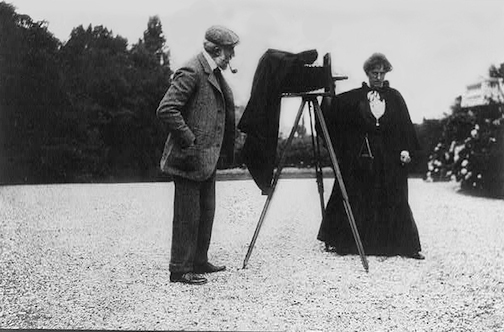
“Frances Benjamin Johnston (1864-1952) was one of the first American women to achieve prominence as a photographer. Trained at the Académie Julian in Paris, she studied photography upon her return to Washington, D.C., in the mid-1880s and opened a professional studio circa 1890. Her family’s social position gave Johnston access to the First Family and leading Washington political figures and launched her career as a photojournalist and portrait photographer. Johnston turned to garden and estate photography in 1910s.”
~https://www.loc.gov/pictures/collection/fbj/
Frances Benjamin Johnston~ http://www.cliohistory.org/exhibits/johnston/
Photographs~ http://www.whitehousehistory.org/galleries/frances-benjamin-johnston
Library of Congress~ http://www.loc.gov/rr/print/coll/fbjchron.html



 The Misty Miss Christy